Author's Note: A deep dive into the latest intel on Google's Gemini 3.1 Flash Image preview (codename Nano Banana 2), analyzing 4K image generation capabilities, API access methods, and developer community reactions.
Today is February 26, 2026. Over the past 48 hours, the keyword Nano Banana 2 has gone viral in the AI developer circle. On X, posts about Google's upcoming Gemini 3.1 Flash Image preview are everywhere, with 4K ultra-HD generated images circulating and technical speculation reaching a fever pitch.
Core Value: Get up to speed on the core intel of the Gemini 3.1 Flash Image preview in 3 minutes, and understand the potential impact of this new model on the AI image generation field.
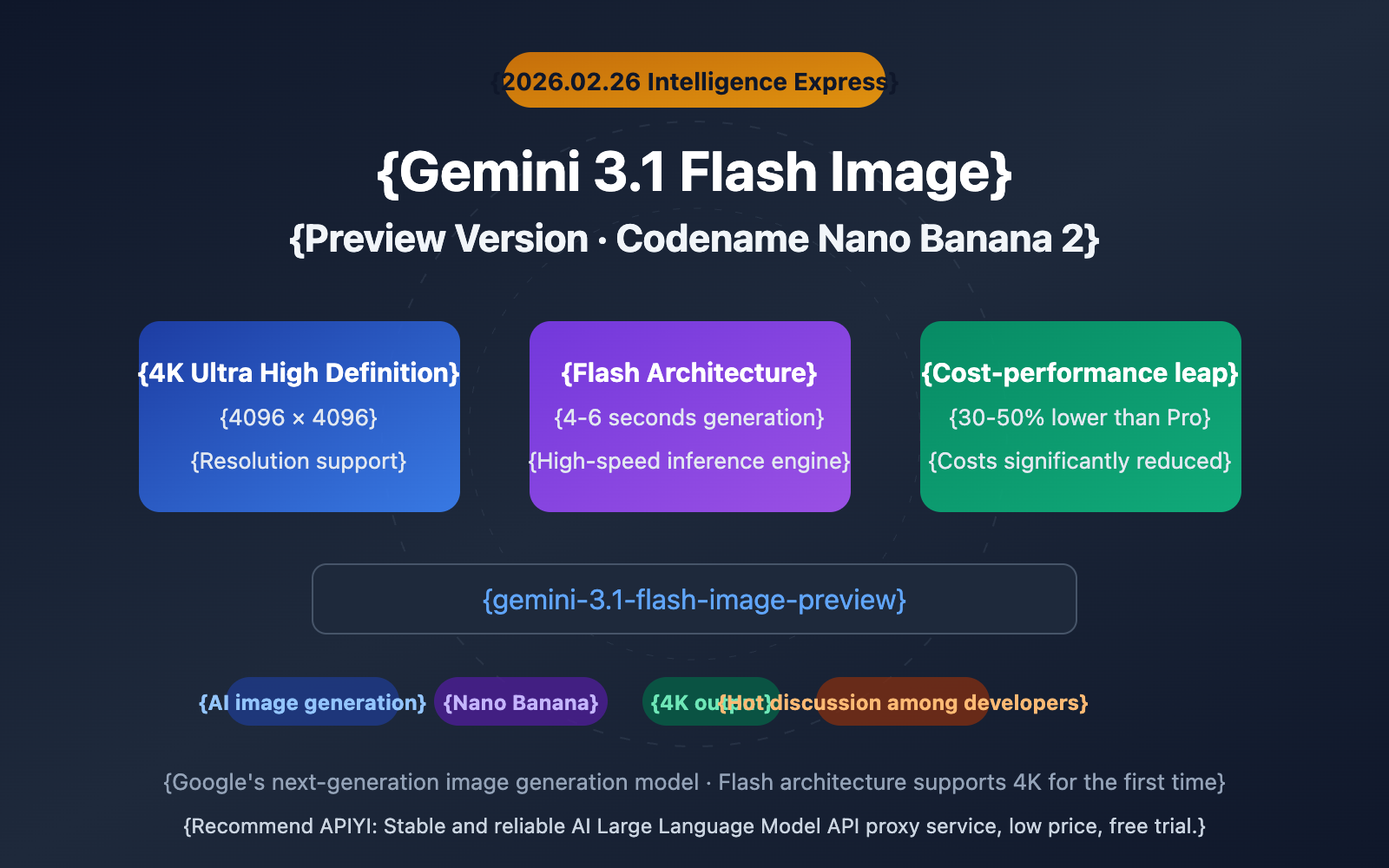
Gemini 3.1 Flash Image Preview: Key Intel
| Intelligence Point | Known Info | Confidence |
|---|---|---|
| Model Codename | Nano Banana 2 (Community rumor) | ⭐⭐⭐⭐ |
| Model ID | gemini-3.1-flash-image-preview | ⭐⭐⭐⭐ |
| Resolution Support | Up to 4K (4096×4096) | ⭐⭐⭐⭐⭐ |
| Architecture | Based on Gemini 3.1 Flash inference engine | ⭐⭐⭐⭐ |
| Positioning | High-speed + High-quality image generation | ⭐⭐⭐⭐ |
Gemini 3.1 Flash Image and the Nano Banana Family
To wrap your head around the Gemini 3.1 Flash Image preview, you first need to look back at the evolution of Google's Nano Banana image generation models. In August 2025, Google anonymously released its first image generation model on the LMArena platform under the codename "Nano Banana." With its impressive blind test performance, it quickly climbed to the top of the charts, beating out competitors like Midjourney and Flux. In November 2025, Nano Banana Pro (Gemini 3 Pro Image) was released, pushing resolution to 4K and achieving a 94% text rendering accuracy rate.
Now, the Gemini 3.1 Flash Image preview circulating in the community is being called "Nano Banana 2." The big draw here is that it aims to blend Pro-level image generation quality with the high-speed inference of the Flash architecture. This means developers might soon get near-4K output with much lower latency and cost.
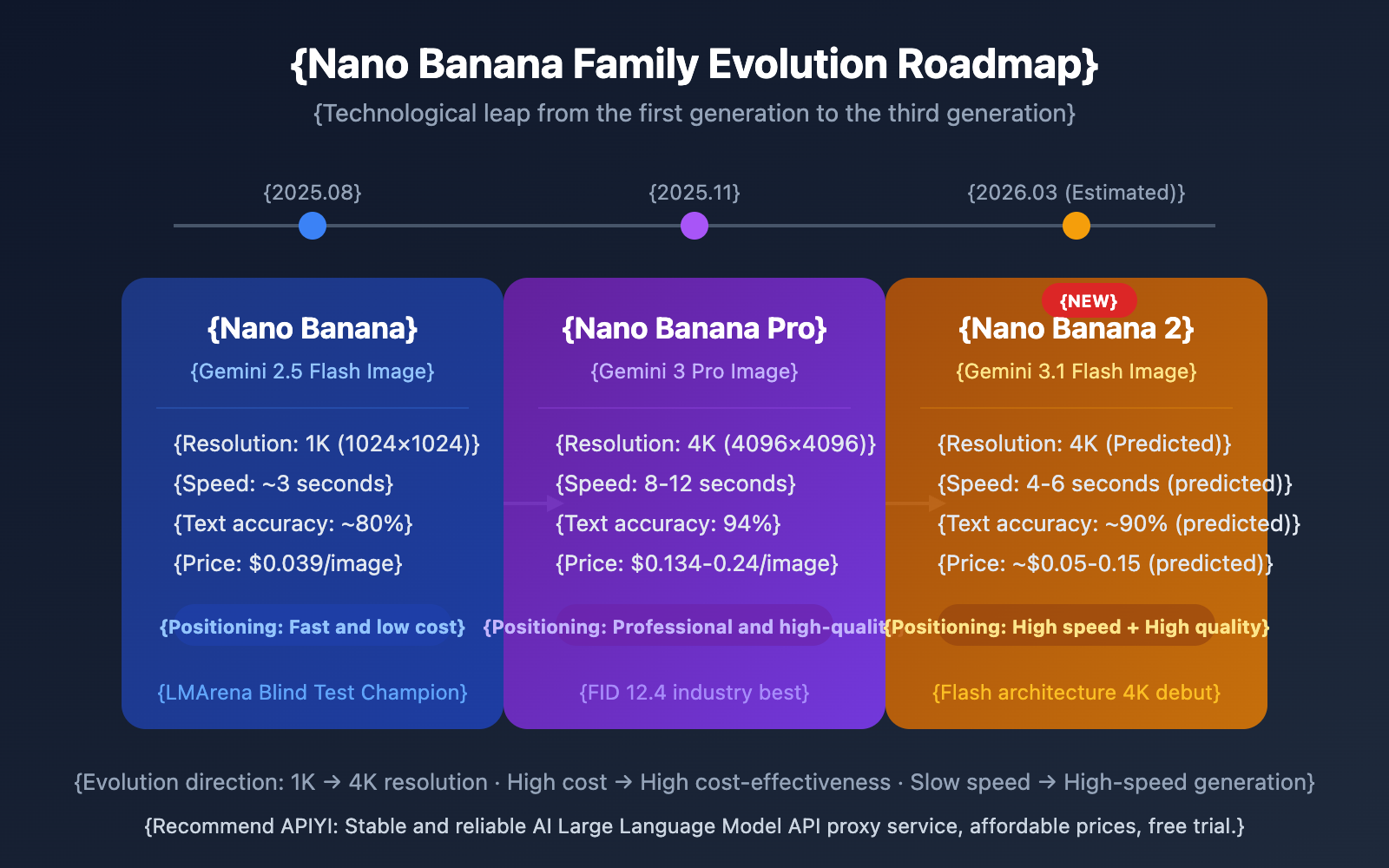
Gemini 3.1 Flash Image Technical Specification Predictions
Based on existing Nano Banana series data and community rumors, we can make some educated guesses about the technical specs of the Gemini 3.1 Flash Image preview.
| Technical Metric | Nano Banana (2.5 Flash Image) | Nano Banana Pro (3 Pro Image) | Nano Banana 2 (3.1 Flash Image) Prediction |
|---|---|---|---|
| Max Resolution | 1K (1024×1024) | 4K (4096×4096) | 4K (4096×4096) |
| Generation Speed | ~3 seconds | 8-12 seconds | 4-6 seconds (Predicted) |
| Text Rendering Accuracy | ~80% | 94% | ~90% (Predicted) |
| Character Consistency | Fair | 95%+ | ~90% (Predicted) |
| Number of Reference Images | Limited | Up to 14 | Up to 8-10 (Predicted) |
| Market Positioning | Fast & Low Cost | Professional & High Quality | Balance of Speed & High Quality |
The Edge of Flash Architecture in Gemini 3.1 Flash Image
Looking at it from a technical perspective, the biggest significance of choosing the Flash architecture over the Pro architecture for the Gemini 3.1 Flash Image preview lies in inference efficiency. The Flash series has always been Google's model line optimized for large-scale deployment. Its hallmark is significantly reducing latency and inference costs while maintaining high quality.
If Nano Banana 2 can pull off 4K image generation on the Flash architecture while keeping generation speeds between 4-6 seconds, its price-to-performance ratio will blow everything else out of the water. That's exactly why the AI developer community is so hyped—high-quality image generation no longer has to come at the cost of speed.
🎯 Developer Tip: If you're keeping an eye on the latest AI image generation API developments, we recommend checking out and testing the existing Nano Banana Pro models via the APIYI (apiyi.com) platform. It supports a unified interface for various mainstream image generation models and usually integrates new models as soon as they're released.
Gemini 3.1 Flash Image Developer Community Reaction
Trending Topics on X
Between February 24-26, 2026, the global developer community was buzzing about the Gemini 3.1 Flash Image preview. Discussions mainly focused on a few key areas:
- 4K Samples Leaking: Several developers shared 4K image samples allegedly generated by Gemini 3.1 Flash Image. The detail and lighting effects are noticeably better than current Flash-level models.
- Speed vs. Quality Balance: The community generally believes this is the first time the Nano Banana series has
Getting Ready for Gemini 3.1 Flash Image API Integration
Expected API Invocation Method
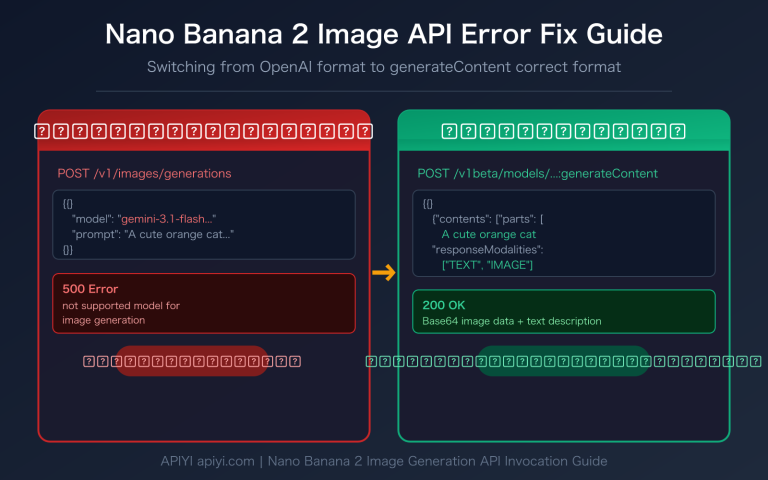
Based on the existing architecture of Google's Gemini image generation API, the model invocation for the Gemini 3.1 Flash Image preview is expected to look like this:
import openai

client = openai.OpenAI(
    api_key="YOUR_API_KEY",
    base_url="https://vip.apiyi.com/v1"
)

# Expected Gemini 3.1 Flash Image invocation method
response = client.chat.completions.create(
    model="gemini-3.1-flash-image-preview",
    messages=[{"role": "user", "content": "A golden Shiba Inu running under cherry blossom trees, 4K Ultra HD, cinematic lighting"}]
)
View full Nano Banana Pro invocation example (currently available)
import openai

client = openai.OpenAI(
    api_key="YOUR_API_KEY",
    base_url="https://vip.apiyi.com/v1"
)

# Currently available Nano Banana Pro invocation
response = client.chat.completions.create(
    model="gemini-3-pro-image-preview",
    messages=[
        {
            "role": "user",
            "content": "Generate a professional product photography style image of a smartwatch, 4K resolution, dark background"
        }
    ],
    max_tokens=4096
)

# Process the returned image data
if response.choices[0].message.content:
    print("Image generation successful")
Pro Tip: Get your API key through APIYI (apiyi.com) to unify your calls for Nano Banana Pro and the upcoming Gemini 3.1 Flash Image models. The platform offers free test credits and supports OpenAI-compatible formats, so you won't need to change your existing code.
Pricing Comparison Forecast: Gemini 3.1 Flash Image vs. Competitors
| Model | Price per 1K Images | Price per 4K Images | Generation Speed | Text Rendering |
|---|---|---|---|---|
| Nano Banana 2 (Forecast) | ~$0.05 | ~$0.15 | 4-6 sec | ~90% |
| Nano Banana Pro | $0.134 | $0.24 | 8-12 sec | 94% |
| Nano Banana (Original) | $0.039 | Not supported | ~3 sec | ~80% |
| Midjourney V7 | Subscription | Not supported | 20-30 sec | 71% |
| DALL-E 3 | $0.016 | Not supported | 15-25 sec | ~85% |
If the pricing for the Gemini 3.1 Flash Image preview does fall within this predicted range, it'll become the most cost-effective 4K image generation solution on the market. Compared to Nano Banana Pro, the Flash version could be 30-50% cheaper while nearly doubling the speed.
🎯 Cost Optimization Tip: Invoking Google's image generation models through a third-party API proxy service like APIYI (apiyi.com) usually gets you better pricing. The platform aggregates multiple providers and automatically selects the most efficient route.
FAQ
Q1: When will the Gemini 3.1 Flash Image Preview be officially released?
As of February 26, 2026, Google hasn't officially announced a release date. Based on community intel and Google's past release patterns, we're expecting the preview version to drop sometime in March 2026. It's a good idea to keep an eye on the official Google AI blog and their X account for the latest updates.
Q2: Can I start preparing for the Gemini 3.1 Flash Image API integration now?
Absolutely. Google's image generation APIs maintain high consistency, so current Nano Banana Pro API calls will likely be compatible with the new model. We recommend testing the gemini-3-pro-image-preview model via APIYI (apiyi.com) first to get familiar with the interface specs. Once the new model is live, you'll just need to swap out the model ID.
Q3: What’s the main difference between Nano Banana 2 and Nano Banana Pro?
The core difference lies in their architecture and positioning. Nano Banana Pro is built on the Gemini 3 Pro inference engine, aiming for ultimate image quality. Nano Banana 2 is expected to use the Gemini 3.1 Flash engine, significantly boosting speed and lowering costs while maintaining high quality. Simply put: the Pro version is the quality benchmark, while the Flash version is the king of price-to-performance.
Summary
Key takeaways for the Gemini 3.1 Flash Image Preview (codenamed Nano Banana 2):
- Flash Architecture + 4K Quality: Achieving Pro-level image generation quality on a high-speed inference architecture for the first time.
- Speed and Cost Advantages: Expected generation speeds of 4-6 seconds, with pricing 30-50% lower than Nano Banana Pro.
- Developer Friendly: Follows standard Gemini API invocation methods and is expected to support OpenAI-compatible formats.
While Google hasn't officially released the model yet, community buzz and technical trends suggest that Gemini 3.1 Flash Image will likely be one of the most significant new models in the AI image generation space for 2026.
We recommend getting a head start with Google's image generation APIs through APIYI (apiyi.com). The platform offers free test credits and supports unified calls for various mainstream image generation models.
📚 References
-
Google DeepMind Nano Banana Pro Official Introduction: Detailed technical specifications for Google's Nano Banana Pro model.
- Link:
deepmind.google/models/gemini-image/pro/ - Description: Official technical documentation for understanding the Pro version's benchmark parameters.
- Link:
-
Gemini API Image Generation Documentation: Official developer documentation for Google's Gemini image generation API.
- Link:
ai.google.dev/gemini-api/docs/image-generation - Description: API integration guide and code examples.
- Link:
-
The Origin of the Nano Banana Name: The story behind the Nano Banana codename from Google's official blog.
- Link:
blog.google/products-and-platforms/products/gemini/how-nano-banana-got-its-name/ - Description: Learn about how the Nano Banana brand came to be.
- Link:
Author: APIYI Technical Team
Tech Talk: Feel free to discuss the latest on Gemini 3.1 Flash Image in the comments. For more AI model resources, visit the APIYI documentation center at docs.apiyi.com.