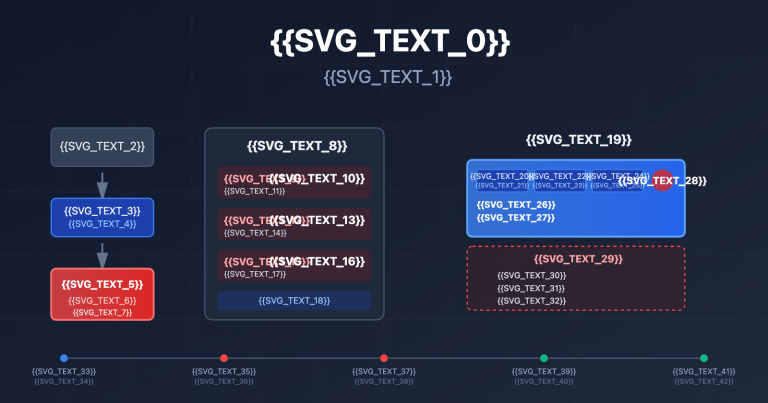
Author's Note: A deep dive into the 5 core breakthroughs of Qwen-Image-2.0, the unified image generation and editing model. We'll cover technical highlights like the 7B lightweight architecture, native 2K resolution, and 1000-token long prompts, along with an API integration and usage guide.
On February 10, 2026, the Alibaba Tongyi team released Qwen-Image-2.0. This is a major upgrade that unifies image generation and editing into a single model. What's really impressive is that it slashes the parameter count from 20B in the previous generation to just 7B while delivering a comprehensive performance boost. As an authorized partner of Alibaba Cloud, APIYI is currently integrating the model. We expect it to go live very soon, and it'll likely come with a price advantage.
Core Value: Through this deep dive, you'll learn about the 5 core breakthroughs of Qwen-Image-2.0, how it actually stacks up against competitors, and how to quickly integrate it via API.
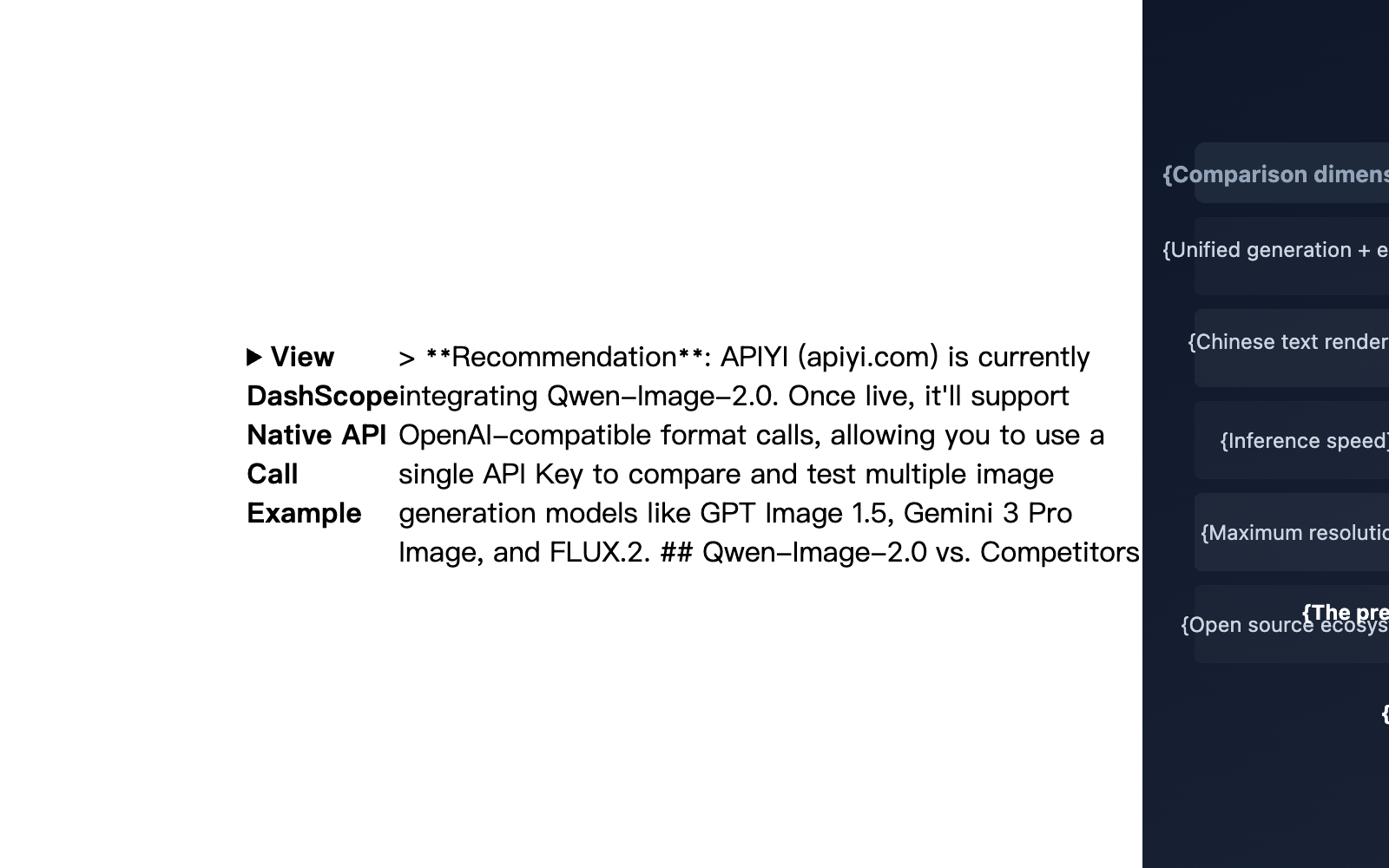
| Comparison Item | Qwen-Image-2.0 | GPT Image 1.5 | Gemini 3 Pro Image | FLUX.2 Max |
|---|---|---|---|---|
| Developer | Alibaba | OpenAI | Black Forest Labs | |
| Unified Gen + Edit | ✅ | ✅ | ✅ | ❌ |
| Max Resolution | 2K | 2K+ | 2K | 2K |
| Chinese Text Rendering | ⭐⭐⭐⭐⭐ | ⭐⭐⭐ | ⭐⭐⭐ | ⭐⭐ |
| Inference Speed | 5-8 seconds | 10-15 seconds | 5-10 seconds | 10-20 seconds |
| Open Source Ecosystem | Previous gen open-sourced | Closed source | Closed source | Partially open |
| API Pricing Ref | 20% off official (APIYI) | $0.04-0.08/image | Per token billing | $0.04/image |
Qwen-Image-2.0's Differentiated Advantages:
- Strongest for Chinese Scenarios: Its bilingual text rendering capability is industry-leading. For Chinese posters and infographics, the results are significantly better than competitors.
- Lightweight Architecture: It achieves GPT Image 1.5-level quality with only 7B parameters, leading to much lower inference costs.
- Open Source Potential: With the entire previous generation released under Apache-2.0, an open-source release for 2.0 is highly anticipated.
- Rich Ecosystem: Boasting over 2,380+ likes on HuggingFace and 484+ LoRA adapters, it has a very active community.
Comparison Note: The data above is sourced from public technical documentation and AI Arena leaderboards. We recommend testing these models on the APIYI (apiyi.com) platform to see how they perform in your specific use cases.
Recommended Application Scenarios for Qwen-Image-2.0
It's a great fit for the following scenarios:
- E-commerce Product Images: Use a single model to handle both product image generation and background replacement, significantly simplifying your workflow. It's perfect for e-commerce operations and design teams.
- Marketing Material Design: Whether it's posters, social media graphics, or ad assets, its powerful Chinese text rendering is a major competitive edge. Great for marketing teams.
- Creative Design: It supports various artistic styles like photorealistic, anime, watercolor, and hand-drawn. Plus, 1,000-token long prompts allow for precise control over your creative direction. Ideal for designers and content creators.
- Technical Chart Generation: Create professional content like PPT slides, infographics, and flowcharts with pixel-perfect layout. Best for technical documentation teams.
🎯 Scenario Advice: If your business involves generating a lot of Chinese text-and-image content, Qwen-Image-2.0 is currently the top choice to watch. We recommend doing some real-world comparison testing via the APIYI (apiyi.com) platform to find the best fit for your specific needs.
Qwen-Image-2.0 Version Evolution and Pricing
Version Evolution Timeline
Since the first version launched in August 2025, the Qwen-Image series has maintained a rapid pace of iteration:
| Version | Date | Core Upgrades |
|---|---|---|
| Qwen-Image v1 | 2025.08 | First 20B MMDiT, Apache-2.0 open source |
| Qwen-Image-Edit | 2025.08 | Added dedicated editing model |
| Qwen-Image-2512 | 2025.12 | Enhanced realistic textures and text rendering |
| Qwen-Image-2.0 | 2026.02 | Unified architecture, 7B lightweight, native 2K |
Pricing Reference
| Channel | Model | Reference Price |
|---|---|---|
| Aliyun DashScope | qwen-image-max | ¥0.50/image |
| Aliyun DashScope | qwen-image-plus | ¥0.20/image |
| Replicate | Qwen Image | $0.030/image |
| Fal.ai | Qwen Image Edit | $0.021/image |
| APIYI (Coming soon) | Qwen-Image-2.0 | Under 80% of official price |
💡 Official pricing for Qwen-Image-2.0 hasn't been released yet. APIYI (apiyi.com) is actively integrating it and will offer prices at least 20% lower than official rates. Sign up now to get free test credits—stay tuned!
FAQ
Q1: What’s the difference between Qwen-Image-2.0 and Qwen-Image-2512?
The biggest change is that version 2.0 unifies generation and editing into a single 7B parameter model. In contrast, the previous 2512 was a 20B model dedicated solely to text-to-image, requiring a separate Qwen-Image-Edit model for modifications. Version 2.0 also supports native 2K resolution and 1000-token long prompts, with significant improvements in image quality and text rendering.
Q2: Can I use Qwen-Image-2.0 via API right now?
It's currently in the API invitation testing phase, but you can experience it for free online at chat.qwen.ai. APIYI (apiyi.com) is currently integrating it. Once live, they'll offer prices at least 20% lower than the official rates, support OpenAI-compatible formats, and let you compare multiple image generation models with a single Key.
Q3: Is Qwen-Image-2.0 suitable for local deployment?
The weights for Qwen-Image-2.0 haven't been open-sourced yet. However, given that the previous series was released under the Apache-2.0 license, the community generally expects version 2.0 to follow suit. A 7B parameter size means it'll likely run on consumer-grade GPUs (with 24GB VRAM). While waiting for the open-source release, we recommend using APIYI (apiyi.com) to quickly verify its performance via API.
Summary
Key takeaways for Qwen-Image-2.0:
- Unified architecture is the standout feature: A single 7B model handles both generation and editing, whereas the previous generation required two 20B models.
- Lightweight without sacrificing quality: Parameters have been reduced by 65%, yet image quality and functional range have improved across the board.
- Irreplaceable for Chinese contexts: With bilingual text rendering and multi-font support, it's the top choice for generating Chinese-language visual content.
- API access is coming soon: Currently in invite-only testing, with a full release expected shortly.
Qwen-Image-2.0 represents a major breakthrough for domestic AI image generation models. For teams that need high-quality Chinese text-and-image content, this is definitely one of the most important models to watch.
We recommend following APIYI (apiyi.com) for the latest integration updates and discounted pricing (20% off official rates). The platform offers free credits and a unified interface for multiple models, making it easy to run quick comparisons and validations.
📚 References
-
Qwen Official Blog: Qwen-Image-2.0 Release Announcement
- Link:
qwen.ai/blog?id=qwen-image-2.0 - Description: Official technical insights and feature overview.
- Link:
-
GitHub Repository: Qwen-Image Project Homepage
- Link:
github.com/QwenLM/Qwen-Image - Description: Open-source code, technical documentation, and usage guides.
- Link:
-
AI Arena Leaderboard: Text-to-Image and Image Editing Rankings
- Link:
arena.ai/leaderboard/text-to-image - Description: Independent third-party evaluation rankings with real-time updates.
- Link:
-
Alibaba Cloud API Documentation: DashScope Image Generation API
- Link:
help.aliyun.com/zh/model-studio/qwen-image-api - Description: Official API integration documentation and parameter specifications.
- Link:
Author: Technical Team
Tech Talk: Feel free to join the discussion in the comments! For more resources, visit the APIYI (apiyi.com) tech community.