Author’s note: Based on a set of Agrumea Farm website-cloning tests, this article compares Gemini 4 Carbon, Claude Opus 5.5, and GPT-6 Astra on three dimensions: design fidelity and interaction requirements, time taken, and API-equivalent cost. It also covers how to choose by scenario and how to rerun the test yourself.
What happens when you hand the same brand website to three top-tier models and ask each to clone it? On November 11, 2026, independent reviewer Pat Simmons (AI for Mortals) published a set of tests that answers exactly that. He had Gemini 4 Carbon, Claude Opus 5.5, and GPT-6 Astra each recreate the website of the Italian food brand Agrumea Farm, and he made the results, screenshots, prompts, run times, and API-equivalent costs public.
This isn’t a “each has its strengths” kind of analysis. In this task, the winner on each dimension is clear: Carbon was the cheapest, Astra was the fastest, and Opus earned the reviewer’s highest quality rating. One caveat: each model ran only once, and the tooling environments and test dates differed, so these results shouldn’t be generalized into a ranking for all web development scenarios.
Core value: After reading this, you’ll know where each of these three “model + tool” workflows shines in quality, speed, and cost, and you’ll be able to use the method here to verify the results on your own projects.
What the Original Site Looks Like: How the Carbon, Opus, and Astra Same-Task Replication Test Worked
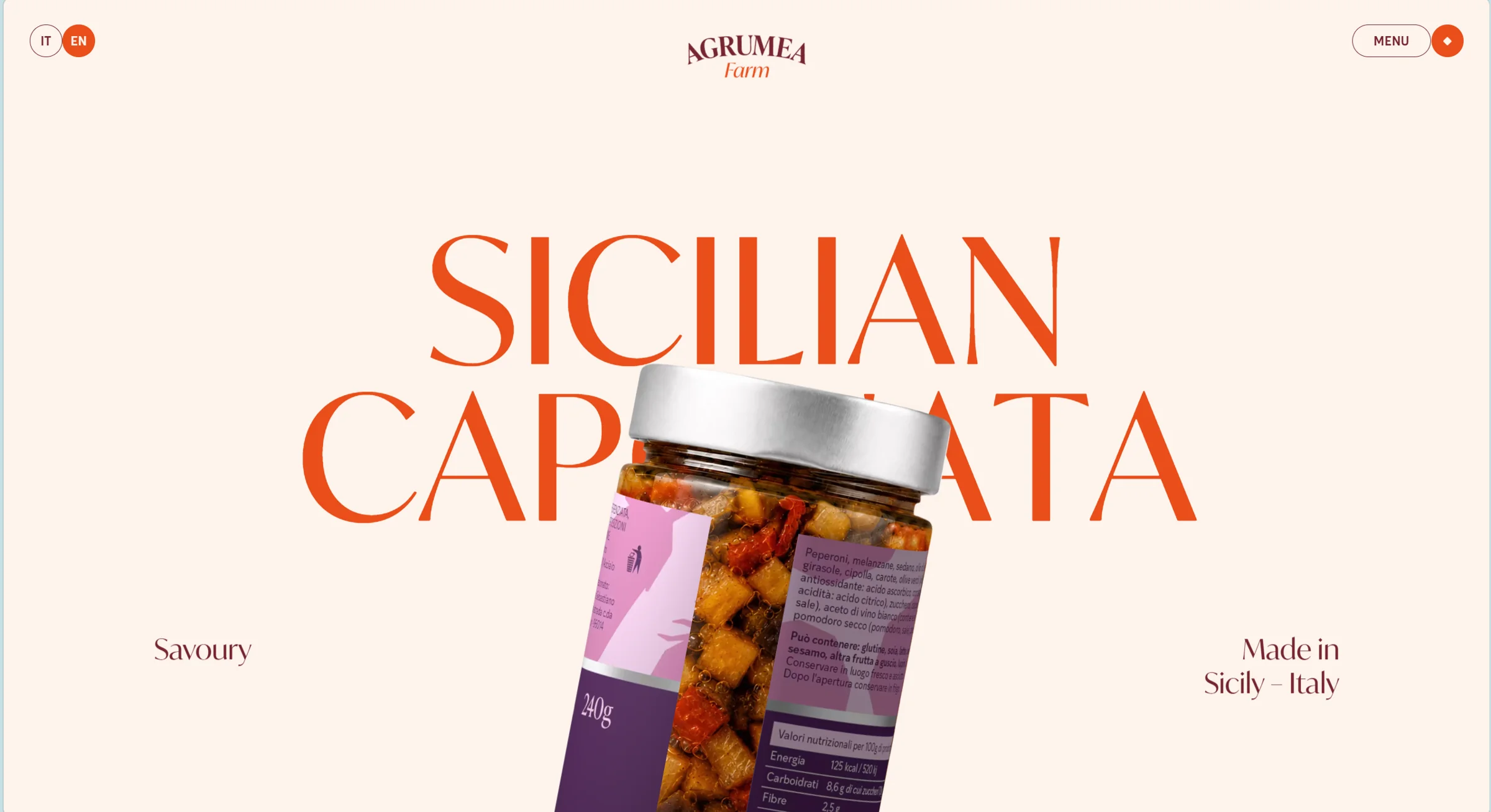
Let’s cover the test conditions before the results. What makes this test valuable is “same website, same prompt, same development goal.” But it compares complete workflows, not the bare models isolated in a lab.
| Test Element | Specific Setup | Impact on the Conclusions |
|---|---|---|
| Test subject | The Agrumea Farm website (English version) | Measures design replication ability, not original aesthetics |
| Task requirements | Replicate the page structure, visual style, 3D can carousel, scrolling and dragging, loading animation, hover animations, and page transitions | Beyond static screenshots, interactions count as a quality metric |
| Viewport sizes | Desktop 1440×900, mobile 390×844 | Responsive layout has to be handled too |
| Verification method | Read styles in the browser and run visual checks to make sure the site works | Browser self-checking ability affects the final result |
| Tooling | Carbon in Google Antigravity, Opus in Claude Code, Astra in Codex, all with high reasoning settings | Results come from the model and toolchain working together |
| Runs and dates | One run per model; Opus and Astra on November 6, Carbon from November 10 to 11 | Single-run variance and environment differences are possible |
Three Key Caveats for the Carbon, Opus, and Astra Test
The first caveat is that this is “replication,” not “free-form design.” All three models had to follow the original brand’s design language, so the comparison focuses on fidelity, detail, and polish. If you need an original visual identity built from scratch, treat this test as a rough reference only.
The second caveat is how costs are measured. All dollar figures in the article are API-equivalent costs that the author calculated from model pricing and usage logs. They aren’t actual charges from a subscription plan. If you run the same tasks on a flat-rate tool, your bill will look completely different.
The third caveat is that the test actually included four models. The author also added Claude Fable 5.2, which took first place in the subjective ranking. So when the rest of this article mentions “2nd, 3rd, and 4th place,” those are rankings among all four models.
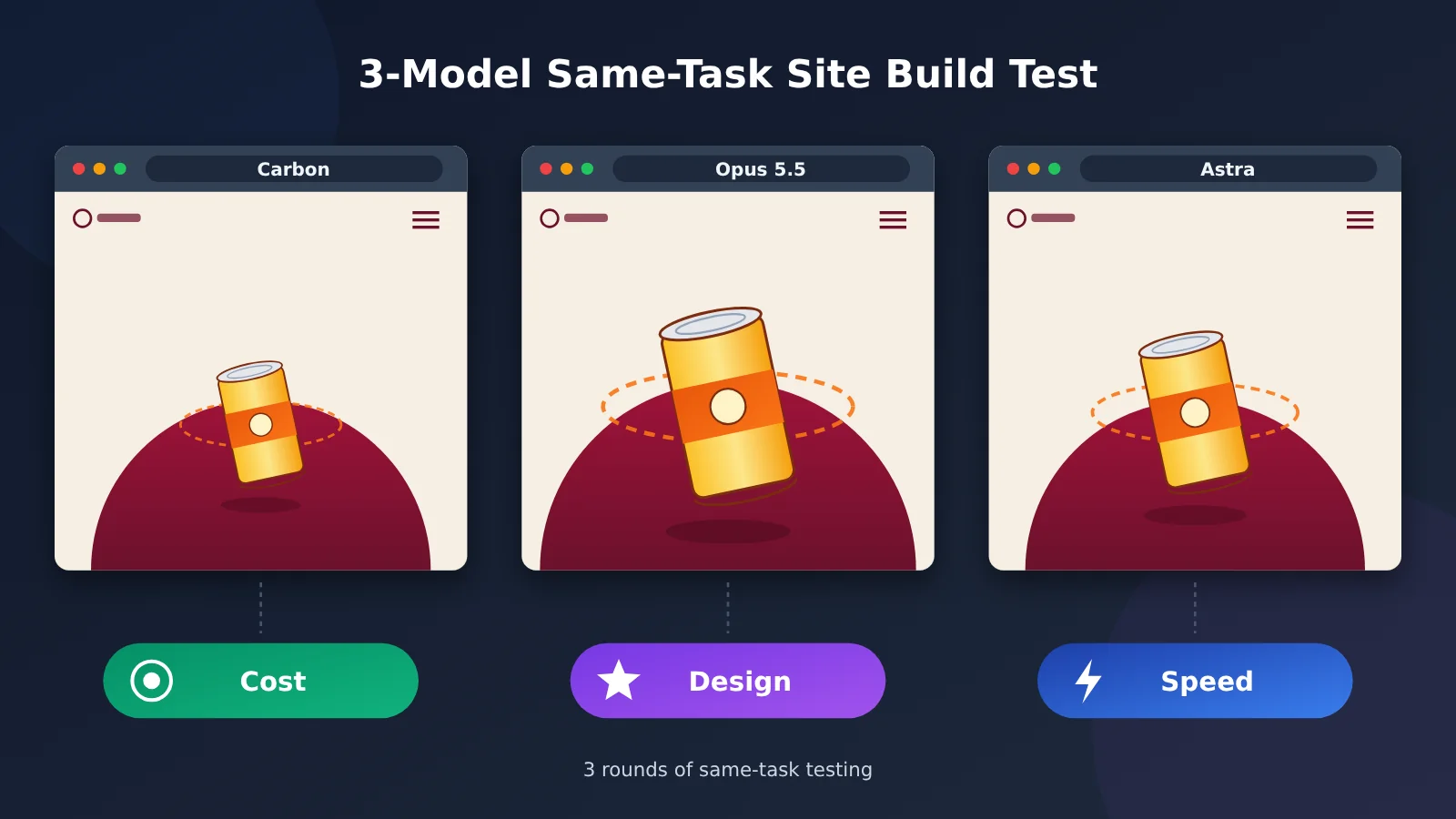
Image credit: The three first-screen screenshots of the works in this article come from AI for Mortals / Pat Simmons, published 2026-11-11. They correspond to the replications by Gemini 4 Carbon, Claude Opus 5.5, and GPT-6 Astra, respectively.
Round 1: Carbon, Opus, and Astra: Who Recreated the Web Design Best?
Let’s start with the visuals. Judging by the public first-screen screenshots, all three entries caught the core elements of the original site: the off-white background, the floating food cans, the burgundy curved backdrop, the orange text circling the product, and the brand logo, language switcher, and menu button at the top. In other words, none of them turned in an off-the-rails template page. The differences come down to proportions, layering, and details.
From top to bottom, the images below show the work from Opus 5.5, Astra, and Carbon.
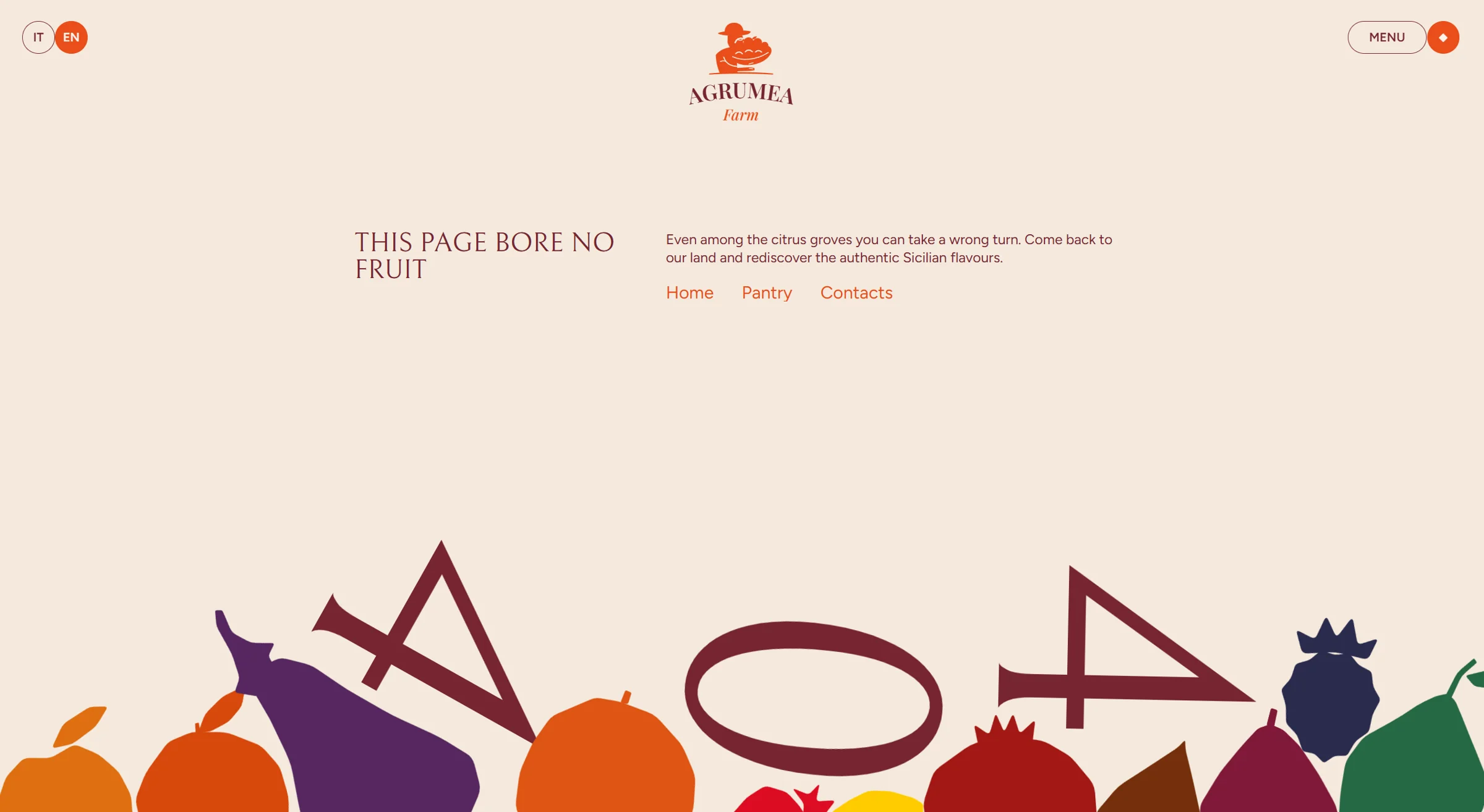
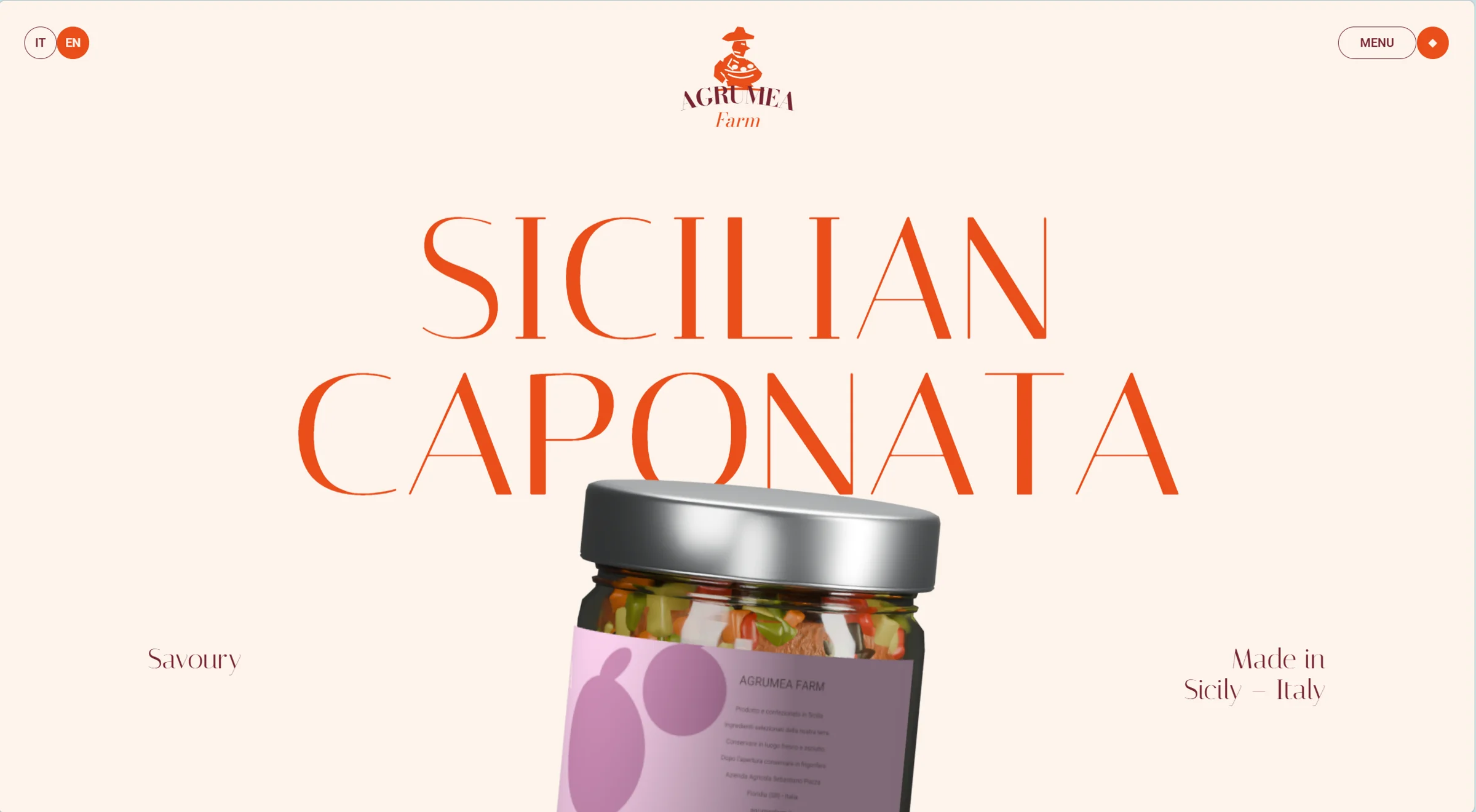
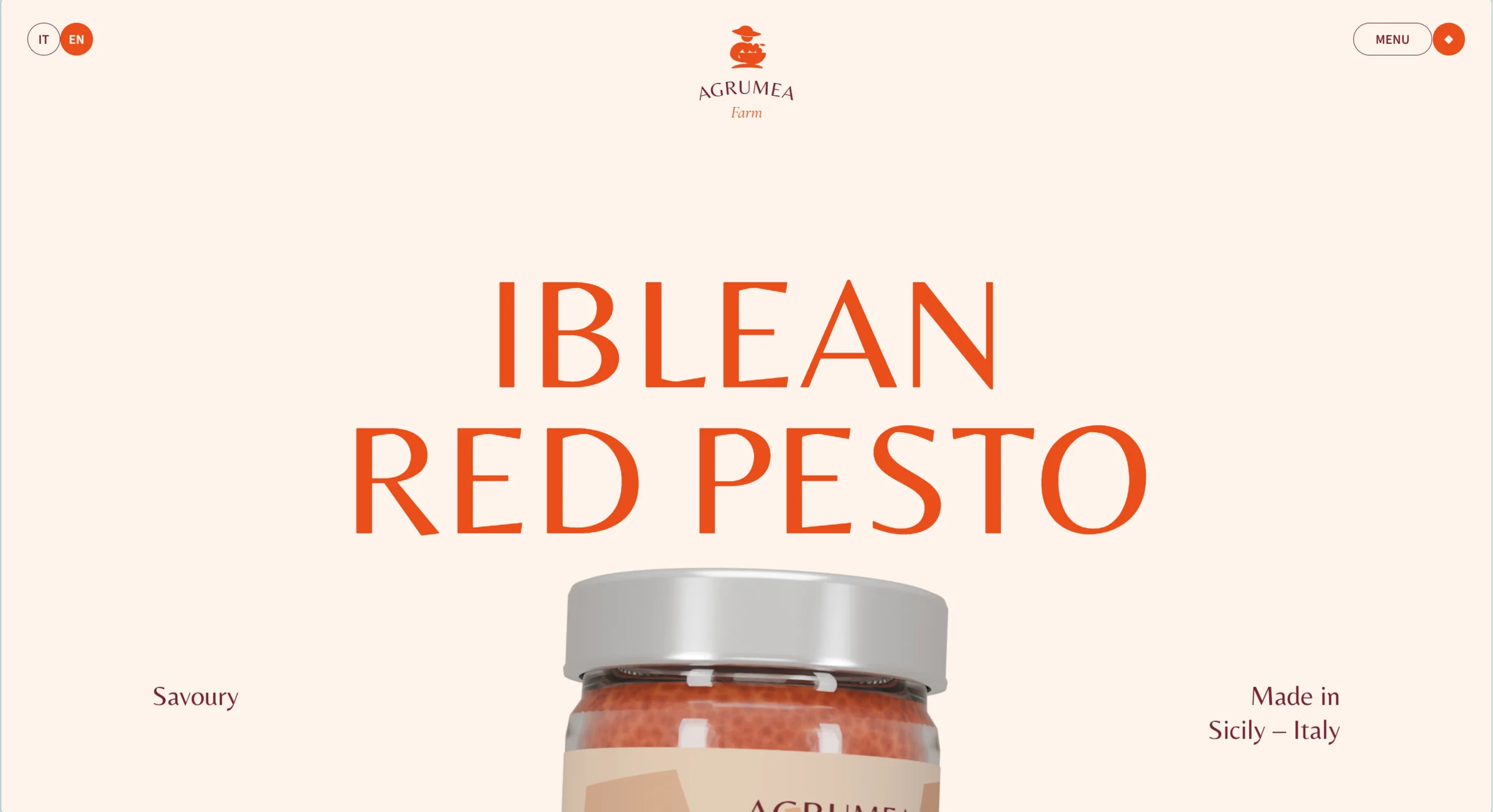
| Aspect | Gemini 4 Carbon | Claude Opus 5.5 | GPT-6 Astra |
|---|---|---|---|
| First-screen composition | Lots of white space, airy overall | Larger product, strong visual impact | Complete layout, fairly compact overall |
| Can proportions | Central can is relatively small | Can stands out as the clear focal point | Clear visual focal point |
| Background and layering | Curved background recreated | Overlap between the can and the background curve is more pronounced | Complete layering |
| Labels and text | Some label and text details are weaker | Richer labels and typography | Can label has noticeable graphic decoration |
| Author’s subjective ranking (four models) | 4th | 2nd | 3rd |
Why Opus Gets More Credit for Design Recreation
First, let’s separate two kinds of information: the first four rows of the table are visual observations from the public screenshots, while the last row is the review author’s subjective ranking. Among the three models in question, the author was happiest with Opus, then Astra, and finally Carbon.
Judging by the screenshots, Opus’s advantage mainly lies in the visual hierarchy of a brand website. On a food brand’s homepage, the product is the star of the first screen. Opus makes the can larger and has it clearly overlap the burgundy curve, with the can in front, and the label text is also crisper. Carbon’s airy layout isn’t wrong in itself, but the can is on the small side and some text details are weaker, which hurts it when the yardstick is “how faithful is the recreation.”
Astra lands somewhere in between. Its composition is complete, its focal point is clear, and the can label has quite a lot of decorative flair, but the overall layout is tighter. For a recreation task, “how much does it look like the original site” matters more than “how good does it look,” which explains why none of the three entries is bad, yet the ranking still shows clear gaps.
Round Two: Why You Can’t Judge Carbon, Opus, and Astra’s Interactions from Screenshots Alone
The biggest difference between a website and a design mockup is that a website needs to “move.” The original task explicitly called for recreating a 3D product-can carousel, scroll and drag interactions, loading animations, hover animations, and page transitions. You can barely see any of this in a static screenshot, yet it directly shapes what users experience when they open the site.
So screenshots can only tell you about layout and visual detail. They can’t prove the interactive features are fully implemented. To judge whether the 3D can drags smoothly, whether hover feedback feels natural, or whether the mobile layout breaks, you need to open the three public demo pages and actually use them. This article doesn’t treat screenshots as interaction test results, and it doesn’t make up interaction scores the original author never provided.
This round also highlights the difference between web development and static image generation. A model can draw a beautiful first screen, but getting a 3D carousel, scroll-driven animations, and a responsive layout all into working code is another matter. It also has to handle load order, performance, and how everything behaves at different screen sizes. The evaluation requires the model to “read styles in the browser and do visual verification” precisely so that “finished writing” becomes “actually works.”
In a real project, you can check an AI-generated website in this order:
- Open the page at both 1440×900 and 390×844, and confirm the layout doesn’t overflow or overlap.
- Trigger dragging, scrolling, hovering, and page transitions one by one, and watch for stuttering or broken animations.
- Open the browser console and check for errors, failed resource loads, or infinitely looping animations.
- Finally, compare against the original site or design mockup screen by screen, and note any visual differences.
Round 3: How Much Do Carbon, Opus, and Astra Differ in Cost and Time?
This round shows the differences between the three workflows better than any other. All figures below come from the original evaluation, and costs are API-equivalent costs.
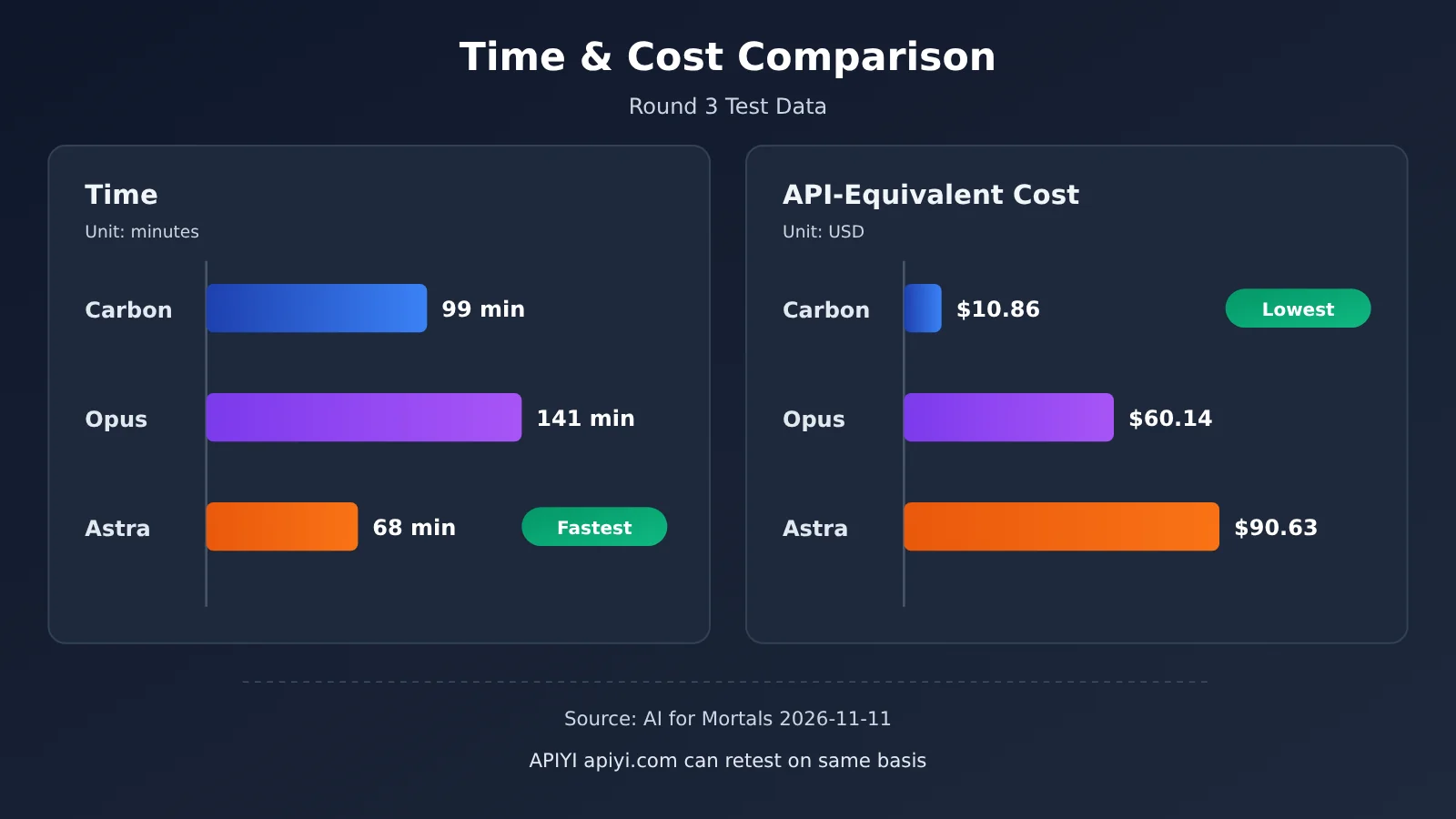
| Metric | Gemini 4 Carbon | Claude Opus 5.5 | GPT-6 Astra |
|---|---|---|---|
| Time taken | 99 minutes | 141 minutes | 68 minutes (fastest) |
| API-equivalent cost | $10.86 (lowest) | $60.14 | $90.63 |
| Input tokens | 27.7 million | 197.9 million | 70.4 million |
| Output tokens | 430K | 483K | 211K |
| Equivalent cost per minute (estimated) | ~$0.11 | ~$0.43 | ~$1.33 |
| Author’s subjective ranking (four models) | 4th | 2nd | 3rd |
A Closer Look at the Carbon, Opus, and Astra Cost Data
Carbon’s API-equivalent cost is about 18% of Opus’s and 12% of Astra’s. If you tend to work by trial and error and iterate a lot, that gap keeps widening across multi-round tasks. Astra finished in 68 minutes, less than half of Opus’s time, which makes it a good fit when delivery speed matters. Opus took the longest and landed in the middle on cost, but it produced the result the author liked best of the three.
One thing in the table is easy to miss: for all three models, input tokens far outnumber output tokens. Based on the table, Carbon’s input-to-output ratio is about 64:1, Opus’s is about 410:1, and Astra’s is about 334:1. That’s typical of agent-style development. On every round, the model has to re-read the code, styles, page state, and other context, so the code it actually “writes” is only a small slice of the total. Opus’s input volume is close to 200 million tokens, which suggests it went through a lot of back-and-forth with its context during this task.
Another point worth noting is that token count and cost aren’t proportional. Astra used only about a third of Opus’s input tokens, yet its equivalent cost was higher. That tells you unit pricing, cache billing, and similar factors matter just as much. When you evaluate cost, don’t just look at who used fewer tokens; calculate it using each model’s actual billing rules. This article doesn’t go into specific unit prices, so please check each vendor’s official pricing page for the latest numbers.
Why Carbon, Opus, and Astra Produce Different Results from the Same Prompt
The same prompt produced three different results, and the models themselves are only part of the reason. In this test, each model ran inside its own vendor’s development tool. Model capability, the way tools get called, the browser self-check mechanism, and context management all shaped the final output together.
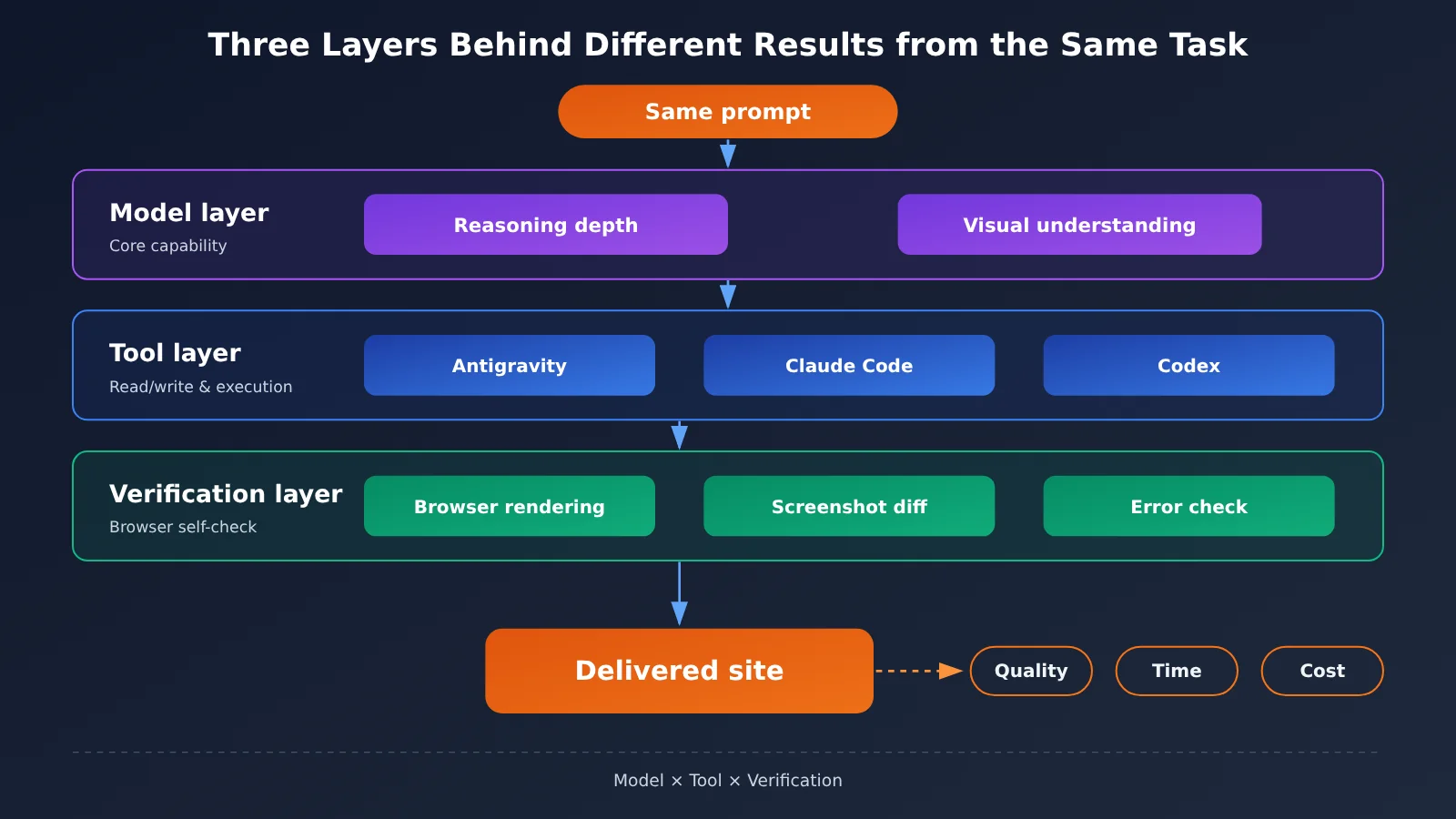
Going by the official materials, each of the three vendors emphasizes something different when it comes to web development:
- Google (Carbon + Antigravity): Emphasizes front-end design, browser verification, dynamic effects, complex 3D content, and multi-agent development. Official examples include redesigning the Google Merchandise Store with two prompts, and building a 3D interactive experience with Three.js.
- OpenAI (Astra + Codex): Astra’s official introduction highlights the ability to build websites, apps, and games, plus a workflow that runs front-end quality checks after generation.
- Anthropic (Opus + Claude Code): The official materials don’t include a same-task comparison. However, in a test by third parties Proofyard/Woofocus on October 24, 2026, Opus 5.5 completed the first-pass design and revisions for a furniture studio homepage, costing $4.34 at API pricing. That test isn’t a direct comparison with the Carbon and Astra runs in this article.
How to Read the Carbon, Opus, and Astra Leaderboard Data
Besides a single hands-on test, you can also look at leaderboards that aggregate many tasks. All the data below is labeled with its collection date. Elo scores depend on each platform’s testing method, so you can’t compare them directly across leaderboards.
| Leaderboard (Date) | Test Type | Claude Opus 5.5 | GPT-6 Astra | Gemini 4 Carbon |
|---|---|---|---|---|
| Arena WebDev (2026-11-10) | Head-to-head voting on web development | 1814 (Max) | 1764 (Max) | 1768 (High, preliminary ranking) |
| DesignArena Overall Agentic Leaderboard (2026-11-11) | Front-end, full-stack, games, mobile, office documents, etc. | 1440 (High), #1 | 1385 (Max), #3 | 1291, #7 |
Opus leads on both leaderboards, which matches the direction of the author’s subjective ranking in this recreation test. Carbon is very close to Astra on the WebDev leaderboard, but it ranks lower on the broader DesignArena overall leaderboard. That suggests “single-page web development” and “complex agent design tasks” are different capability dimensions, so choose a model based on your own task type.
How to Re-Test Carbon, Opus, and Astra Yourself via API
Someone else’s single test is only a starting point. The most reliable evidence is running the models on your own tasks. The example below sends the same prompt to several models through an OpenAI-compatible endpoint and records the latency and Token usage. One caveat: this only measures the step where the model generates code directly. It doesn’t include the multi-round tool calls and browser self-checks that the original evaluation ran in Antigravity, Claude Code, and Codex.
Minimal Example
from openai import OpenAI

client = OpenAI(
    api_key="YOUR_API_KEY",
    base_url="https://api.apiyi.com/v1"  # APIYI's OpenAI-compatible endpoint
)

resp = client.chat.completions.create(
    model="your-model-id",  # Use the actual name from the platform's model list
    messages=[{"role": "user", "content": "输出一个单文件 HTML 食品品牌官网首屏,米白背景、居中悬浮产品罐头、酒红色弧形背景"}]
)
print(resp.choices[0].message.content[:500])
print(resp.usage)  # Check input and output Tokens
View the full multi-model, same-prompt re-test script
import time
from openai import OpenAI

client = OpenAI(
    api_key="YOUR_API_KEY",
    base_url="https://api.apiyi.com/v1"  # One key to call multiple providers' models
)

# Model IDs should match the platform's model list; prices are in "USD per million Tokens", so fill them in from the official pricing page
MODELS = {
    "model-a": {"input_price": 0.0, "output_price": 0.0},
    "model-b": {"input_price": 0.0, "output_price": 0.0},
    "model-c": {"input_price": 0.0, "output_price": 0.0},
}

PROMPT = """请复刻一个食品品牌官网首屏,输出单文件 HTML:
1. 米白色背景,中央悬浮产品罐头,酒红色弧形背景,橙色环绕文字;
2. 顶部包含品牌标志、语言切换和菜单按钮;
3. 罐头支持鼠标拖动旋转,悬停时有缩放反馈;
4. 同时适配 1440x900 和 390x844 两种尺寸。
只输出完整代码。"""

def run(model: str, price: dict) -> dict:
    start = time.time()
    resp = client.chat.completions.create(
        model=model,
        messages=[{"role": "user", "content": PROMPT}],
    )
    elapsed = time.time() - start
    usage = resp.usage
    cost = (usage.prompt_tokens * price["input_price"]
            + usage.completion_tokens * price["output_price"]) / 1_000_000
    html = resp.choices[0].message.content
    with open(f"{model}.html", "w", encoding="utf-8") as f:
        f.write(html)
    return {
        "model": model,
        "seconds": round(elapsed, 1),
        "input_tokens": usage.prompt_tokens,
        "output_tokens": usage.completion_tokens,
        "api_equivalent_cost": round(cost, 4),
    }

if __name__ == "__main__":
    for name, price in MODELS.items():
        try:
            print(run(name, price))
        except Exception as e:
            print(name, "调用失败:", e)
Once the script finishes, you’ll have one HTML file per model. Then follow the four-step checklist from the second round: open each file in a browser and check the layout, the interactions, and any console errors. Combine that with the latency and equivalent cost to make your call. To smooth out run-to-run variance, I’d run each model at least three times.
🚀 Quick-start tip: In same-prompt comparisons, the most tedious part is usually signing up for several providers’ keys and adapting to different SDKs. I’d recommend handling that step through APIYI (apiyi.com). One API key gets you OpenAI, Claude, Gemini, and other mainstream models through an OpenAI-compatible interface, and new users get free test credits, which makes it easy to run through the comparison workflow on a small sample first.
Carbon, Opus, and Astra: Use Cases and Decision Advice
Based on this test and the leaderboard data, you can do a first-pass filter by development goal. The “Basis” column notes the type of source where possible, so you can judge how much weight each recommendation deserves.
| Development Goal | Top Pick | Basis | Suggested Validation |
|---|---|---|---|
| Cost-sensitive, lots of exploration and iteration | Gemini 4 Carbon | Lowest API-equivalent cost in this test (measured data) | Compare cumulative cost across many small tasks |
| Visual fidelity, complex interactions, high polish | Claude Opus 5.5 | Rated best of the three by the author’s subjective judgment, and leads on both leaderboards | Screen-by-screen fidelity and interaction acceptance checks |
| Fast completion and execution efficiency | GPT-6 Astra | Shortest runtime in this test (measured data) | Time the same task + quality acceptance check |
| Not sure which to pick, want to get a baseline first | Re-test all three on the same task with a small sample | A single test isn’t enough to draw conclusions | Batch comparison through APIYI’s unified interface at apiyi.com |
When to Choose Carbon
- Prototype exploration phase: You need to try several page designs quickly, and a lower cost per run means you can afford more rounds.
- Personal projects or teams on a tight budget: As long as quality is acceptable, the gap in long-term invocation costs adds up fast.
- Primary development with human review: Use Carbon to produce the first draft, then have a person or another model handle the final check.
When to Choose Opus
- Brand sites and marketing landing pages: Visual fidelity and detail matter a lot here, and rework costs more than invocation costs.
- Pages with complex interactions: When there’s a lot of 3D display, dragging, and scroll-driven animation, final polish matters most.
When to Choose Astra
- Tight delivery schedules: You need a complete, runnable page in a short amount of time.
- Teams that value a front-end QA process: The official materials emphasize post-generation quality checks, which makes it a good fit if you want to hand acceptance checks off to your workflow.
💡 Our advice: This test is a side-by-side look at one real workflow, not an absolute ranking. What should ultimately drive your decision is which option actually gets your own task running, and how much money and time it takes. We recommend running a small-scale re-test with the same prompt through APIYI at apiyi.com before settling on your main model.
FAQ
Q1: What did the Carbon, Opus, and Astra website test actually measure?
It measured how well three “model + dev tool” workflows could recreate the Agrumea Farm website. That covers page structure, visual style, the 3D can carousel, scroll and drag interactions, loading and hover animations, page transitions, and responsive layout. The test measures how faithfully each one reproduces an existing design, not original aesthetic taste.
Q2: Why is Carbon the cheapest but ranked lowest by the reviewer?
Cost and quality are two separate dimensions. Carbon used the fewest input tokens and had the lowest equivalent cost. But in the screenshots, its cans look a bit small and some text details are weaker, so it doesn’t score as well when the criterion is fidelity to the original. Cheap doesn’t mean bad. For this particular recreation task, the reviewer simply valued Opus’s level of completion more.
Q3: When was this test run? Will the results go out of date?
The review was published on November 11, 2026. The Opus and Astra tests were finished on November 6, and the Carbon test ran from November 10 to 11, which lines up with Carbon’s wider rollout on November 10. Models and tools change fast, so treat the conclusions as a snapshot of where things stand right now.
Q4: What’s the difference between equivalent API cost and subscription cost?
Equivalent API cost is an estimate based on token usage and API pricing, so it reflects what the model actually consumed. Subscription cost is the flat monthly price, which is governed by quotas and refresh rules. For the same task, a subscription tool might only use up part of your quota, while pay-as-you-go model invocation generates a bill right away. When choosing, calculate costs based on how you’ll actually be billed.
Q5: How can I use the API to quickly compare these models on web development?
You can follow the retest script in this article:
1. Sign up at APIYI (apiyi.com) to get an API key and free test credits.
2. Set `base_url` to `https://api.apiyi.com/v1`, and check the platform’s model list to confirm the names of the models you want to compare.
3. Call each model in turn with the same prompt, record the time taken and token usage, then check the generated pages in a browser.
Q6: Can a single API call reproduce the original review’s results?
Not fully. The original review ran in Antigravity, Claude Code, and Codex, involving multiple rounds of file reads and writes plus browser self-checks, and every run took over an hour. A single call only tests how well the model generates code directly, which makes it good for a first-pass screening. To get closer to the original test, you’d need to build an agent workflow with browser-based verification.
Q7: What are the limitations of this test?
There are three main ones: each model was run only once, so there’s some luck involved; the three used different tool environments and test dates, so you can’t isolate the models themselves; and the ranking comes from the reviewer’s subjective judgment. On top of that, static screenshots can’t prove that the interactions were fully implemented. So it works well as a reference case, but you shouldn’t treat it as a general-purpose ranking.
Carbon, Opus, and Astra: Key Takeaways
- What this test is: The same website-recreation task was run once through each of three workflows. Think of it as a side-by-side look at a real-world scenario, not a controlled benchmark.
- Design fidelity: Of the three, the author rated Opus highest, Astra second, and Carbon last.
- Speed: Astra was the fastest at 68 minutes, about half of Opus’s time.
- Cost: Carbon’s equivalent cost was $10.86, roughly 18% of Opus’s and 12% of Astra’s.
- Cost structure: Agent development is dominated by input tokens, so per-token pricing and caching rules shape the bill just as much.
- Leaderboard reference: Opus leads on both Arena WebDev and the DesignArena overall ranking, though each leaderboard measures things differently.
- Getting started: Use APIYI (apiyi.com) to run a small same-task retest with a single key, then decide on your primary model.
Summary
Comparing Carbon, Opus, and Astra on the same website comes down to three main points:
- Quality: In this recreation task, Opus’s output got the highest rating from the reviewer, with a more prominent main product and clearer visual hierarchy.
- Speed: Astra finished in just 68 minutes, which makes it a good fit for projects with tight delivery schedules.
- Cost: Carbon’s API-equivalent cost was far lower than the other two, so it suits high-frequency iteration and budget-sensitive work.
All three models are now capable of producing high-quality web development work. What differs is the tradeoff among visual fidelity, interaction quality, turnaround time, and cost. Rather than asking which model is the absolute best, it’s more useful to pin down your own development goals and run the same task yourself. We recommend using APIYI (apiyi.com) to retest multiple models through a single unified interface, and basing your final choice on the work that actually ships and what it actually costs.
📚 References
- Gemini 4 Carbon: No-Hype Full Review & Testing: Pat Simmons / AI for Mortals, a website-clone review using the same prompt across models, 2026-11-11
- Link:
aiformortals.co/blog/gemini-4-carbon-review -
Notes: The main source for this article’s test setup, timing, token counts, and API-equivalent cost data
-
The three clone pages: Public builds from Carbon, Opus 5.5, and Astra
- Links:
aiformortals.co/builds/agrumea-clone-gemini-4-carbon,aiformortals.co/builds/agrumea-clone-opus-5-5,aiformortals.co/builds/agrumea-clone-gpt-6-astra -
Notes: You can open these in a browser and check the interactions yourself
-
Agrumea Farm official site: The original site used as the test target
- Link:
agrumeafarm.it/en -
Notes: Used as the reference for judging how faithful each clone is
-
Arena WebDev leaderboard: A web development leaderboard based on head-to-head voting
- Link:
arena.ai/leaderboard/code/webdev -
Notes: This article cites data from 2026-11-10
-
DesignArena leaderboard: A comprehensive agentic design leaderboard
- Link:
designarena.ai/leaderboard -
Notes: This article cites data from 2026-11-11, covering multiple types of design tasks
-
Google official blog: Gemini 4 Carbon availability announcement
- Link:
blog.google/innovation-and-ai/models-and-research/gemini-models/gemini-4-carbon-now-available/ -
Notes: Google’s official positioning of Carbon for front-end design and browser verification
-
OpenAI official introduction: GPT-6 Astra
- Link:
openai.com/index/gpt-6-astra/ -
Notes: Describes Astra’s web development and front-end QA workflow
-
Woofocus test: A comparison of different Claude models for web design, 2026-10-24
- Link:
app.woofocus.com/blog/best-claude-model-for-web-design - Notes: Supplementary reference for Opus 5.5 on design and editing tasks; not a direct three-model comparison
Author: APIYI Technical Team
Technical discussion: Feel free to reach out to us on the APIYI homepage. For more integration resources, visit the docs.apiyi.com documentation center.