Author's Note: A deep comparison of Claude Opus 4.6 vs 4.5 benchmark data, new features, breaking changes, and migration advice to help you make the upgrade decision.
Claude Opus 4.6 was officially released on February 5, 2026, just about two months after the release of Opus 4.5. This article compares Claude Opus 4.6 and Claude Opus 4.5 from the perspectives of benchmarks, new features, and breaking changes to provide clear upgrade recommendations.
Core Value: After reading this article, you'll have a clear understanding of the actual performance gains in Opus 4.6 compared to 4.5, and whether you should upgrade immediately.
Claude Opus 4.6 vs 4.5 Core Differences at a Glance
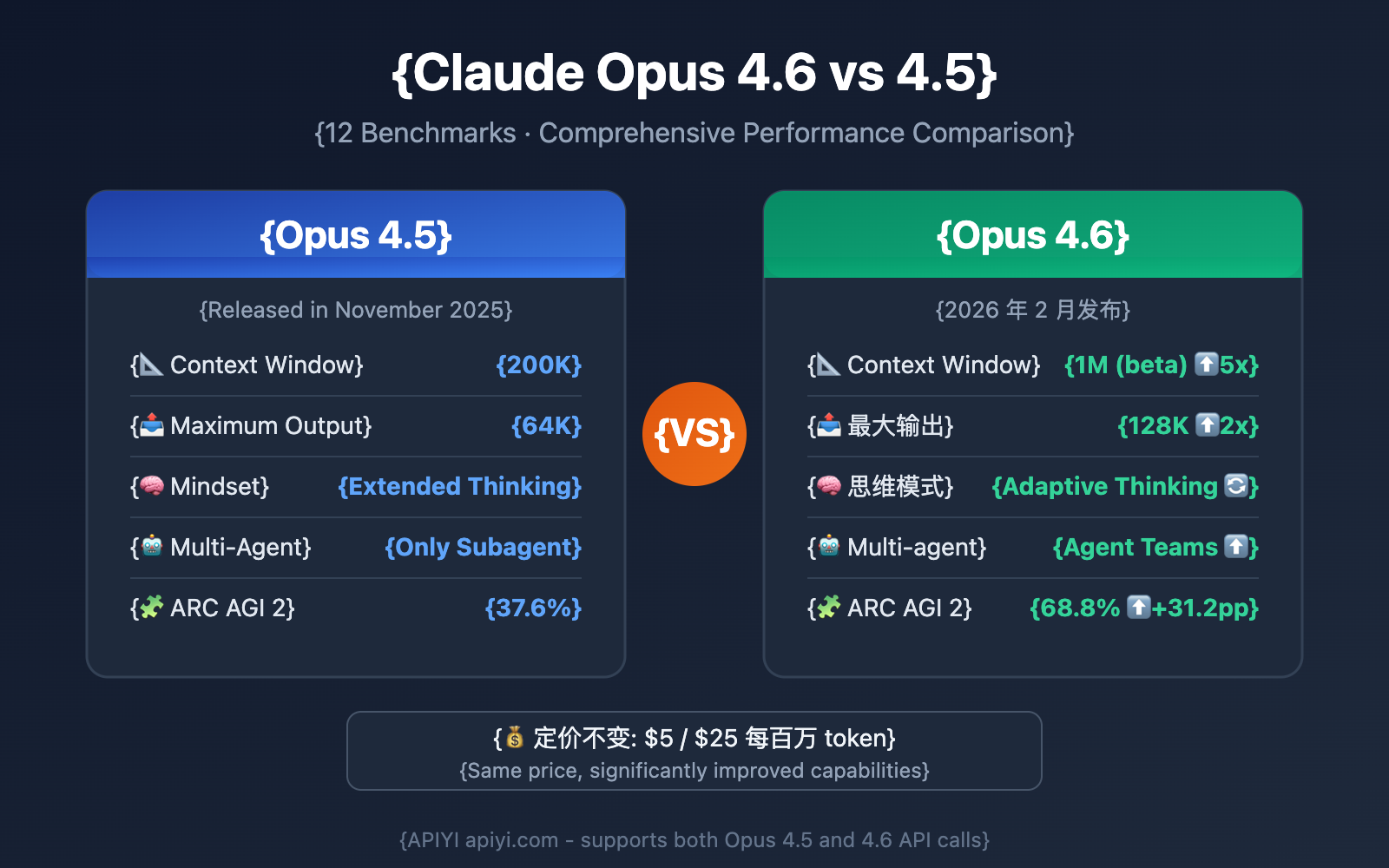
| Comparison Dimension | Opus 4.5 (2025.11) | Opus 4.6 (2026.02) | Change |
|---|---|---|---|
| Context Window | 200K tokens | 1M tokens (beta) | ⬆️ 5x Expansion |
| Max Output | 64K tokens | 128K tokens | ⬆️ Doubled |
| Thinking Mode | Extended Thinking | Adaptive Thinking | 🔄 Architecture Refactor |
| Multi-Agent | Subagent only | Agent Teams + Subagent | ⬆️ New |
| Standard Pricing | $5 / $25 per million tokens | $5 / $25 per million tokens | — Unchanged |
| Model ID | claude-opus-4-5-20250924 |
claude-opus-4-6 |
🔄 Updated |
Key Changes: Claude Opus 4.6 vs 4.5
The core upgrades in Opus 4.6 focus on three main areas: a leap in reasoning capabilities, context capacity expansion, and an upgrade to the multi-agent collaboration architecture.
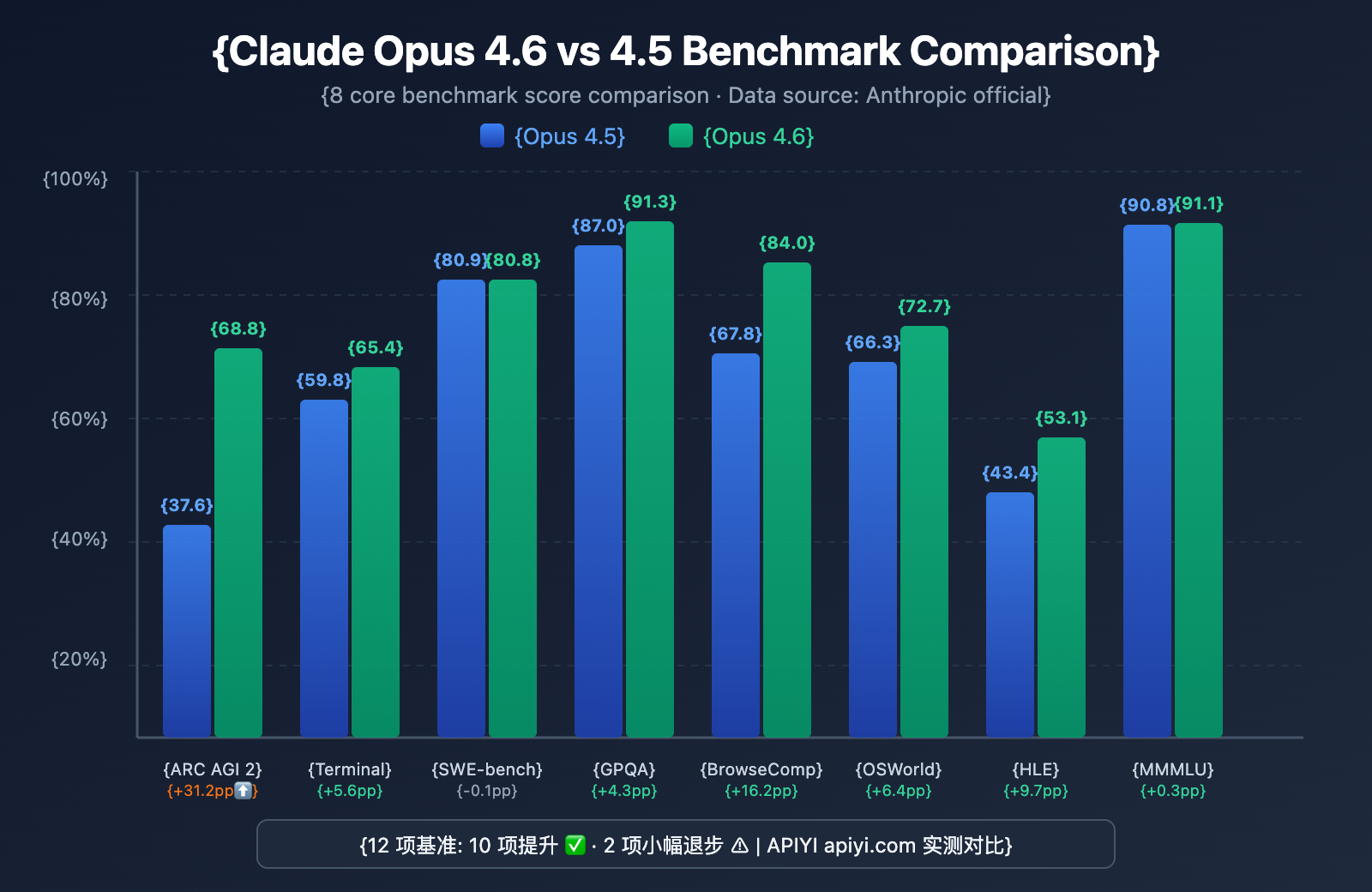
In terms of reasoning, the ARC AGI 2 test score leaped from 37.6% to 68.8%—a 31.2 percentage point increase, which is the largest single improvement among all benchmarks. This indicates that Opus 4.6 has achieved a qualitative leap in handling entirely new types of reasoning tasks.
The context window has expanded from 200K to 1M (beta). Coupled with the new Context Compaction API, the experience for scenarios like large-scale codebase analysis and long document processing will be significantly improved.
💡 Upgrade Tip: Opus 4.6 delivers a massive boost in core capabilities while keeping the price the same. We recommend performing actual tests and comparisons via the APIYI (apiyi.com) platform to quickly verify the new version's performance in your specific scenarios.
Claude Opus 4.6 vs 4.5 Benchmark Comparison
The following data is sourced from Anthropic's official releases and independent third-party evaluations:
Claude Opus 4.6 vs 4.5 Coding & Engineering Capabilities
| Benchmark | Opus 4.5 | Opus 4.6 | Change | Description |
|---|---|---|---|---|
| Terminal-Bench 2.0 | 59.8% | 65.4% | ⬆️ +5.6pp | Terminal tool usage capability |
| SWE-bench Verified | 80.9% | 80.8% | ⬇️ -0.1pp | Software engineering (mostly flat) |
| τ2-bench Retail | 88.9% | 91.9% | ⬆️ +3.0pp | Complex environment tasks |
| Finance Agent | 55.9% | 60.7% | ⬆️ +4.8pp | Financial domain agents |
Claude Opus 4.6 vs 4.5 Reasoning & Knowledge Capabilities
| Benchmark | Opus 4.5 | Opus 4.6 | Change | Description |
|---|---|---|---|---|
| ARC AGI 2 | 37.6% | 68.8% | ⬆️ +31.2pp | General reasoning (biggest improvement) |
| GPQA Diamond | 87.0% | 91.3% | ⬆️ +4.3pp | Graduate-level science Q&A |
| Humanity's Last Exam | 43.4% | 53.1% | ⬆️ +9.7pp | Top-tier expert challenges (with tools) |
| MMMLU | 90.8% | 91.1% | ⬆️ +0.3pp | Massive multitask understanding |
Claude Opus 4.6 vs 4.5 Practical Application Capabilities
| Benchmark | Opus 4.5 | Opus 4.6 | Change | Description |
|---|---|---|---|---|
| BrowseComp | 67.8% | 84.0% | ⬆️ +16.2pp | Web browsing and information retrieval |
| OSWorld | 66.3% | 72.7% | ⬆️ +6.4pp | OS interaction tasks |
| MCP Atlas | 62.3% | 59.5% | ⬇️ -2.8pp | MCP tool usage (regression) |
| MMMU Pro | 73.9% | 77.3% | ⬆️ +3.4pp | Multimodal understanding (with tools) |
Data Interpretation: Out of 12 benchmarks, Opus 4.6 leads in 10, with slight regressions in 2 (SWE-bench -0.1pp, MCP Atlas -2.8pp). You can use the APIYI (apiyi.com) platform to quickly compare how these two versions perform on your specific tasks.
Claude Opus 4.6 vs 4.5: New Feature Comparison
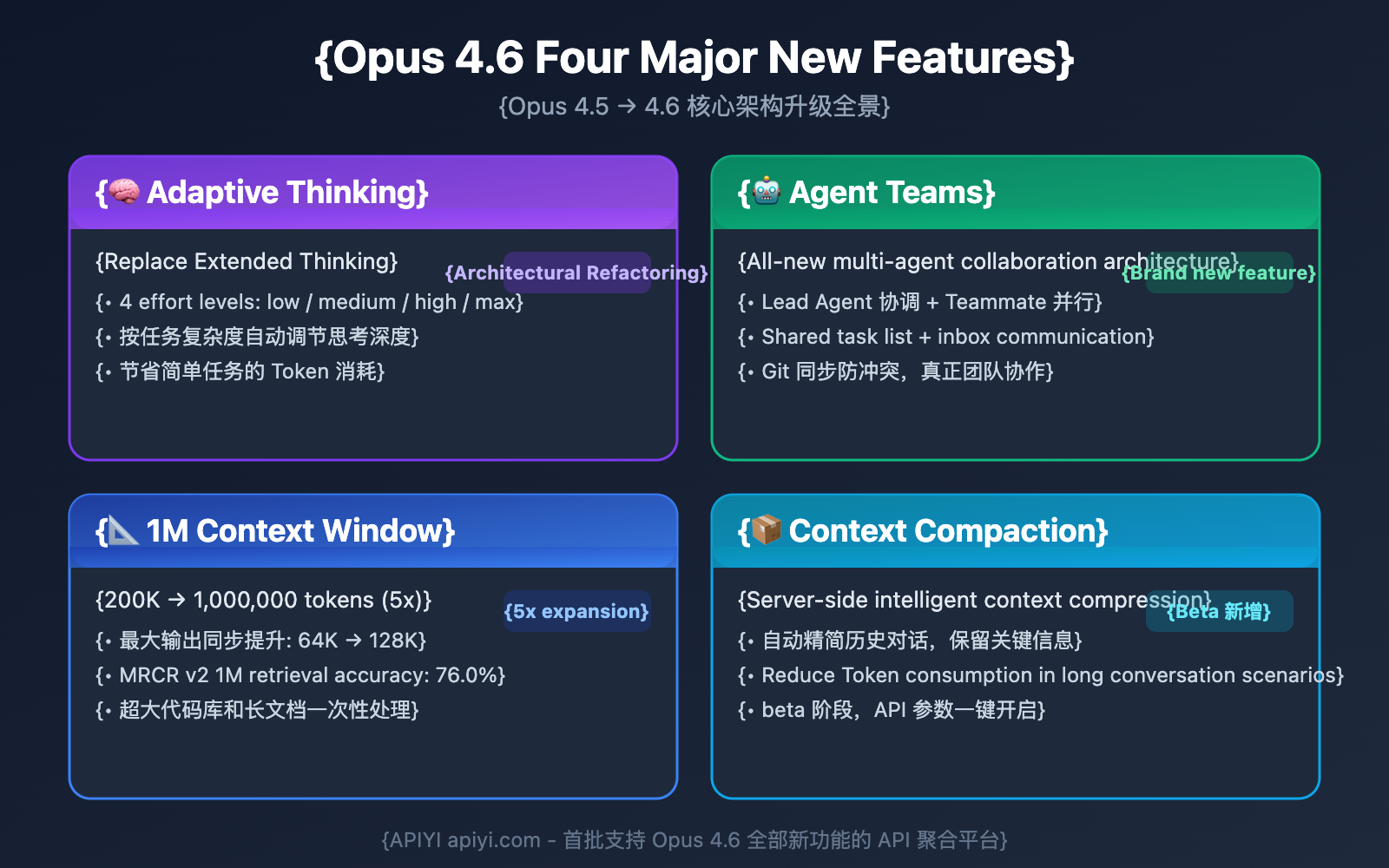
4 Standout Features Exclusive to Opus 4.6
1. Adaptive Thinking
Replacing Opus 4.5's Extended Thinking, the new Adaptive Thinking introduces an effort parameter:
import anthropic

client = anthropic.Anthropic(api_key="YOUR_API_KEY")
# Using APIYI's unified interface is just as convenient
# client = anthropic.Anthropic(api_key="YOUR_KEY", base_url="https://vip.apiyi.com/v1")

response = client.messages.create(
    model="claude-opus-4-6",
    max_tokens=8000,
    thinking={
        "type": "adaptive",
        "effort": "high"  # low / medium / high / max
    },
    messages=[{"role": "user", "content": "Analyze the performance bottlenecks in this code"}]
)
Use cases for the 4 effort levels:
| Effort Level | Use Case | Token Consumption |
|---|---|---|
low |
Simple classification, format conversion | Minimal |
medium |
General Q&A, text generation | Moderate |
high (Default) |
Complex reasoning, code analysis | High |
max |
Mathematical proofs, scientific research | Maximum |
2. Context Compaction API
A brand-new server-side context compaction capability that automatically streamlines message history in long conversations while preserving key information:
response = client.messages.create(
    model="claude-opus-4-6",
    max_tokens=4000,
    context_compaction={
        "enabled": True  # beta feature
    },
    messages=long_conversation_history
)
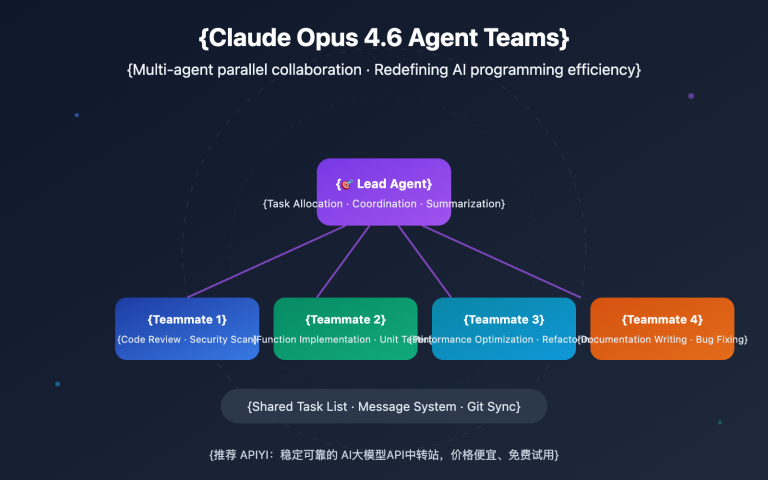
3. Agent Teams
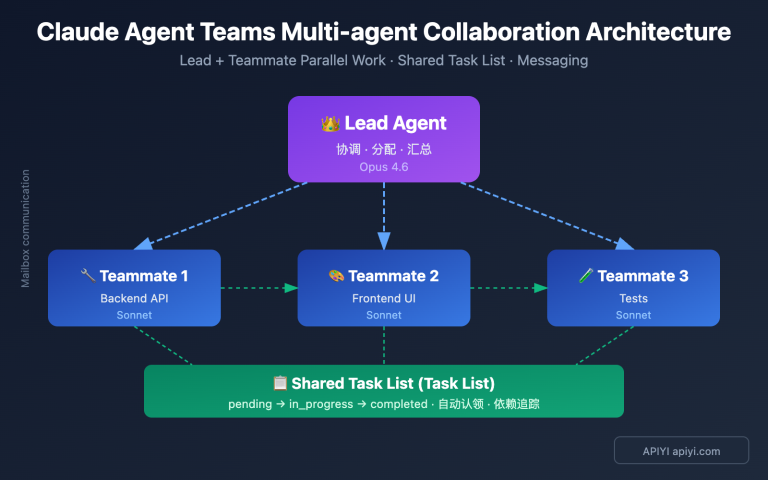
While Opus 4.5 only supported Subagent mode, Opus 4.6 introduces the Agent Teams architecture:
- Lead Agent: Responsible for task decomposition and coordination.
- Teammate Agents: Multiple agents working in parallel.
- Shared Task List + Inbox: A robust team collaboration mechanism.
4. 1M Context Window (Beta)
| Capability | Opus 4.5 | Opus 4.6 |
|---|---|---|
| Standard Context | 200K | 200K |
| Extended Context (Beta) | — | 1M |
| Long Context Retrieval (MRCR v2 1M) | — | 76.0% |
| Max Output | 64K | 128K |
📌 Extended context uses premium pricing: $10 Input / $37.50 Output per million tokens (for the portion exceeding 200K).
Claude Opus 4.6 vs 4.5 Breaking Changes
Before you upgrade to Opus 4.6, make sure to check these breaking changes:
3 Must-Address Breaking Changes
1. Prefill Feature Removal (Biggest Impact)
Opus 4.5 allowed pre-filling content in the assistant message to guide the output format, but Opus 4.6 has completely removed this feature. Requests using prefill will now return a 400 error.
# ❌ No longer supported in Opus 4.6
messages=[
    {"role": "user", "content": "List 3 cities"},
    {"role": "assistant", "content": "1."}  # 400 Error
]

# ✅ Correct way: Use a system prompt to guide the format
messages=[
    {"role": "user", "content": "List 3 cities, please answer using a numbered list format"}
]
2. Changes in Tool Parameter Quote Handling
Opus 4.6 is stricter with how it handles quotes in tool call parameters, which might break some parsing logic. It's a good idea to double-check all your tool_use parameter parsing code.
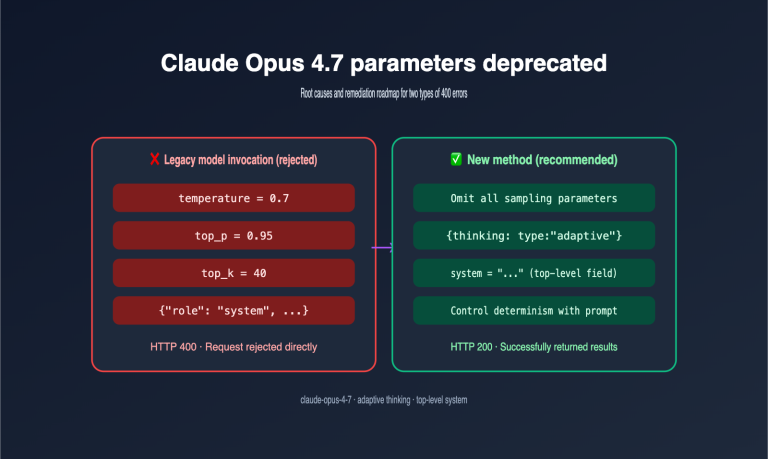
3. Extended Thinking Deprecated
# ❌ No longer supported in Opus 4.6
thinking={"type": "enabled", "budget_tokens": 10000}

# ✅ Migrate to Adaptive Thinking
thinking={"type": "adaptive", "effort": "high"}
⚠️ Migration Tip: Validate in a test environment before upgrading, especially for apps using the prefill feature. We recommend using APIYI (apiyi.com) to access both API versions simultaneously for A/B testing before making the final switch.
Claude Opus 4.6 vs 4.5 User Feedback
What Users Love
- Significant improvements in coding and reasoning tasks, especially complex multi-step ones.
- Noticeably stronger autonomous execution in Agent mode.
- Long context processing no longer loses key information.
User Complaints
Some users have reported a dip in text writing quality with Opus 4.6:
- Users on Reddit have mentioned that creative writing fluency and stylistic variety aren't quite as good as 4.5.
- Coherence in long-form generation has dropped in certain scenarios.
- This might be related to the architectural shifts in Adaptive Thinking.
Advice: If your core use case is creative writing, you might want to keep Opus 4.5 as a backup and switch between them depending on the task.
Claude Opus 4.6 vs 4.5 Pricing and API Usage
Pricing Plans (Prices Remain Unchanged)
| Pricing Tier | Input Price | Output Price | Conditions |
|---|---|---|---|
| Standard Pricing | $5 / MTok | $25 / MTok | ≤200K Context |
| Premium Pricing | $10 / MTok | $37.50 / MTok | >200K Context (beta) |
| Batch API | $2.50 / MTok | $12.50 / MTok | Asynchronous batch requests |
API Call Comparison
import openai

# Call via APIYI unified interface (Recommended)
client = openai.OpenAI(
    api_key="YOUR_API_KEY",
    base_url="https://vip.apiyi.com/v1"
)

# Call Opus 4.6
response_46 = client.chat.completions.create(
    model="claude-opus-4-6",
    messages=[{"role": "user", "content": "Hello"}]
)

# Call Opus 4.5 (Comparative Testing)
response_45 = client.chat.completions.create(
    model="claude-opus-4-5-20250924",
    messages=[{"role": "user", "content": "Hello"}]
)
Pro Tip: Get free test credits via APIYI (apiyi.com). The platform supports both Opus 4.5 and 4.6, making it easy to compare the two versions in real-world scenarios.
Claude Opus 4.6 vs 4.5: Upgrade Decision Guide
When to Upgrade Immediately
- Complex Reasoning Tasks: With a 31.2pp jump in ARC AGI 2, the reasoning capability has seen a qualitative leap.
- Large-scale Codebase Analysis: The 1M context + 128K output offers a massive leap in experience for long-code projects.
- Multi-agent Workflows: Agent Teams is a brand-new capability that 4.5 simply doesn't have.
- Web Information Retrieval: BrowseComp has improved by 16.2pp.
When to Hold Off on Upgrading
- Creative Writing Focus: Some users have reported that writing quality might have actually taken a step back.
- Heavy Reliance on Prefill: You'll need to refactor your code to remove prefill logic first.
- Intensive MCP Tool Usage: MCP Atlas scores dropped by 2.8pp, so these scenarios require careful testing and verification.
Recommended Migration Strategy
- Parallel Versioning: Access both 4.5 and 4.6 on the APIYI platform and route requests based on the specific task type.
- Gradual Rollout: Start by using 4.6 for non-critical business tasks to verify its stability.
- Regression Testing: Focus your checks on prefill,
tool_useparameter parsing, and code related to Extended Thinking.
FAQ
Q1: Are Claude Opus 4.6 and 4.5 priced the same?
Yes, the standard pricing is exactly the same: $5 for input / $25 for output per million tokens. Extended context (>200K) uses premium pricing: $10 for input / $37.50 for output. While the price remains unchanged, the capabilities have seen a massive boost, significantly improving the value for your money.
Q2: Do I need to change my code to upgrade from Opus 4.5 to 4.6?
If you're using prefill, Extended Thinking, or specific tool_use parameter formats, you'll need to update your code. For simple chat calls, you just need to change the model parameter to claude-opus-4-6. We recommend testing and verifying this first on the APIYI (apiyi.com) platform.
Q3: How can I test both versions side-by-side?
We recommend using an API aggregation platform that supports multiple models:
- Visit APIYI (apiyi.com) and register an account.
- Get your API Key and free credits.
- Switch between
claude-opus-4-6andclaude-opus-4-5-20250924by changing the model parameter. - Compare the output quality of both versions using the same input.
Summary
The core differences between Claude Opus 4.6 and 4.5:
- Reasoning Leap: ARC AGI 2 jumped from 37.6% to 68.8%—an incredible improvement.
- Architecture Upgrade: 1M context, 128K output, Adaptive Thinking, and Agent Teams.
- Backward Compatibility Notes: The removal of Prefill and the deprecation of Extended Thinking are the biggest hurdles for migration.
- Writing Scenarios: Some users have reported that creative writing quality might have taken a slight step back.
For coding, reasoning, and agentic workflows, Opus 4.6 is the clear choice for an upgrade. For creative writing, it's a good idea to keep both versions running in parallel for now.
We recommend using APIYI (apiyi.com) to quickly verify the real-world performance of both versions, as the platform offers free credits and easy switching between the two.
📚 References
⚠️ Link Format Note: All external links use the
Resource Name: domain.comformat. This makes them easy to copy but prevents clickable jumps to avoid SEO weight loss.
-
Anthropic Official Announcement: Claude Opus 4.6 Release Notes
- Link:
anthropic.com/news/claude-opus-4-6 - Description: Official benchmark data and feature introduction
- Link:
-
Anthropic API Documentation: Claude API Migration Guide
- Link:
docs.anthropic.com/en/docs/about-claude/models - Description: Detailed documentation on model parameters, pricing, and API interfaces
- Link:
-
Vellum AI Model Comparison: Claude Opus 4.6 vs 4.5 Independent Review
- Link:
vellum.ai/changelog/claude-opus-4-6 - Description: Third-party independent benchmark comparisons and analysis
- Link:
Author: APIYI Team
Technical Discussion: Feel free to discuss your experience with Claude Opus 4.6 vs 4.5 in the comments. For more resources, visit the APIYI apiyi.com technical community.