
Skip to content
Apiyi.com Blog

Apiyi.com Blog

Best AI API Router Services

  • Nano Banana Pro🔥
  • Free AI Imagen
  • DocsExpand
    • ChangeLog
    • Models
    • Scenarios
  • APIYI DashboardExpand
    • Logs
    • KEY(Token)
    • Recharge
    • Back APIYI Home
    • Register APIYI
Apiyi.com Blog
Apiyi.com Blog
Best AI API Router Services
  • DeepSeek Servers Busy? 5 Steps for Everyday Users to Identify the Cause and 4 Temporary Workarounds
    AI Model Troubleshooting | AI Tidbits

    DeepSeek Servers Busy? 5 Steps for Everyday Users to Identify the Cause and 4 Temporary Workarounds

    ByShark 2026年 11月 4日

    Author’s note: This article is for everyday DeepSeek users. It explains how to find the source of a “server busy” error and what temporary alternatives are available. On the afternoon of November 3, 2026, several users posted in quick succession on the tech community V2EX. Their titles were blunt: “DeepSeek is down” and “Is DeepSeek…


    Read More DeepSeek Servers Busy? 5 Steps for Everyday Users to Identify the Cause and 4 Temporary WorkaroundsContinue

  • Code-Generated Video vs. Pixel-Generated Video: 4 Questions to Decide When AI Should Write the Code
    AI Agents | AI Tools | Video AI API

    Code-Generated Video vs. Pixel-Generated Video: 4 Questions to Decide When AI Should Write the Code

    ByShark 2026年 11月 4日

    Author’s note: Starting with the f(t) rendering principle and the SenseNova 6.8 Code2Video case, this article uses four questions to help you choose between code-based and pixel-based video generation. If you create science explainers, formula walkthroughs, or data animations, you’ve probably run into the same problem: the visuals look good, but the text is wrong…

    Read More Code-Generated Video vs. Pixel-Generated Video: 4 Questions to Decide When AI Should Write the CodeContinue

  • Get Agents to Generate Interactive Charts: Flint-interactive’s Semantic Event Approach and 3 Integration Paths
    AI Tools | API Code Examples | API Use Cases

    Get Agents to Generate Interactive Charts: Flint-interactive’s Semantic Event Approach and 3 Integration Paths

    ByShark 2026年 11月 4日

    Author’s note: This article breaks down how Flint-interactive uses “semantic events + update operations” to reduce the cost and error rate of agent-generated interactive charts, and explores three integration paths. If you’re building an AI agent for data analysis or reporting, you’ve probably run into this: an agent can quickly create a static chart, but…

    Read More Get Agents to Generate Interactive Charts: Flint-interactive’s Semantic Event Approach and 3 Integration PathsContinue

  • Understanding and Verifying Large Language Model API Bills: 5 Types of Charges and a 4-Step Reconciliation Method
    AI Memberships | AI Model Pricing

    Understanding and Verifying Large Language Model API Bills: 5 Types of Charges and a 4-Step Reconciliation Method

    ByShark 2026年 11月 4日

    Author’s note: This article breaks down input, output, cache, and reasoning tokens, along with multimodal billing, in Large Language Model API bills. It also covers practical ways to reconcile usage against request logs, investigate sudden cost changes, and respond to pricing updates. You open your bill at the end of the month and notice that…

    Read More Understanding and Verifying Large Language Model API Bills: 5 Types of Charges and a 4-Step Reconciliation MethodContinue

  • LLM Findings Become Outdated After 15.7 Months on Average: Why You Should Retest Each Model Version (5-Step Retesting Checklist)
    API Best Practices | APIYI Tips & Tricks

    LLM Findings Become Outdated After 15.7 Months on Average: Why You Should Retest Each Model Version (5-Step Retesting Checklist)

    ByShark 2026年 11月 4日

    Author’s note: Stanford researchers found that 44% of widely cited LLM findings are outdated. Among findings with an estimated expiration date, the average lifespan was just 15.7 months. This article turns the research into a model-selection retesting checklist development teams can use. “This model can’t count the r’s in strawberry.” “Information in the middle of…

    Read More LLM Findings Become Outdated After 15.7 Months on Average: Why You Should Retest Each Model Version (5-Step Retesting Checklist)Continue

  • How to Troubleshoot Model API Call Errors: 6 Steps to Identify Whether the Problem Is on Your End, the Gateway, or the Upstream Model
    API Best Practices | APIYI Tips & Tricks

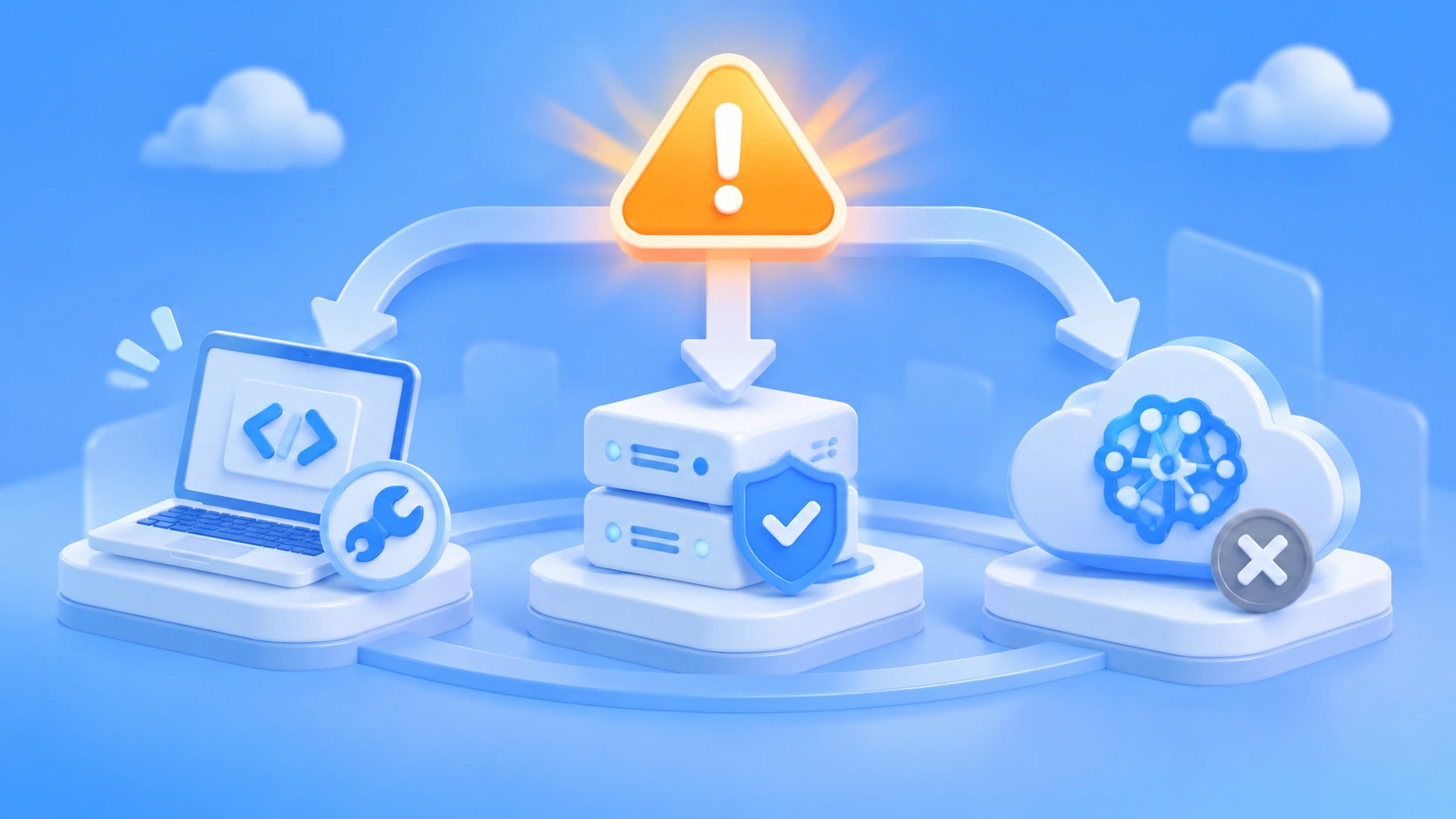
    How to Troubleshoot Model API Call Errors: 6 Steps to Identify Whether the Problem Is on Your End, the Gateway, or the Upstream Model

    ByShark 2026年 11月 4日

    Author’s note: A troubleshooting guide for developers working with model APIs in production. Using a three-layer framework—your own request, the gateway platform, and the upstream model—it explains how to pinpoint failures with error codes, logs, and a minimal curl reproduction, and what information to include in a support request. An alert goes off in the…

    Read More How to Troubleshoot Model API Call Errors: 6 Steps to Identify Whether the Problem Is on Your End, the Gateway, or the Upstream ModelContinue

  • Lower Model Pricing Doesn’t Mean a Lower Bill: A 5-Step Method for Estimating Real Costs Using Token Consumption and Caching
    API Best Practices | APIYI Tips & Tricks

    Lower Model Pricing Doesn’t Mean a Lower Bill: A 5-Step Method for Estimating Real Costs Using Token Consumption and Caching

    ByShark 2026年 11月 4日

    Author’s note: When comparing model costs, looking only at the price per million tokens can lead you to the wrong choice. This article explains how to calculate cost using “unit price × actual token consumption” and walks you through testing models on a small sample of your own tasks. When choosing a model, many teams…

    Read More Lower Model Pricing Doesn’t Mean a Lower Bill: A 5-Step Method for Estimating Real Costs Using Token Consumption and CachingContinue

  • Non-Developers Building Data Processing Workflows with Codex: 5 Principles for Dividing Responsibilities to Preserve Methodological Ownership and Human Verification
    AI Tools | APIYI Tips & Tricks

    Non-Developers Building Data Processing Workflows with Codex: 5 Principles for Dividing Responsibilities to Preserve Methodological Ownership and Human Verification

    ByShark 2026年 11月 4日

    Author’s note: Using Heimstaden’s environmental risk assessment project as an example, this article breaks down how non-developers can work with Codex on data discovery, cleaning, and workflow building—and why ownership of the methodology and human validation must remain with domain experts. Many business analysts know their industry but don’t write code. When a project involves…

    Read More Non-Developers Building Data Processing Workflows with Codex: 5 Principles for Dividing Responsibilities to Preserve Methodological Ownership and Human VerificationContinue

  • Permission Approvals for Parallel AI Coding Agents: 5 Steps to Avoid Fragmentation Without Losing Control
    AI Tools | API Best Practices | APIYI Tips & Tricks

    Permission Approvals for Parallel AI Coding Agents: 5 Steps to Avoid Fragmentation Without Losing Control

    ByShark 2026年 11月 4日

    Author’s note: When multiple AI coding agents work in parallel, how can you reduce the window switching caused by permission approvals without loosening control over file writes and command execution? This article offers a framework for making those decisions at the workflow level. If you regularly run two or three Claude Code sessions alongside a…

    Read More Permission Approvals for Parallel AI Coding Agents: 5 Steps to Avoid Fragmentation Without Losing ControlContinue

  • Before Generating Dance Videos from Photos: 5 Checks on Output Limitations, Billing, and Source Material Rights
    AI Tools | Video AI API

    Before Generating Dance Videos from Photos: 5 Checks on Output Limitations, Billing, and Source Material Rights

    ByShark 2026年 11月 4日

    Author’s note: Using a photo-to-dance-video tool’s own product description, publicly released on November 3, 2026, as an example, we’ll break down what these tools can and can’t do, how they charge, and what rights you need for your materials—so you can set realistic expectations before your first generation. Turning a photo of your cat, dog,…

    Read More Before Generating Dance Videos from Photos: 5 Checks on Output Limitations, Billing, and Source Material RightsContinue

Page navigation

Previous PagePrevious 1 … 16 17 18 19 20 … 93 Next PageNext

© 2026 Apiyi.com Blog - WordPress Theme by Kadence WP

Scroll to top
  • Nano Banana Pro🔥
  • Free AI Imagen
  • Docs
    • ChangeLog
    • Models
    • Scenarios
  • APIYI Dashboard
    • Logs
    • KEY(Token)
    • Recharge
    • Back APIYI Home
    • Register APIYI
  • 简体中文 (Chinese (Simplified))
  • 繁體中文 (Chinese (Traditional))
  • English
  • Русский (Russian)
  • 日本語 (Japanese)
  • 한국어 (Korean)
  • العربية (Arabic)
  • Français (French)
  • Deutsch (German)
  • Indonesia (Indonesian)
  • Português (Portuguese (Portugal))
  • Español (Spanish)