Author’s note: This article reads the published numbers for Gemini 4 Neon and Claude Opus 5.5 along two separate tracks — coding and knowledge work — and flags each figure’s source: official self-report, model card, Artificial Analysis model page, Artificial Analysis article, APIYI summary table, or pricing endpoint.
If your workflow already uses Claude Opus 5.5, Gemini 4 Neon, released on 2026-11-18, raises a straightforward question: which model posts higher numbers on the same project, and whether those numbers are measured with the same yardstick. Google’s blog, the DeepMind model card, and Artificial Analysis all published numbers on launch day, but they use different measurement definitions, tiers, and test frameworks.
The data in this article was verified on 2026-11-19. All figures come from public sources, and each one is labeled with its source. We read coding and knowledge work as two separate tracks and cover model cards and Artificial Analysis in two sections. Which model is a better fit for you depends on which rows you care about.
Key takeaways: After reading this, you’ll know how to read the three-column table in the Gemini 4 Neon model card, what the intelligence score, cost per task, latency, and output speed on Artificial Analysis each represent, and how to look up Claude Opus 5.5’s model name and listed price on APIYI.
Gemini 4 Neon and Claude Opus 5.5: Key Points
Start with a quick-reference table. Each row notes the tier and the source, and the two numbers in the same row aren’t necessarily measured under identical conditions.
| Dimension | Gemini 4 Neon | Claude Opus 5.5 | Source |
|---|---|---|---|
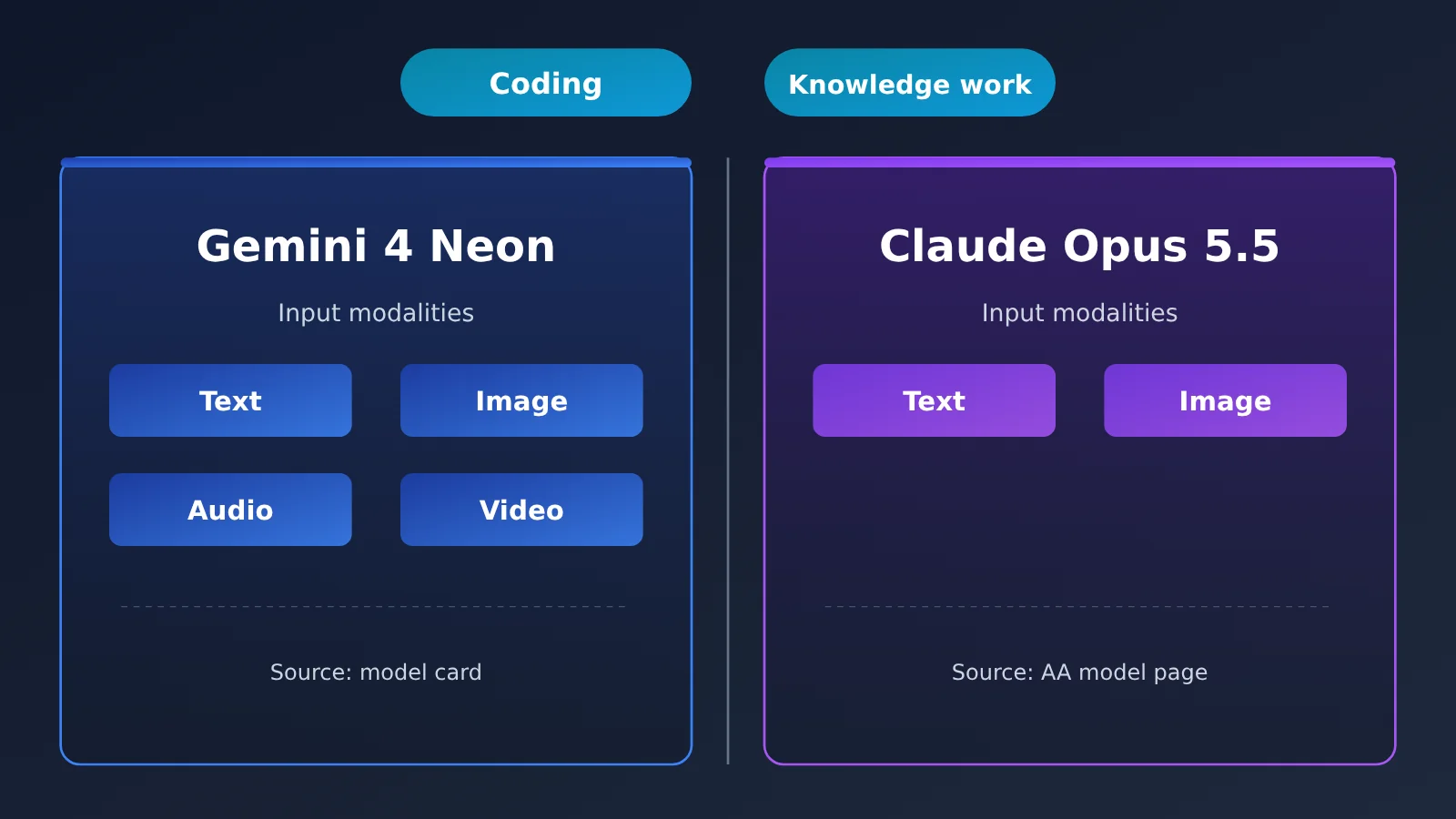
| Input modalities | Text, image, audio, video | Text, image | Model card / Artificial Analysis model page |
| Intelligence score (index v5.0.1) | 61 (xhigh) | 59 (max) | Artificial Analysis model page |
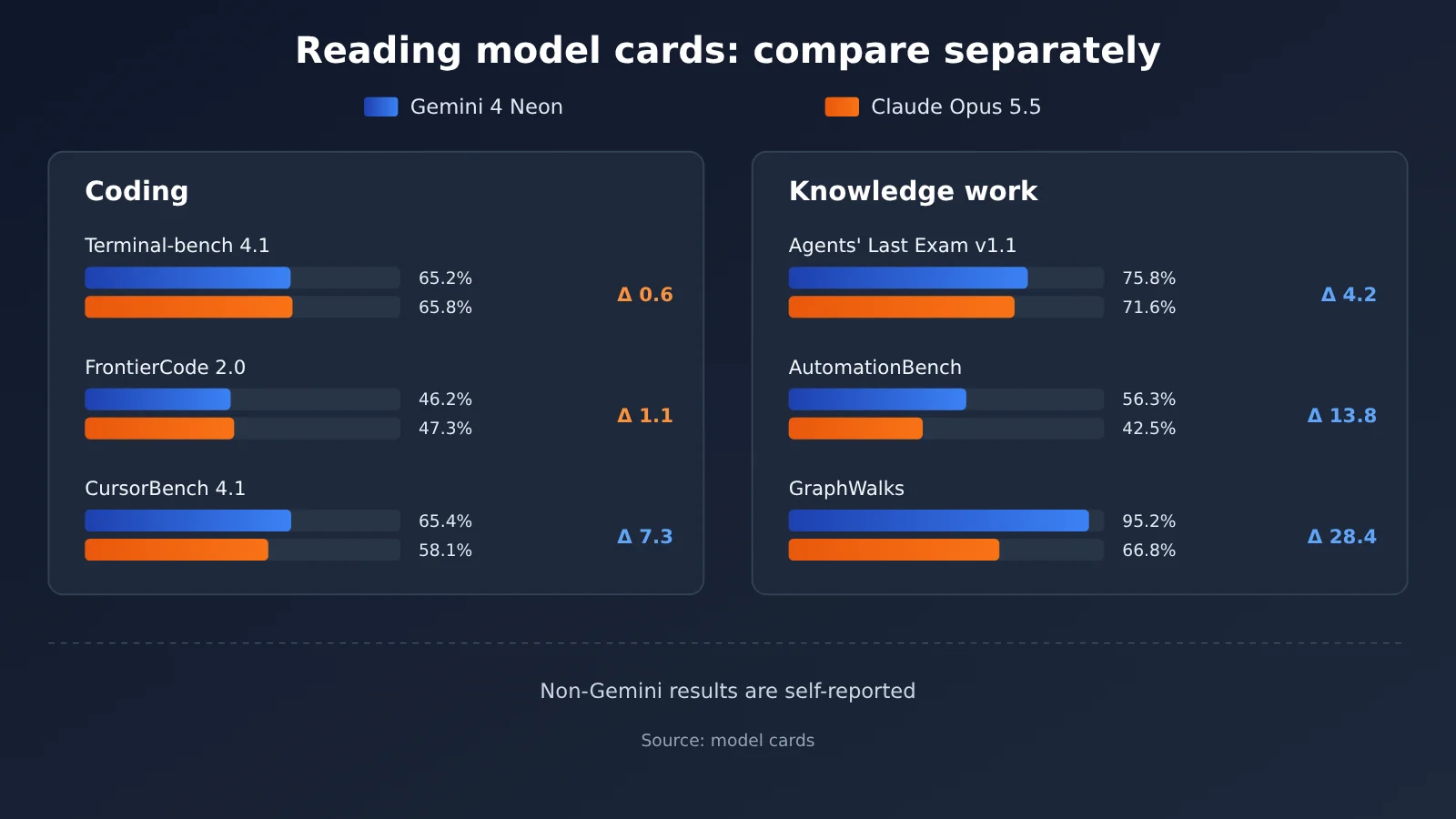
| Terminal-bench 4.1 (cheat-adjusted) | 65.2% | 65.8% | Model card (non-Gemini results are self-reported by each vendor) |
| FrontierCode 2.0 | 46.2% (default high) | 47.3% | Model card |
| Cost per task | $6.44 | $10.04 | Artificial Analysis model page |
| Output speed | 110 tokens/sec | 118 tokens/sec | Artificial Analysis model page |
| List price (input / output, per million tokens) | $3 / $15 | $4 / $20 | Google AI Studio pricing page / Artificial Analysis model page |
Where Gemini 4 Neon and Claude Opus 5.5 Land on the Numbers
Each side wins some rows in this table. Gemini 4 Neon is higher on most of the sub-scores in the model cards and on the Artificial Analysis intelligence score (61 vs. 59). Claude Opus 5.5 is higher on Terminal-bench 4.1 (65.8% vs. 65.2%), FrontierCode 2.0 (47.3% vs. 46.2%), and output speed (118 vs. 110 tokens/sec).
Input modalities deserve a separate note. According to the model card, Gemini 4 Neon accepts text, image, audio, and video as input. Per the Artificial Analysis model page, Claude Opus 5.5 takes text and image. If your task involves processing audio or video directly, this item will decide your choice. If the task only involves text and screenshots, this item makes no difference.
Gemini 4 Neon vs. Claude Opus 5.5: How to Read the Three-Column Model Card Table
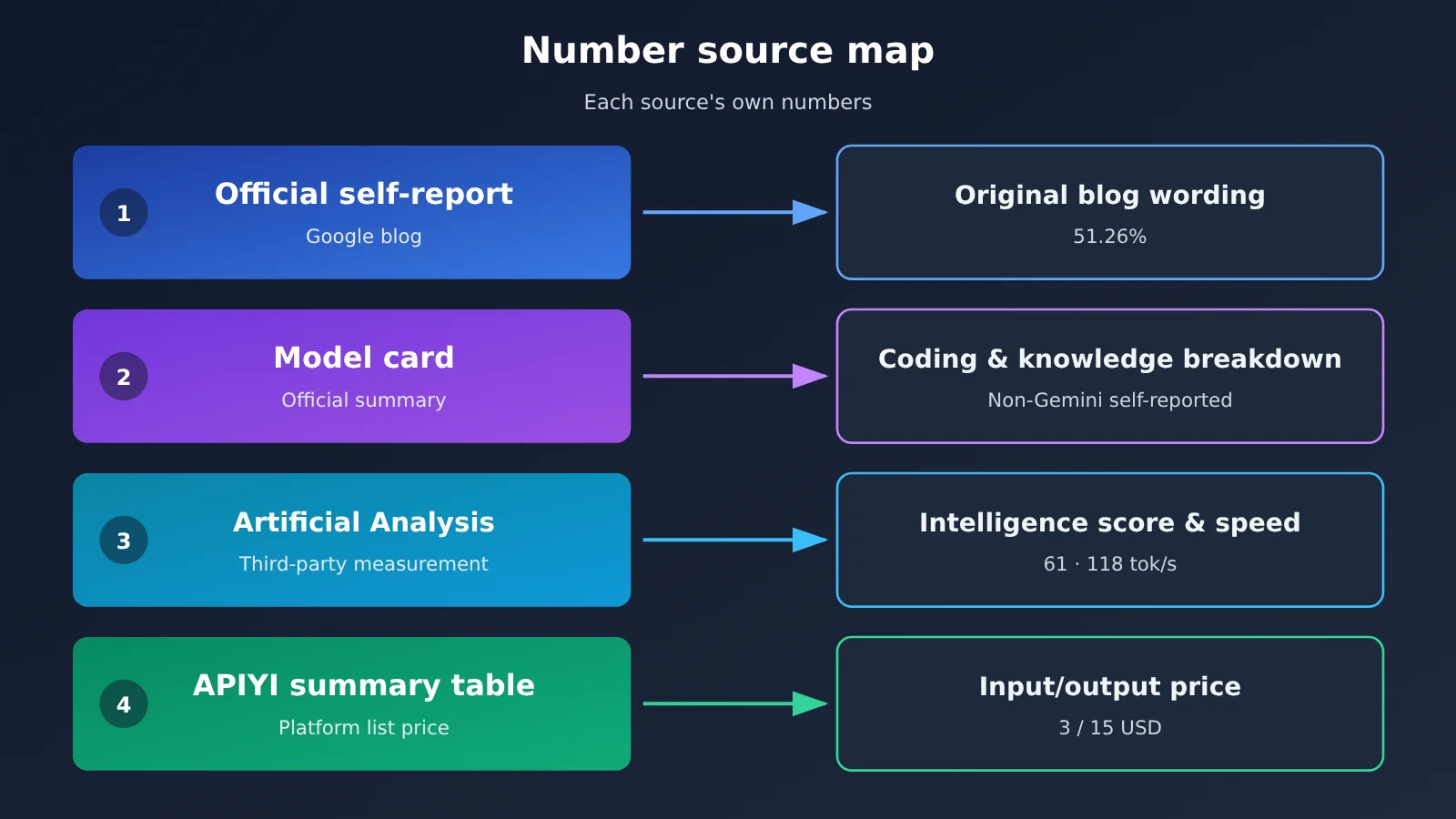
The DeepMind model card comparison table has only three columns: Gemini 4 Neon, Claude Opus 5.5, and GPT-6.2 Sol. This article only reads the first two. The evaluation notes PDF states outright that non-Gemini results come from each vendor’s own reporting by default. So this table is an official aggregation — the columns were not re-run by the same lab on the same day, which means every cell should be read as a public claim.
Gemini 4 Neon vs. Claude Opus 5.5: Coding Sub-scores
Below are the rows in the model card that relate to coding and secure programming.
| Sub-score (model card) | Gemini 4 Neon | Claude Opus 5.5 | Higher |
|---|---|---|---|
| CursorBench 4.1 | 65.4% | 58.1% | Neon |
| Terminal-bench 4.1 (cheating-adjusted accuracy) | 65.2% | 65.8% | Opus |
| FrontierCode 2.0 | 46.2% (default high) | 47.3% | Opus |
| SWE-sweep vendor harness | 39.0% | 10.1% | Neon |
| SWE-sweep mini-SWE harness | 12.8% | 3.6% | Neon |
| CWE-Bench v2 | 70.7% | 67.1% | Neon |
| WebExploitBench v1.2 | 51.3% | 37.1% | Neon |
There are three things to keep in mind when reading this table.
- The two sub-scores where Opus leads are both in mainstream coding. Terminal-bench 4.1 and FrontierCode 2.0 both measure terminal operations and code tasks, and the gaps are 0.6 and 1.1 percentage points respectively. Neon’s FrontierCode result is labeled as the default high setting.
- The two SWE-sweep rows use two different harnesses. Neon scores 39.0% in Google Antigravity and 12.8% in the mini-SWE harness. The Google blog attributes this gap to what the harness unlocks, so it shouldn’t be read as the model itself being three times better. When comparing the two models, compare them under the same harness — that is, 39.0% vs. 10.1%, or 12.8% vs. 3.6%.
- The same number is written differently across sources. WebExploitBench is 51.3% in the model card and 51.26% in the Google blog. Both are reproduced here as written, without picking one over the other.
Gemini 4 Neon vs. Claude Opus 5.5: Knowledge and Science Sub-Benchmarks
There are more sub-benchmarks for knowledge work, scientific reasoning, and long context — and Neon is higher on most of them.
| Sub-benchmark (model card) | Gemini 4 Neon | Claude Opus 5.5 |
|---|---|---|
| AA Index v5.0.1 | 61 | 59 |
| Vals Index v2.2 | 70.9% | 70.1% |
| AutomationBench | 56.3% | 42.5% |
| Agents’ Last Exam v1.1 | 75.8% | 71.6% |
| RiemannBench | 84.0% | 80.0% |
| Terminal-Bench-Science 0.1 | 70.5% | 63.3% |
| HLE-Diamond | 71.3% | 67.9% |
| MKA Climb WSR | 56.5% | 53.0% |
| Chartography | 73.5% | 66.3% |
| LVBench | 89.0% | 83.7% |
| GraphWalks (256k to 1M, BFS F1) | 95.2% | 66.8% |
The gap varies from row to row. Vals Index differs by just 0.8 points, while GraphWalks differs by 28.4 points — that one measures graph traversal over ultra-long contexts from 256k to 1M tokens. If your knowledge work involves retrieving and reasoning across long documents, the GraphWalks row is the one to watch. If it’s business automation, AutomationBench’s 56.3% vs. 42.5% is closer to your use case.
The Google blog also lists some rankings on a self-reported basis — for example, #1 on Legal Research Bench and Tax Agent Bench, plus mostly #1 on Surge for finance, accounting, and spreadsheet modeling. The blog doesn’t give percentages for these items, nor does it list the corresponding Opus numbers, so these rankings can’t go straight into a two-model comparison table.
Gemini 4 Neon vs Claude Opus 5.5: How to Read the Four Numbers from Artificial Analysis
Artificial Analysis is a third-party measurement, so it belongs to a different system than model cards. Its model page gives an intelligence score, cost per task, time per task, and output speed for each reasoning-effort tier. The headline comparison in this section is Neon xhigh vs Opus max — the top tier each vendor lists on its model page — but the two tiers aren’t equivalent.
| Metric (Artificial Analysis model page, v5.0.1) | Gemini 4 Neon (xhigh) | Claude Opus 5.5 (max) |
|---|---|---|
| Intelligence score | 61 | 59 |
| Cost per task | $6.44 | $10.04 |
| Time per task | 21.5 minutes | 24.5 minutes |
| Output speed | 110 tokens/sec | 118 tokens/sec |
| First answer token | 56.51 sec | 335.85 sec |
| Index-run output tokens | 283 million | 218 million |
| List price (input / output) | $3.00 / $15.00 | $4.00 / $20.00 |
| Blended price | $2.21 | $2.94 |
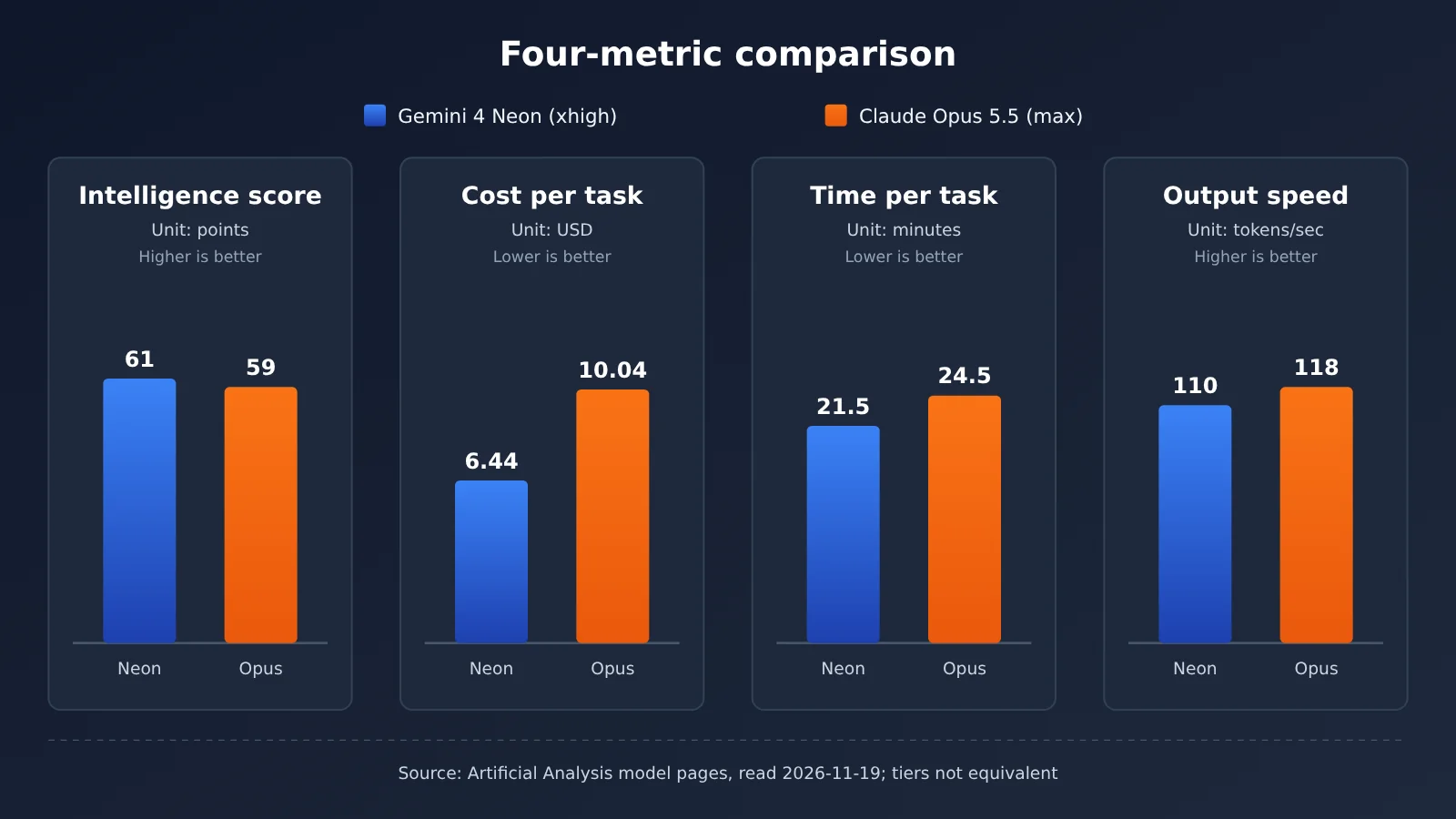
📊 Chart note: The numbers above come from the Artificial Analysis model page and reflect the accounting from a third-party index run. When you call Claude Opus 5.5 on APIYI apiyi.com, go by the platform’s model list and list prices.
Cost per task: the leaderboard’s ledger
The $6.44 vs $10.04 per-task cost is what Artificial Analysis calculated after running its index. It’s a figure on the leaderboard, not your bill at APIYI. This number depends on both unit price and usage. According to the model page, Neon generated 283 million tokens during the index run—more than Opus’s 218 million—but its unit price is $3/$15, while Opus is $4/$20. Your actual cost depends on the input length, output length, and cache hit rate of your own tasks.
Latency, output speed, and time to first token
Opus has the higher output speed: 118 vs 110 tokens/sec. Yet per-task latency is shorter for Neon: 21.5 vs 24.5 minutes. The two sets of numbers aren’t contradictory, since latency also includes the wait for the first token and the total output volume. According to the model page, Opus max takes 335.85 seconds to produce its first answer token, while Neon xhigh takes 56.51 seconds. In interactive settings, time to first token affects how it feels more than throughput does.
Same-Tier Comparison and Coding Scores
If you drop down a tier, the numbers on the model page change too. Neon high comes in at 60 points, 14.8 minutes, and 101 tokens/sec; Opus xhigh is 57 points, 16.1 minutes, and 107 tokens/sec; Opus high is 52 points, 9.3 minutes, and 108 tokens/sec. For Neon’s high, medium, and low tiers, time to first token is 40.64 seconds, 20.14 seconds, and 13.93 seconds, respectively. These figures come from the model page FAQ and aren’t in the same column as the summary table above.
On coding, the Artificial Analysis article provides a Coding Agent Index: Neon xhigh scores 59 on Antigravity CLI, while Opus 5.5 max scores 58 on Claude Code — the two run in different CLIs. Google’s blog lists 58.6, which is the official self-reported figure and is distinct from the 59 in the article. The same article also gives per-task coding cost: $6.86 for Neon and $12.61 for Opus 5.5 max.
Gemini 4 Neon vs. Claude Opus 5.5: Use-Case Recommendations
The following judgments are based on the numbers above. They’re recommendations, not facts. Please check them against your own task samples.
When to Lean Toward Gemini 4 Neon
- Audio and video as direct input: Per the model card, Neon supports audio and video, while Opus takes text and images as input.
- Retrieval and reasoning over ultra-long contexts: 95.2% vs. 66.8% on GraphWalks; Neon’s unified window supports up to 1048576 tokens (Google Cloud developer guide).
- Business automation and knowledge-work agents: 56.3% vs. 42.5% on AutomationBench, and 75.8% vs. 71.6% on Agents’ Last Exam v1.1 (model card).
- Interactions sensitive to first-token latency: Per the Artificial Analysis model page, Neon xhigh has a first-token latency of 56.51 seconds, while Opus max is 335.85 seconds.
When to Keep Using Claude Opus 5.5
- Terminal-operation coding: 65.8% vs. 65.2% on Terminal-bench 4.1 (model card).
- FrontierCode-style coding tasks: 47.3% vs. 46.2% (model card; Neon at default high tier).
- Long-output throughput: output speed of 118 vs. 110 tokens/sec (Artificial Analysis model page).
- Workflows already deeply tied to Claude Code or the messages endpoint: migration costs themselves should be factored in.
How to Call Claude Opus 5.5 on APIYI and Verify Gemini 4 Neon Status
Claude Opus 5.5 Model IDs and Pricing on APIYI
If you’re already using Opus, you can check the model IDs and prices on APIYI (apiyi.com) with the same API key. The APIYI master table at docs.apiyi.com/models.md shows a last-updated timestamp of 2026-11-16 09:39 (UTC+8). The pricing endpoint api.apiyi.com/api/pricing was read on 2026-11-19, reports version shell-api-modelmak-v1, and lists 285 models in total.
| Model ID | Input / cache read / output (USD per million tokens) | Endpoint | Group (APIYI master table) | Group id (pricing endpoint) |
|---|---|---|---|---|
claude-opus-5-5 |
4 / 0.2 / 20 | chat, messages | ClaudeCode, Claude_Reverse, Claude_Enterprise, Default, SVIP | ClaudeCode, ClaudeCodeReverse, ClaudeOfficial, default, svip |
claude-opus-5-5-thinking |
4 / 0.2 / 20 | chat, messages | Same as above | Same as above |
gemini-4-neon |
Not listed yet | — | — | — |
The two sets of group names don’t line up exactly, so both are kept in the table. In the pricing endpoint, a model_ratio of 1 corresponds to $2 input per million tokens, and a completion_ratio of 5 means output costs 5x the input price — matching the first tier in the master table. You can use that rule to verify the prices above yourself.
Neither the APIYI master table nor the pricing endpoint includes gemini-4-neon, and there’s no standalone model page for it either. It isn’t listed yet — we’ll get it up as soon as we can; model IDs and prices are subject to the platform’s model list. For reference, the Google AI Studio pricing page lists Neon’s paid rates as $3.00 input, $15.00 output (including thinking tokens), and $0.15 for cache, per million tokens, with no free tier and implicit caching only.
Calling Steps
- Put your key in an environment variable, such as
APIYI_API_KEY, and read it only from the environment in your code — never hard-code it in plaintext. - If you’re using an OpenAI-compatible client, set
base_urltohttps://api.apiyi.com/v1. - Set the
modelfield toclaude-opus-5-5orclaude-opus-5-5-thinking, and choose chat or messages as your endpoint depending on your needs. - Pick a group based on what your use case requires. Group names follow the spelling used in the master table and the pricing endpoint.
- When you run comparison tests after Neon is listed, keep this in mind: the Google Cloud developer guide states that its thinking levels are only low, medium, high, and xhigh, with high as the default. Passing
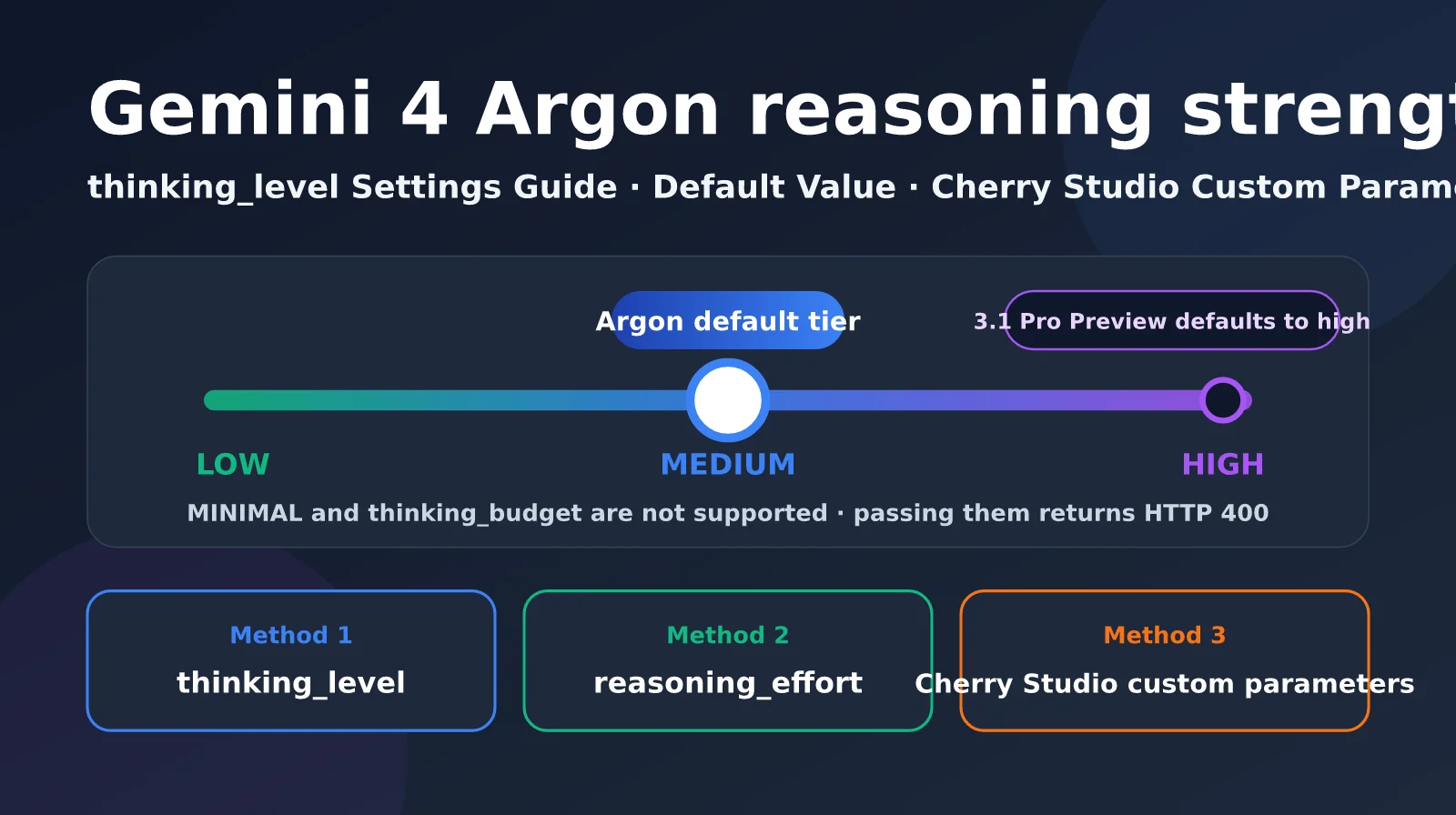
thinking_budgetorMINIMALreturns HTTP400. It doesn’t support explicit context caching, and implicit caching applies automatically to shared prefixes over 4096 tokens.
🚀 Quick start: Start by running a dozen or so of your own real tasks on Opus to establish a baseline, recording output tokens and latency. Once Neon is listed on APIYI apiyi.com, run the same batch of samples at the same thinking level for comparison — that way the numbers you get reflect your own business.
Gemini 4 Neon vs Claude Opus 5.5: Decision Recommendations
💡 Recommendation: If your work is mainly terminal and code tasks, the gaps reported in the model cards and by Artificial Analysis are both small. Opus is slightly ahead on Terminal-bench 4.1 and FrontierCode 2.0, so there’s no obvious reason to switch. If your work leans more toward knowledge organization, long context, and multimodal input, Neon scores higher on most sub-items in the model card, so it’s worth running a side-by-side test as soon as it becomes available. The above is a judgment, not a fact.
On cost, don’t take Artificial Analysis’s $6.44 and $10.04 figures and plug them straight into a budget. And don’t apply the line from Google’s blog—”the default high setting costs 32% less per task than Carbon”—to Opus. That’s Google’s own methodology, and the comparison isn’t against Opus either.
Common Questions (FAQ)
Q1: What’s Gemini 4 Neon’s positioning?
According to Google’s blog (official self-reporting) and the Google Cloud developer guide, Neon sits between Hydrogen (fast everyday execution) and Carbon (complex long-horizon tasks), aimed at high-frequency complex workflows. The model card states it’s adapted from Gemini 4 Carbon, with a knowledge cutoff of March 2026.
Q2: Between Gemini 4 Neon and Claude Opus 5.5, who has the higher coding numbers?
You have to look at it per benchmark. In the model card, Opus is higher on Terminal-bench 4.1 (65.8% vs 65.2%) and FrontierCode 2.0 (47.3% vs 46.2%), while Neon is higher on CursorBench 4.1 and SWE-sweep. The Coding Agent Index in the Artificial Analysis article is 59 vs 58, but the two were run in different CLIs.
Q3: Is the intelligence score comparison of 61 vs 59 made at the same tier?
No. That’s Neon xhigh vs Opus max, taking the highest tier from each model page. If you compare Neon high (60) against Opus xhigh (57), the gap changes. The intelligence score of 61 is consistent across the Google blog, the model card, and Artificial Analysis.
Q4: Can the $6.44 vs $10.04 per-task cost be treated as my bill?
No. That’s the benchmark ledger from when Artificial Analysis ran the index, and it depends on its task set and output token volume. Your actual bill is calculated from your own input, output, and cache usage plus the platform’s list pricing. On APIYI apiyi.com, Opus is listed at $4 input, $0.2 cache read, and $20 output (per million tokens).
Q5: Can I call Gemini 4 Neon on APIYI right now?
Neither the APIYI master table (updated 2026-11-16) nor the pricing endpoint (read 2026-11-19) lists `gemini-4-neon`. It isn’t available yet — we’ll get this model listed as soon as possible; model names and pricing are subject to the platform’s model list. For now you can run baseline samples on apiyi.com with `claude-opus-5-5` to prepare for later comparisons.
Q6: Why does Opus output faster yet take longer per task?
Task duration includes time to first token. According to the Artificial Analysis model pages, Opus max’s first answer token arrives at 335.85 seconds, while Neon xhigh’s is 56.51 seconds. Output speed only reflects throughput after output begins.
Q7: What are the limitations of these comparisons?
Non-Gemini results in the model card come from each vendor’s self-reporting by default. The Coding Agent Index has two versions, 58.6 and 59, and MKA has two versions, 56.5% and 56% — this article keeps both as reported. The 12.8% and 39.0% for SWE-sweep come from two different harnesses. The rankings and safety numbers in the Google blog are official self-reported figures, not third-party re-tests.
Gemini 4 Neon vs Claude Opus 5.5: Key Takeaways
- Each side leads on some numbers: Neon scores higher on most model-card subcategories and on the intelligence score, while Opus is ahead on two coding scores and output speed.
- The model card is an official summary: results for non-Gemini models are self-reported by each vendor, not a same-day retest.
- State the effort tier clearly: the intelligence-score comparison is Neon at xhigh versus Opus at max.
- Cost per task is the leaderboard’s number: $6.44 vs $10.04 — it doesn’t equal your platform bill.
- Modalities differ: Neon accepts audio and video input, while Opus takes text and images.
- How to get started: Opus is already live on APIYI, Neon isn’t listed yet — go by the platform’s model list.
Summary
Comparing Gemini 4 Neon and Claude Opus 5.5 means looking at coding and knowledge work separately:
- Coding line: Opus is slightly ahead on Terminal-bench 4.1 and FrontierCode 2.0, while Neon is higher on CursorBench 4.1 and on SWE-sweep under the same harness.
- Knowledge-work line: Neon is higher on most model-card subcategories, with the gaps in GraphWalks and AutomationBench being the most obvious.
- Artificial Analysis’s four numbers: intelligence score 61 vs 59, cost per task $6.44 vs $10.04, duration 21.5 vs 24.5 minutes, output speed 110 vs 118 tokens/sec — with Neon at xhigh and Opus at max.
A sensible approach: start by building an Opus baseline on your own task samples, then run a like-for-like comparison at the same tier once Neon is listed. You can check the pricing and groups for claude-opus-5-5 and claude-opus-5-5-thinking on APIYI at apiyi.com, and use the same key for your calls and any later switching.
📚 References
-
Sundar Pichai’s announcement post: where Gemini 4 Neon is available
- Link:
x.com/sundarpichai/status/2123167780988125621 - Note: the release scope as officially stated
- Link:
-
Google blog, Introducing Gemini 4 Neon: the benchmarks, pricing, and safety numbers as officially reported
- Link:
blog.google/innovation-and-ai/models-and-research/gemini-models/introducing-gemini-4-neon - Note: Coding Agent Index 58.6, plus the harness notes for SWE-sweep
- Link:
-
DeepMind model card: the three-column comparison table and evaluation notes
- Link:
deepmind.google/models/model-cards/gemini-4-neon/ - Note: non-Gemini results come from each vendor’s own reporting by default
- Link:
-
Google Cloud developer guide: model IDs, thinking tiers, and caching rules
- Link:
docs.cloud.google.com/gemini-enterprise-agent-platform/models/guides/gemini-4-neon - Note: the conditions that trigger an HTTP 400
- Link:
-
Google AI Studio pricing page: Neon’s paid pricing
- Link:
aistudio.google.com/docs/pricing - Note: no free tier; only implicit caching is supported
- Link:
-
Artificial Analysis article: Neon’s intelligence score and cost per coding task
- Link:
artificialanalysis.ai/articles/gemini-4-neon-intelligence-gain - Note: third-party measurement, Coding Agent Index 59
- Link:
-
Artificial Analysis model pages: score breakdowns for Neon vs. Opus 5.5
- Link:
artificialanalysis.ai/models/gemini-4-neon,artificialanalysis.ai/models/claude-opus-5-5 - Note: read on 2026-11-19, index v5.0.1
- Link:
Author: APIYI technical team
Getting in touch: feel free to contact us via the APIYI homepage — model IDs and pricing are available in the documentation center at docs.apiyi.com