Author's Note: A deep dive into Anthropic's latest Claude Cowork release, analyzing its multi-agent architecture, Token consumption mechanisms, and introducing the open-source alternative Open Claude Cowork.
On January 12, 2026, Anthropic launched Claude Cowork, a revolutionary product that upgrades AI from a passive chat assistant to an "autonomous digital colleague." It can independently manage local file systems, orchestrate complex project workflows, and execute multi-step tasks without needing constant prompts from humans.
Core Value: This article will help you understand the real capabilities of Claude Cowork, its Token consumption mechanism, and how to use open-source solutions to lower your costs.
Analyzing Claude Cowork's Core Capabilities
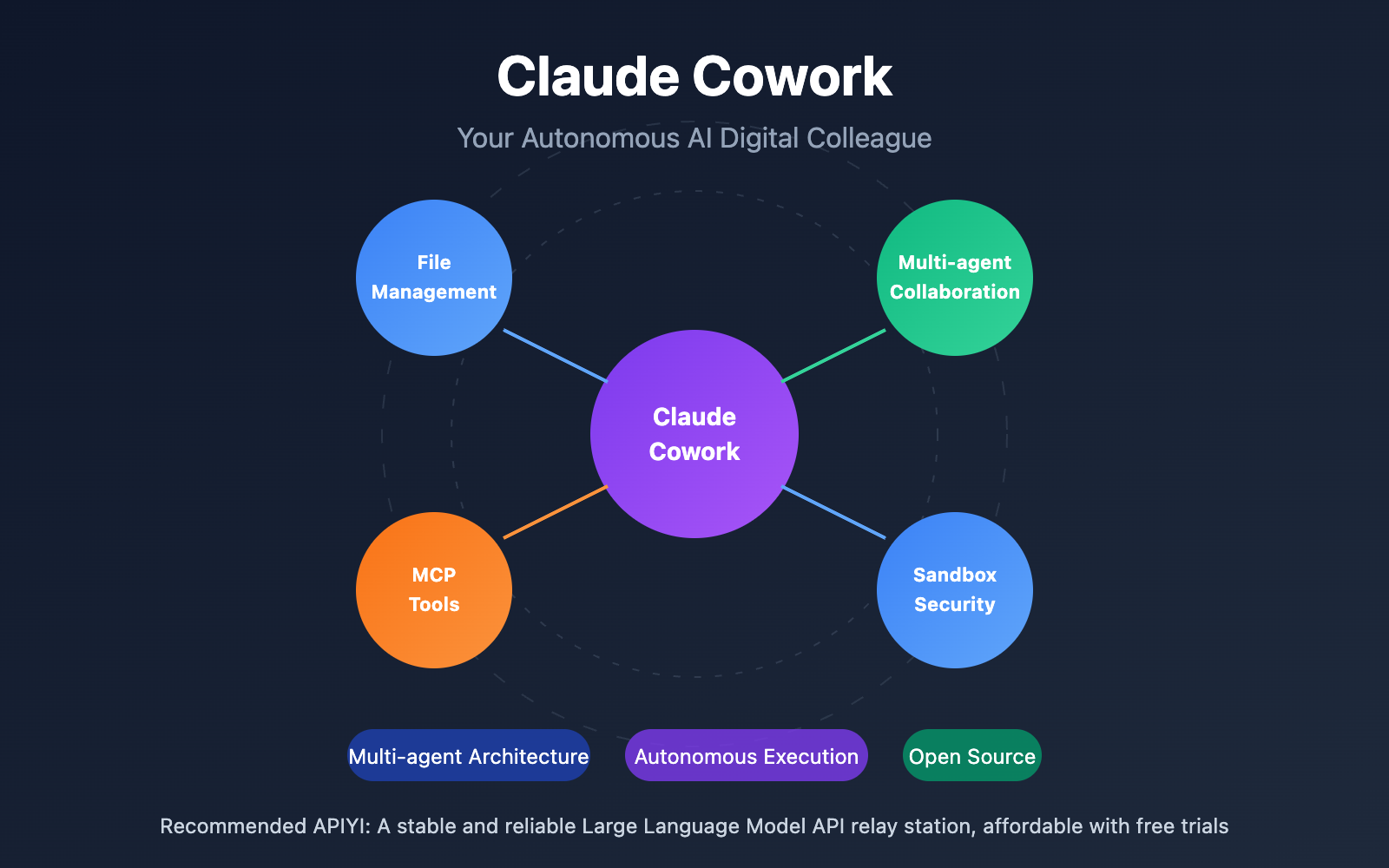
Anthropic has positioned Claude Cowork as "Claude Code for the rest of your work"—a general-purpose agent designed specifically for non-technical folks, allowing regular users to enjoy the same powerful capabilities developers get with Claude Code.
| Core Capability | Description | Actual Value |
|---|---|---|
| Local File System Access | Read, edit, create, and organize files in designated folders | Automated document management and data organization |
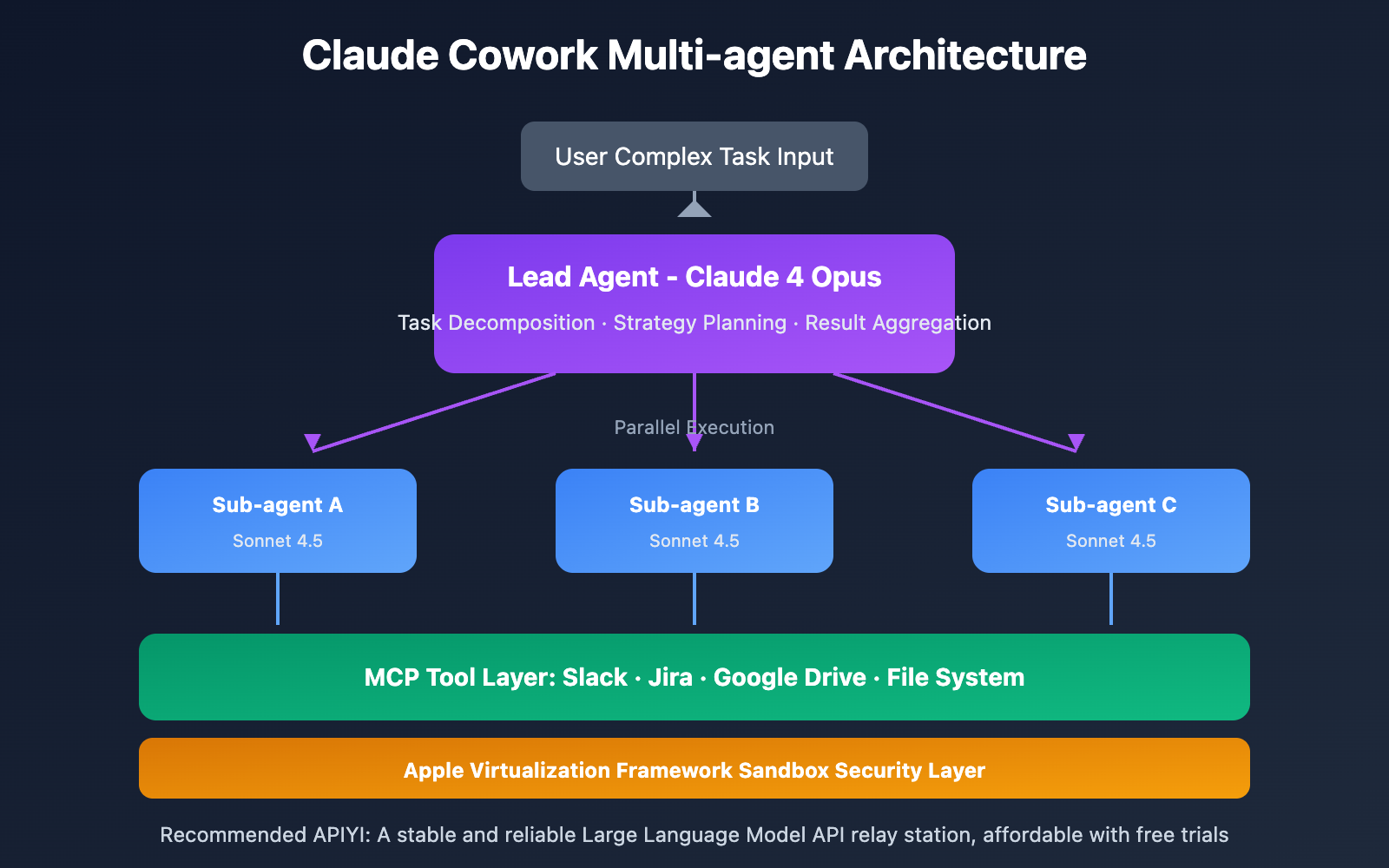
| Multi-agent Collaboration | Opus 4 acts as the lead agent, with Sonnet 4.5 instances working in parallel as sub-agents | Efficient decomposition and execution of complex tasks |
| MCP Tool Integration | Native support for enterprise tools like Slack, Jira, and Google Drive | Seamless connection to existing workflows |
| Sandbox Security | Executes tasks within a virtual machine using the Apple Virtualization Framework | Protects system security and prevents accidental operations |
A Deep Dive into Claude Cowork's Multi-agent Architecture
Claude Cowork uses a recursive multi-agent architecture, which is the secret sauce behind its ability to handle complex tasks. When you assign it a complicated task (for example, "Check these 50 receipts against the department budget and flag any discrepancies"), the system kicks off a process:
- Lead Agent Planning: Claude 4 Opus handles high-level task decomposition and strategy formulation.
- Sub-agent Parallel Execution: Multiple Claude 4.5 Sonnet instances process individual sub-tasks simultaneously.
- Result Aggregation & Self-Correction: The lead agent consolidates the results and triggers retries if something isn't right.
As Simon Willison noted after his first run: Claude Cowork is essentially "Claude Code wrapped in a friendlier interface, paired with a pre-configured file system sandbox." Tech experts who reverse-engineered Claude Code found that under the hood, it uses VZVirtualMachine (part of the Apple Virtualization Framework) to download and boot a custom Linux root file system.
The Truth About Claude Cowork Token Consumption
This is the question developers care about most: just how "token-hungry" is Claude Cowork?
Subscription Plans vs. Quotas
| Subscription Plan | Monthly Fee | Message Quota (5-hour window) | Cowork Actual Availability |
|---|---|---|---|
| Pro | $20/mo | ~45 messages | Limited, easy to hit the ceiling |
| Max 5x | $100/mo | ~225 messages | Medium complexity tasks |
| Max 20x | $200/mo | ~900 messages | Complex workflows |
Key Facts About Token Consumption
According to Anthropic's official documentation and user tests:
- A single Cowork session can consume the equivalent of dozens of regular chat messages.
- Multi-step file operations are major token consumers because every file read/write requires context.
- Parallel sub-agent execution means you're consuming tokens from multiple model instances at the same time.
- Quotas reset every 5 hours, not daily.
🎯 Cost Advice: For high-frequency use cases, calling the API directly might be more economical than a subscription. Using Claude API via platforms like APIYI (apiyi.com) allows you to pay for actual token consumption and avoid wasting subscription quotas.
Open Claude Cowork: A Deep Dive into the Open Source Alternative
If you don't want to shell out $100-$200/month for a Max subscription, the open-source project Open Claude Cowork by ComposioHQ is worth a look.
Core Positioning
Open Claude Cowork is a desktop chat app built on Electron. It integrates the Claude Agent SDK and Composio Tool Router to provide an experience similar to the official Cowork, but with support for more flexible model choices.
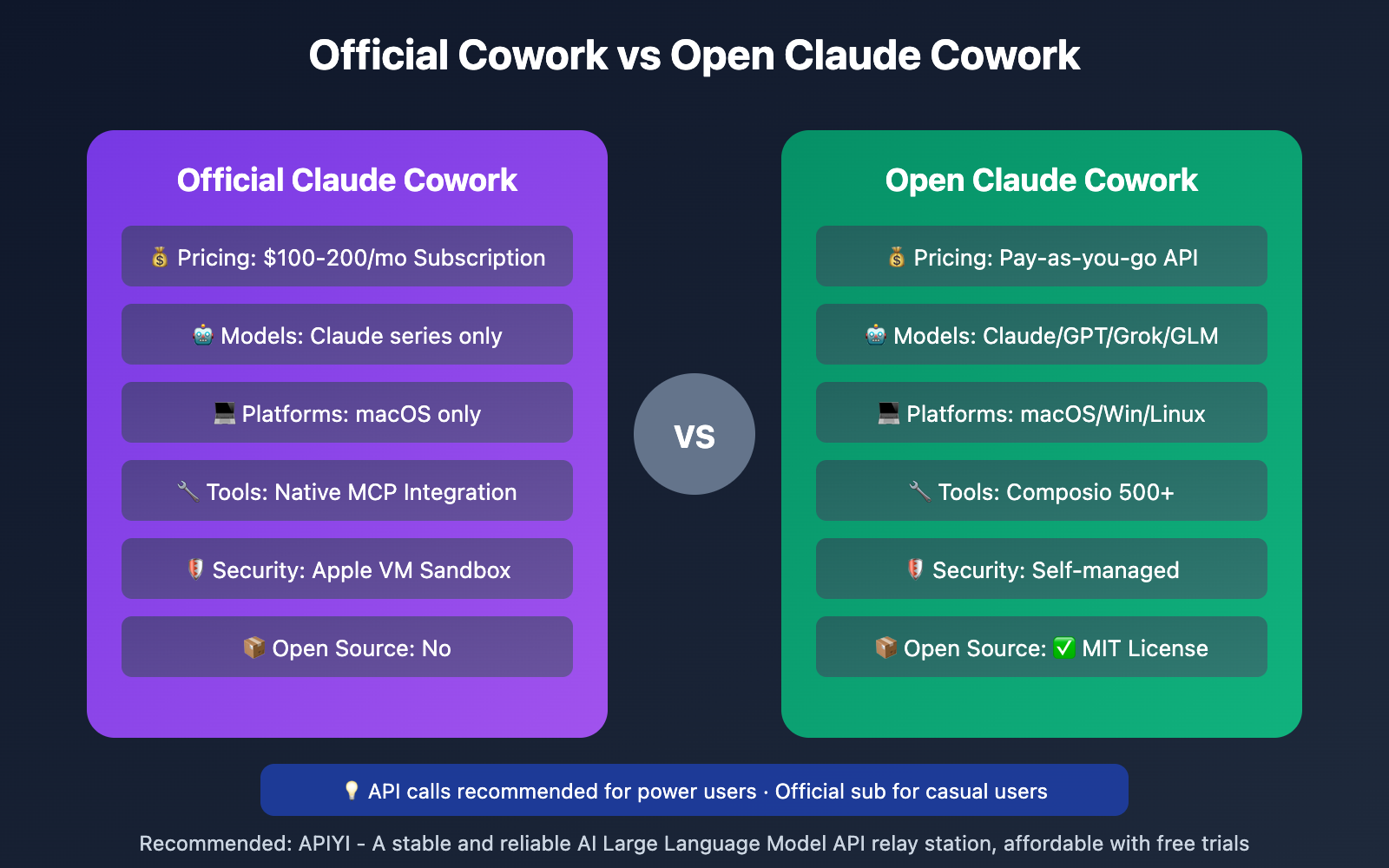
| Feature | Official Cowork | Open Claude Cowork |
|---|---|---|
| Model Support | Claude series only | Claude, GPT-5, Grok, GLM, MiniMax, etc. |
| Tool Integration | Native MCP tools | Composio 500+ tools (Gmail, Slack, GitHub) |
| Pricing Model | Subscription ($100-200/mo) | Pay-as-you-go API |
| Platform Support | macOS only | macOS, Windows, Linux |
| Open Source | No | Yes |
Open Claude Cowork Technical Architecture
The project uses a three-layer architecture:
| Layer | Tech Stack | Responsibility |
|---|---|---|
| Frontend Layer | Electron Renderer | UI rendering, SSE streaming responses |
| Backend Layer | Node.js + Express | Provider routing, session management, MCP configuration |
| AI Layer | Claude Agent SDK / Opencode SDK | Model calls, tool execution, context management |
Getting Started with Open Claude Cowork
Here's the easiest way to deploy it:
# Clone the project
git clone https://github.com/ComposioHQ/open-claude-cowork.git

# Run the automated setup script
cd open-claude-cowork
./setup.sh
The setup script will automatically handle: Composio CLI installation, account configuration, API Key setup, and dependency installation.
Manual Environment Variable Configuration
# Create a .env file
ANTHROPIC_API_KEY=your_anthropic_key
OPENCODE_API_KEY=your_opencode_key  # Optional
COMPOSIO_API_KEY=your_composio_key
Environment Requirements:
- Node.js 18+
- Anthropic API Key (Required)
- Composio API Key (Required for tool integration)
Pro Tip: If you mainly use Claude models, you can get an API Key through APIYI (apiyi.com). The platform provides a unified interface and free test credits, allowing you to quickly compare the performance of different models.
Claude Cowork Use Cases and Best Practices
Best Use Cases for Cowork
- Batch Document Processing: Organizing, categorizing, and renaming large volumes of files.
- Data Reconciliation: Comparing spreadsheets and highlighting discrepancies.
- Content Generation: Batch generating reports, summaries, and translations.
- Project Management: Workflow automation integrated with Jira and Slack.
Where Cowork Might Not Be the Best Fit
- Real-time Conversations: Standard Claude is more cost-effective for simple Q&A.
- One-off Coding Tasks: Claude Code is more specialized for this.
- High-frequency API Calls: Using the API directly offers better cost control.
🎯 Pro Tip: Evaluate your usage patterns—if you're running heavy automation daily, a Max subscription might be worth it. For occasional use, a pay-as-you-go API plan is more flexible. You can quickly test how different models perform for your specific needs via APIYI (apiyi.com).
FAQ
Q1: What’s the difference between Claude Cowork and Claude Code?
Claude Code is built for developers; it runs via the terminal and can execute arbitrary code. Cowork is designed for general users, featuring a graphical interface and operating files within a secure sandbox. While they share similar underlying tech, the user experience and security boundaries are different.
Q2: Can Open Claude Cowork completely replace the official version?
Functionally, it covers most scenarios, but it lacks the official Apple Virtualization sandbox security mechanism. If you're comfortable managing your own security boundaries, it's a more affordable and flexible alternative.
Q3: How do I choose the most cost-effective option?
Recommended strategy:
- Evaluate your monthly usage frequency and task complexity.
- Low-frequency users: Use a Pro subscription supplemented by API.
- High-frequency users: Opt for Max 20x or direct API calls.
- Get your API and test things out via APIYI (apiyi.com); the platform supports a unified interface for multiple Large Language Models.
Summary
Here are the key takeaways for Claude Cowork:
- Revolutionary Positioning: It marks a shift from a passive assistant to an autonomous digital coworker. Its multi-agent architecture makes automating complex tasks a reality.
- Cost Considerations: Token consumption is significantly higher than standard chats. You'll need to choose between subscription or API plans based on how often you use it.
- Open-Source Alternative: Open Claude Cowork offers a flexible choice with cross-platform and multi-model support.
Claude Cowork represents a major step in AI's evolution from a chat tool to an autonomous agent. For users who need high-frequency automation, picking the right subscription plan or API method is the secret to keeping costs under control.
I recommend testing the Claude API's actual performance via APIYI (apiyi.com). The platform offers free credits and a unified interface for multiple models, making it easy to figure out which setup works best for you.
📚 References
⚠️ Link Format Note: All external links use the
Resource Name: domain.comformat. This makes them easy to copy while avoiding clickable redirects to prevent SEO weight loss.
-
Simon Willison's Initial Review: Deep technical analysis of Claude Cowork
- Link:
simonwillison.net/2026/Jan/12/claude-cowork/ - Note: A first-look review from a technical expert's perspective, including reverse-engineering findings.
- Link:
-
Open Claude Cowork GitHub Repository: Full code for the open-source alternative
- Link:
github.com/ComposioHQ/open-claude-cowork - Note: Includes installation scripts, configuration guides, and technical architecture details.
- Link:
-
Official Anthropic Claude Pricing: Subscription plans and API rates
- Link:
claude.com/pricing - Note: Detailed info on Pro, Max 5x, and Max 20x benefits.
- Link:
-
TechCrunch Cowork Launch Report: Analysis of product positioning and industry impact
- Link:
techcrunch.com/2026/01/12/anthropics-new-cowork-tool-offers-claude-code-without-the-code/ - Note: Coverage from a mainstream tech media outlet regarding the launch.
- Link:
-
Fortune Industry Impact Analysis: Potential threats Cowork poses to startups
- Link:
fortune.com/2026/01/13/anthropic-claude-cowork-ai-agent-file-managing-threaten-startups/ - Note: Analyzes how Cowork competes with file management SaaS companies.
- Link:
Author: Technical Team
Tech Chat: Feel free to discuss in the comments. For more resources, visit the APIYI (apiyi.com) tech community.