Author’s note: Starbucks disclosed its drive-thru AI plans on its October 29, 2026, earnings call. This article examines where the plan stands and the challenges it faces from the perspectives of customers, baristas, and the company.
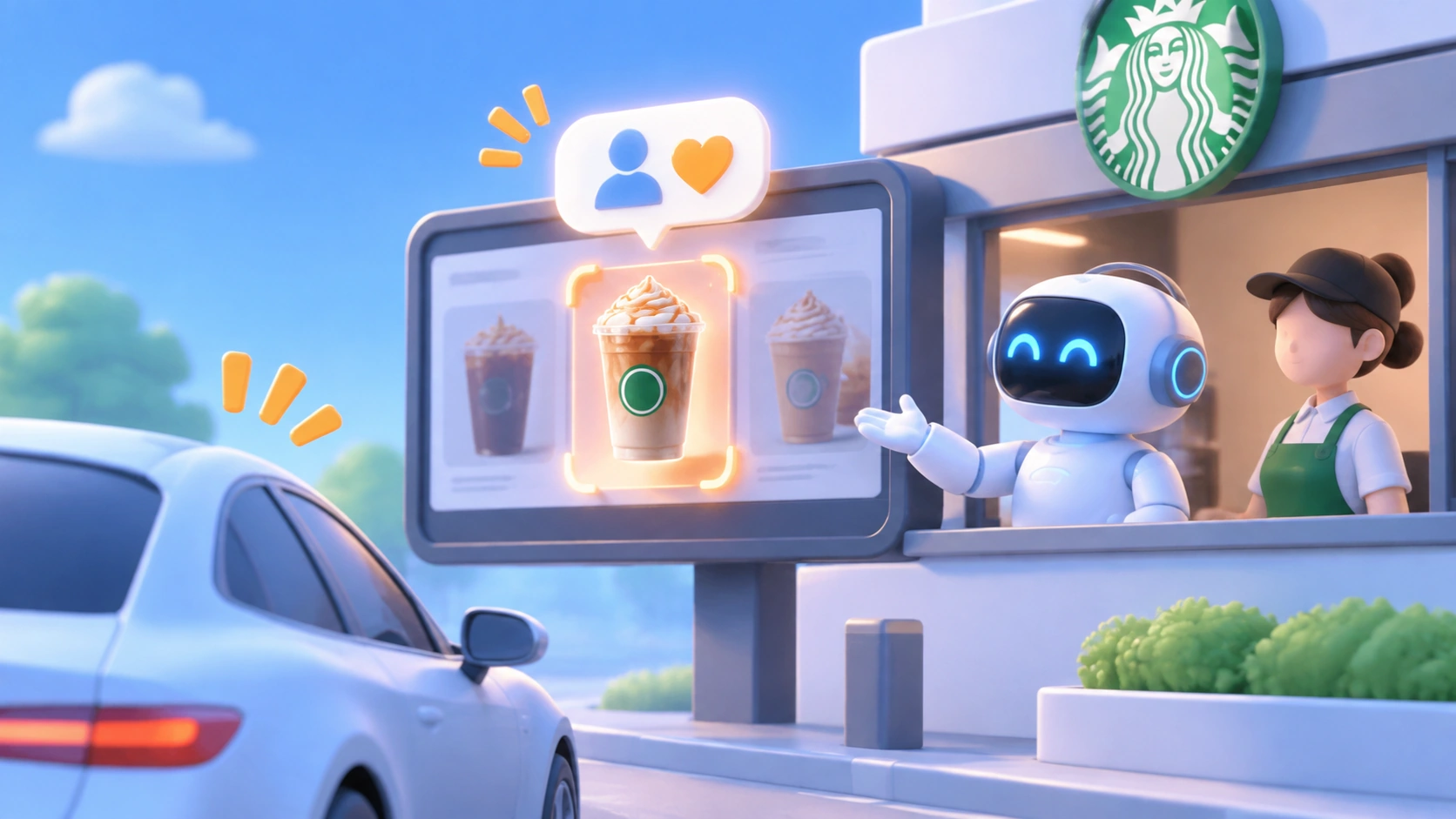
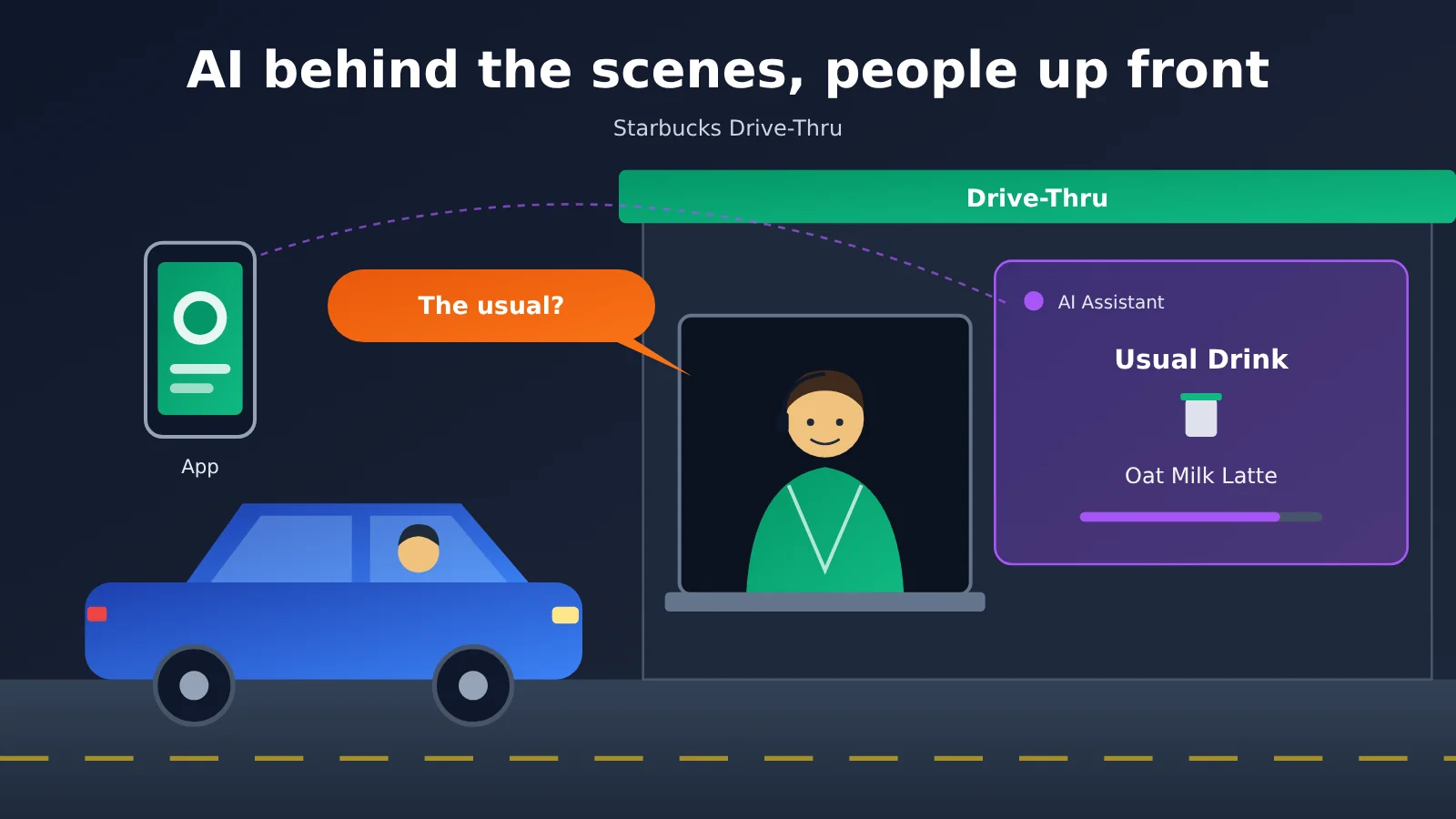
Imagine an ordinary morning. You pull into a Starbucks drive-thru lane with the Starbucks app open on your phone. Instead of walking you through the full menu, the barista asks, “The usual, an oat milk latte?” You say yes, pay, and drive up to the pickup window. That’s the drive-thru Fast Pass experience Starbucks CEO Brian Niccol described in late October 2026. In this scenario, AI doesn’t speak for the barista. It helps the barista “recognize” a regular.
This isn’t just speculation. On its fiscal fourth-quarter 2026 earnings call, Starbucks said it was exploring ways to identify participating customers when they arrive, show them personalized digital menus, and make payment more convenient. The CEO later described the scenario above in an interview with Yahoo Finance. Personalized menus are still in the early exploration stage, though, and the company hasn’t announced the identification technology, pilot locations, or launch date.
What you’ll learn: By the end of this article, you’ll know how far Starbucks’ plan has progressed and which claims remain unconfirmed. You’ll also see why enterprise AI projects need to consider technical performance, employee workload, and the actual customer experience at the same time.
Starbucks’ AI Customer Recognition Plans at a Glance
Let’s separate what Starbucks has confirmed from what it’s still exploring. The company discussed two related but distinct projects. The first is back-end AI-assisted order entry, which it plans to test in fiscal 2027. The second is customer recognition and personalized digital menus, which are still in early exploration with no confirmed launch date.
| Item | Details | Current Status |
|---|---|---|
| Disclosure date | October 29, 2026, on the fiscal 2026 Q4 earnings call | Publicly disclosed |
| Announced by | Starbucks Chairman and CEO Brian Niccol | Publicly disclosed |
| Back-end AI-assisted order entry | Helps baristas enter orders more accurately and efficiently | Testing planned for fiscal 2027 |
| Recognition of participating customers + personalized menus | Recognizes customers who opt in, displays personalized digital menus, and simplifies payment | Early exploration; no launch date |
| Specific recognition technology | Facial recognition, license plate recognition, and other methods have not been confirmed | Not disclosed |
| Quantified returns | The CEO said it was too early to discuss financial impact | No commitments made |
Two timing details are worth noting. Fiscal 2027 isn’t the same as calendar year 2027. Starbucks’ fiscal 2026 ended on September 27, 2026, so testing could begin earlier than many readers expect. Also, the CEO said that “about half of customers use the drive-thru.” That describes customer habits; it doesn’t mean the drive-thru accounts for half of revenue.
Starbucks AI Customer Recognition: Claims That Don’t Hold Up
The news spread quickly, along with several exaggerated claims. As of November 2, 2026, there’s no evidence that “Starbucks has launched facial recognition for ordering,” that “Starbucks raises prices based on customers’ financial circumstances,” or that “AI drove 7.2% sales growth.” The 7.2% figure refers to global comparable-store sales growth for the quarter and has no connection to an AI project that hasn’t launched. PCMag and Gizmodo discussed facial recognition and privacy risks, but those were media analyses of potential approaches. A Starbucks spokesperson told Gizmodo that the project was still in its early stages and that there were no further details to share.
How Starbucks’ Personalized Drive-Thru Menu Divides the Work: What AI Does and What People Do
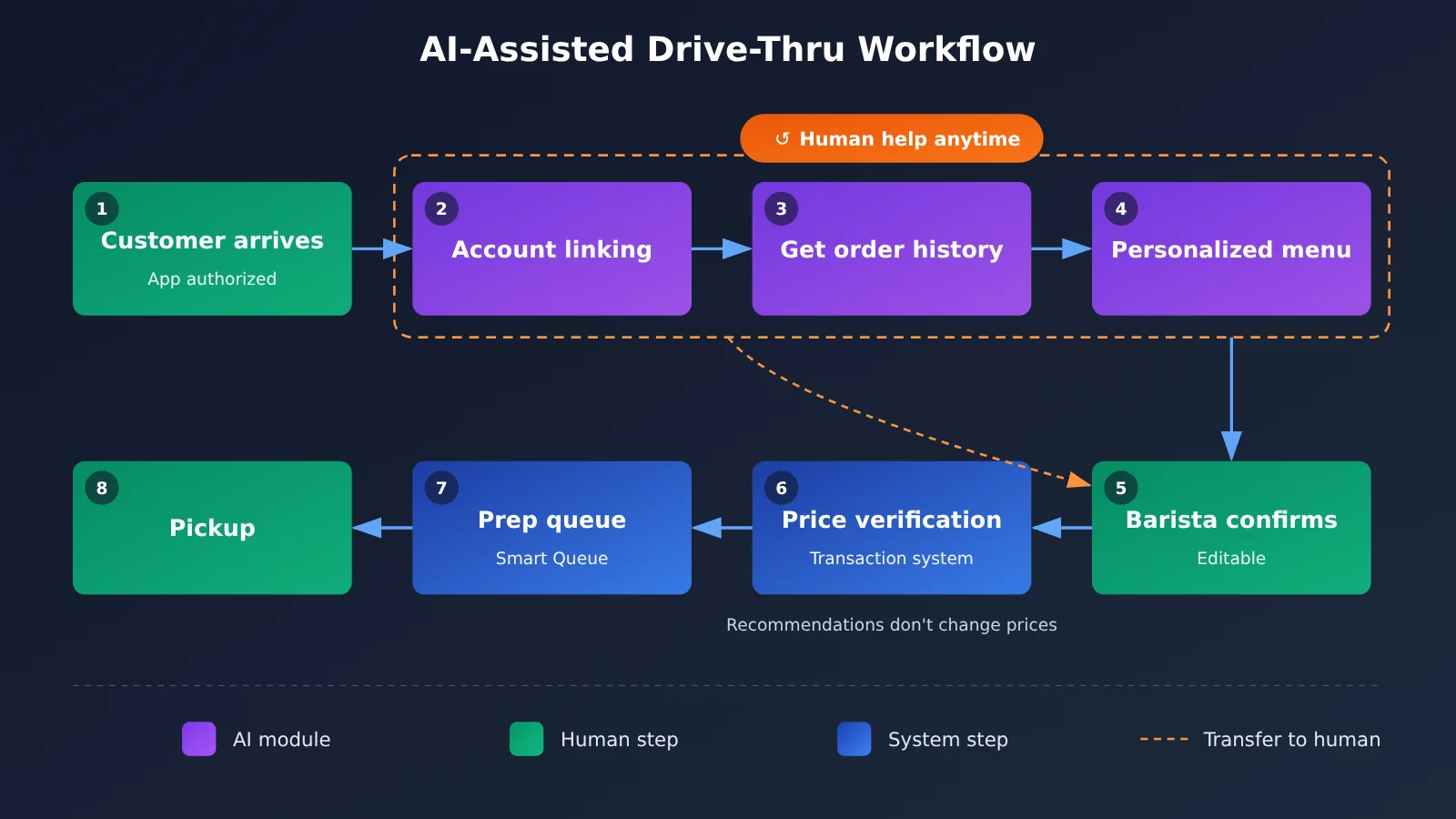
The Fast Pass process described by the CEO offers a fairly clear picture of how the work could be divided between people and machines. AI and information systems handle repetitive information, while baristas interpret customer intent, handle exceptions, and provide human interaction. The table below is based on Starbucks’ stated vision, not a published product manual.
| Stage | Traditional drive-thru | AI / system in the Fast Pass vision | Barista in the Fast Pass vision |
|---|---|---|---|
| Identity confirmation | None | Links an arriving customer to their authorized account | No additional action needed |
| Understanding the order | Asks the customer to order from the full menu | Retrieves recent orders and frequently purchased drinks | Asks whether the customer would like their usual drink |
| Personalized recommendations | Fixed menu | Adjusts the menu content and display order | Decides whether recommendations are appropriate |
| Order entry | Barista manually enters size, milk, and sweetness | Helps structure the order in the background | Confirms and corrects details and handles new requests |
| Payment | Payment at the window | Connects with the App payment process | Handles payment issues |
| Human interaction | Barista | Doesn’t speak directly to the customer | Handles all human interaction |
The key to this division of labor is that AI stays behind the scenes, supporting employees. It cuts out low-value back-and-forth, like having to repeat “I want a large with oat milk and less sugar,” while keeping the greeting between barista and customer. Starbucks described the same idea in its January 2026 explanation of its AI applications: use technology to remove friction from employees’ workflows so baristas can focus on making drinks and serving customers.
A Personalized Menu Doesn’t Mean Personalized Prices
There’s an important distinction here. Adjusting the order in which products appear based on customer preferences, suggesting frequently purchased drinks, and showing member offers are all forms of personalized recommendation. Changing the base price of the same product based on personal characteristics is a different business mechanism. Starbucks has not announced any differential pricing plans. Taco Bell is also testing AI-powered digital menus that adjust for each vehicle, and it confirmed to Restaurant Dive that these tests won’t change product prices. From a system design perspective, prices should be determined by the official transaction system; the recommendation module shouldn’t have permission to change them.
Why Starbucks Is Keeping Humans in the Loop: What Drive-Thru Research Shows
If efficiency were the only goal, the most straightforward approach would be to let a voice bot take orders. So why is Starbucks emphasizing that it’s keeping baristas involved? Intouch Insight’s 2026 drive-thru study offers some context. The study covered 13 US restaurant chains and included 2,145 mystery shopper visits conducted from June to July 2026, with 165 visits per brand. One important caveat: this wasn’t a test of Starbucks’ new AI menu.
| Metric | Staff service rated friendly | Staff service rated unfriendly |
|---|---|---|
| Customer satisfaction rate | 98.6% | 26.8% |
| Willingness to recommend the location | 86.5% | 19.6% |
| Order accuracy rate | 91.3% | 73.2% |
| Average visit time | 5 minutes 16 seconds | 5 minutes 41 seconds |
The most striking finding is that visits with friendly service were actually shorter on average. At least in this sample, the data doesn’t support the assumption that friendly service slows down the drive-thru. But this is an association in an observational study, not a randomized controlled trial. We can’t conclude that a friendly attitude directly caused an 18.1 percentage-point increase in accuracy. For example, well-staffed locations with smooth operations may be both friendlier and more accurate.
In the same study, Starbucks had a 96% order accuracy rate and a 99% satisfaction rate across 165 breakfast-period visits. That means its existing human-led process was already performing well. The AI project needs to prove it can deliver an incremental improvement—not start by assuming human service is inefficient and needs to be “rescued.”
Starbucks’ AI Drive-Thru vs. Robotic Ordering
Unlike Starbucks’ approach of using AI behind the scenes, many fast-food brands have chosen to let AI take orders directly from customers. Industry experience shows that while the technology is improving, customer acceptance is another matter.
| Brand / Project | AI’s role | Reported progress | Issues or concerns |
|---|---|---|---|
| Starbucks’ new drive-thru plan | Behind employees, assisting with order entry and personalized menus | Order-entry assistance scheduled for testing in fiscal 2027 | No real-world test data yet |
| Burger King voice AI | Talks directly with customers | Piloted at approximately 50–70 locations | Some customers didn’t want to talk to a robot and drove away |
| McDonald’s Archy | Takes voice orders while employees prepare them | Accuracy exceeded 90% in early tests | A previous test with IBM ended in 2024 |
| Taco Bell digital menus | Adjusts menu displays for each vehicle | Testing disclosed in April 2026 | Says it won’t change prices |
Burger King’s experience is a clear example. Chakri Somisetti, the brand’s vice president of technology, acknowledged that some customers at pilot locations drove away because they didn’t want to talk to a robot. The brand therefore plans to make it easier for customers to switch to a human order-taker. That doesn’t mean Burger King is abandoning AI, but it does show the risk of making AI the only point of interaction. Survey results disclosed by Technomic in September 2026 tell a similar story: 46% of respondents found ordering from a person in-store appealing, compared with just 23% for AI drive-thru ordering.
Voice AI itself is improving. Intouch Insight’s dedicated tests of AI ordering at Burger King, Taco Bell, and Wendy’s found that order accuracy rose from 82.5% in 2025 to 90.8% in 2026, while the share of orders that had to be partially repeated fell from 34.2% to 29.1%. However, the average total time with AI was 5 minutes 14 seconds, compared with 5 minutes 15 seconds for the same brands in the main study sample—a difference of just 1 second. Of the 2145 visits in the main study, only 36 involved AI in the ordering process, accounting for less than 2%. These figures show that evaluating AI in restaurants isn’t just about model response speed: accuracy and the experience across the entire process matter more.
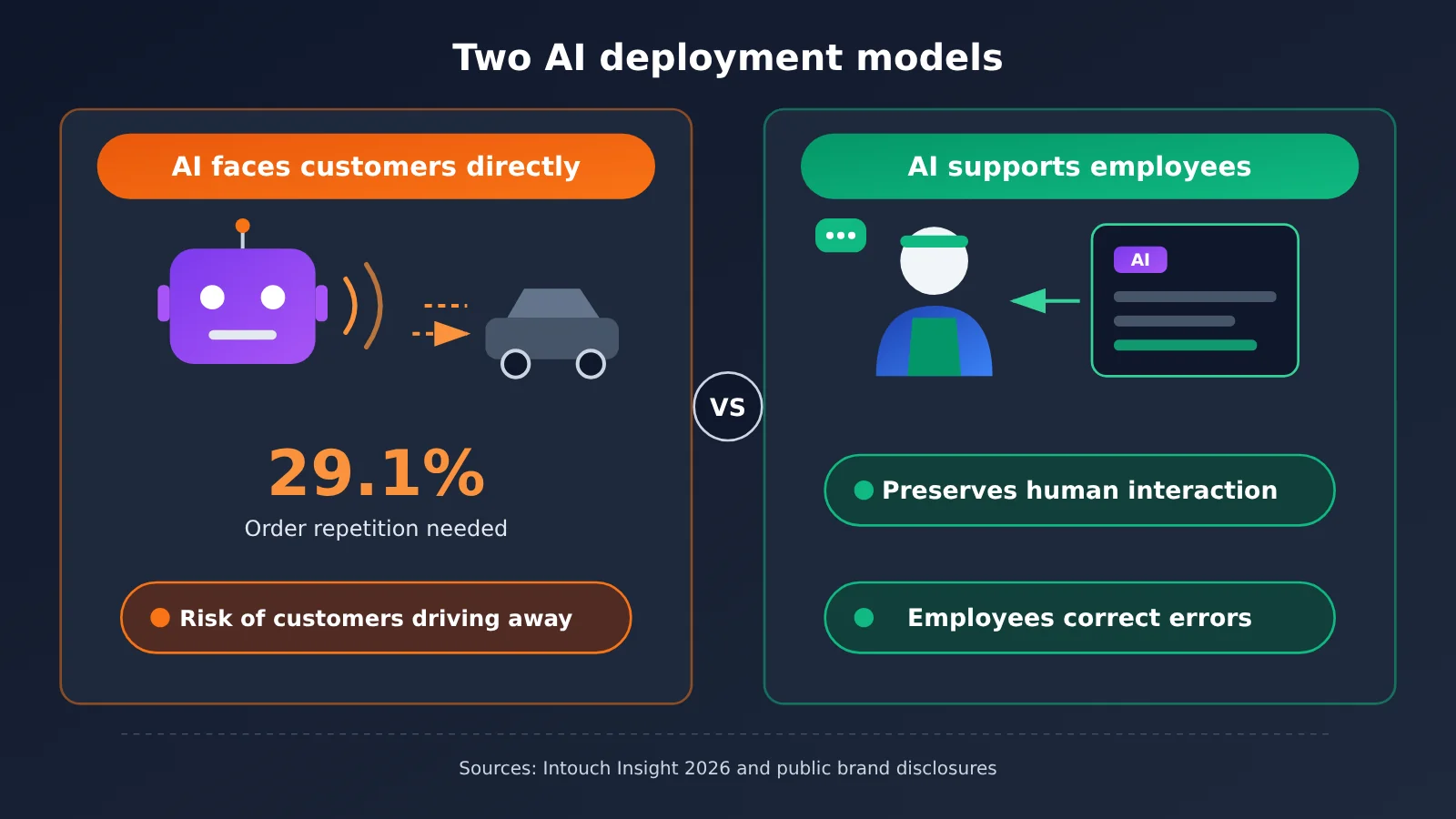
💡 Evaluation tip: When comparing “AI taking orders directly” with “AI assisting employees,” measure accuracy, repetition rate, and the rate of transfers to a human using the same set of real orders. Judging by demos alone can be misleading. During development, you can use APIYI apiyi.com to switch between multiple models through the same interface and evaluate them side by side on the same order data.
Starbucks Employees’ Real-World AI Experiences: Green Dot Assist and Automated Counting
To understand the new drive-through initiative, it helps to first look at the employee-facing AI tools Starbucks has already deployed. These projects have similar-sounding names, but their purposes and statuses differ significantly.
| Project | Purpose | Status | Relationship to the new drive-through initiative |
|---|---|---|---|
| Green Dot Assist | Lets employees ask questions about recipes, procedures, and service standards in natural language | Announced in June 2025, initially piloted in 35 stores, and now rolled out | A separate system that doesn’t identify customers |
| Smart Queue | Coordinates the order in which in-store, drive-through, app, and delivery orders are prepared | Already in use as an operational technology | Provides a business foundation for future drive-through efficiency improvements |
| Automated Counting | Uses an iPad camera to scan and automatically count inventory | Discontinued on May 18, 2026 | A discontinued inventory project, unrelated to the drive-through |
| New drive-through initiative | Assists with order entry, identifies participating customers, and personalizes menus | Order-entry testing is planned for fiscal 2027; personalized menus are still being explored | The subject of this news |
Green Dot Assist: A Gap Between Design Goals and Employee Feedback
The idea behind Green Dot Assist is straightforward: When a new employee can’t remember how to make a seasonal drink, they can ask on the store’s iPad instead of searching through reference materials or interrupting a colleague. But in a July 2026 investigation, Fast Company interviewed four employees who reported problems using it. One employee, Sara Gattis, said that in her experience, the tool often replied that it couldn’t understand her questions, leaving her to fall back on the usual lookup methods. That’s one person’s feedback, not a measure of the system’s overall error rate. Still, it’s a reminder that the ideal experience promoted by a company can differ from what frontline employees actually experience.
Automated Counting: A Shutdown Worth Taking Seriously
Automated Counting is an even more instructive cautionary example. Powered by technology from NomadGo, the inventory system aimed to cut stocktaking time to around 10 to 12 minutes. According to Fast Company, it had expanded to approximately 11,300 company-operated U.S. stores by the end of September 2025. Employees reported a range of problems: reflections in mirrors were counted as extra products, different types of milk and syrup were confused, packaging changes caused recognition failures, and inventory progress was lost when Wi-Fi disconnected. At some stores, AI-assisted counting was even slower than doing it manually.
Starbucks ultimately discontinued the system on May 18, 2026, saying it hadn’t performed as expected and that the company had listened to feedback and changed direction. The lesson is that a successful demonstration in a controlled environment doesn’t guarantee reliable performance across thousands of real stores. When employees have to repeatedly correct mistakes, “automation” can end up creating more work. Of course, one project’s failure doesn’t mean Green Dot Assist or the new drive-through initiative will necessarily fail. Each needs to be evaluated on its own merits.
Product Design Lessons from Starbucks’ Personalized Drive-Through Menu
For teams building enterprise AI applications, Starbucks’ approach offers several useful design principles. The key is to treat AI as a tool that assists employees, not replaces them.
- Reduce effort, don’t add steps: Track the number of actions and manual corrections required for each order. If AI makes a barista tap the screen more often, it’s adding work.
- Let deterministic systems handle pricing and payments: The model can interpret intent and generate suggestions, but the official transaction system must validate prices, discounts, and payment status.
- Always offer a human handoff: The lesson from Burger King is that customers need to be able to choose to speak with a person at any time.
- Require explicit consent for personalization: Starbucks hasn’t publicly answered how customers opt in, opt out, or withdraw consent; whether the system stores license plates or biometric data; or how it handles mistaken identity. These questions must be resolved before launch.
- Prevent purchase history from being exposed: When a personalized menu appears on a drive-through screen, other people in the car can see it too.
Here’s a simplified example of the “AI suggests, employee decides” approach. The model generates prompts for the barista based only on authorized order history. It doesn’t handle pricing, and the employee confirms the order with the customer:
import openai, json

client = openai.OpenAI(
    api_key="YOUR_API_KEY",
    base_url="https://api.apiyi.com/v1"  # APIYI OpenAI-compatible endpoint
)

history = ["大杯燕麦拿铁 少糖", "大杯燕麦拿铁 少糖", "中杯冷萃"]  # Authorized customers only

resp = client.chat.completions.create(
    model="gpt-4o-mini",
    response_format={"type": "json_object"},
    messages=[
        {"role": "system", "content": "你是咖啡师的后台助手。只根据历史订单给出常购饮品建议,"
         "输出 JSON:{\"suggest\": 饮品, \"script\": 咖啡师可用的确认话术}。不得输出价格。"},
        {"role": "user", "content": json.dumps(history, ensure_ascii=False)}
    ]
)
tip = json.loads(resp.choices[0].message.content)
print(tip)  # Display on the employee screen for the barista to confirm or modify; the transaction system calculates the price
This code illustrates three design constraints: data comes only from authorized accounts, the output is a structured prompt for employees rather than a direct order, and pricing doesn’t go through the model. A production system would also need confidence thresholds, a human handoff option, and audit logging.
🚀 Quick validation: If you’re evaluating a similar employee-assist AI use case, start by building a prototype with anonymized historical order data. Through APIYI apiyi.com, you can use a single API key to call models such as OpenAI, Claude, and Gemini, then compare their structured output reliability and instruction-following. New users can start testing with free credits.
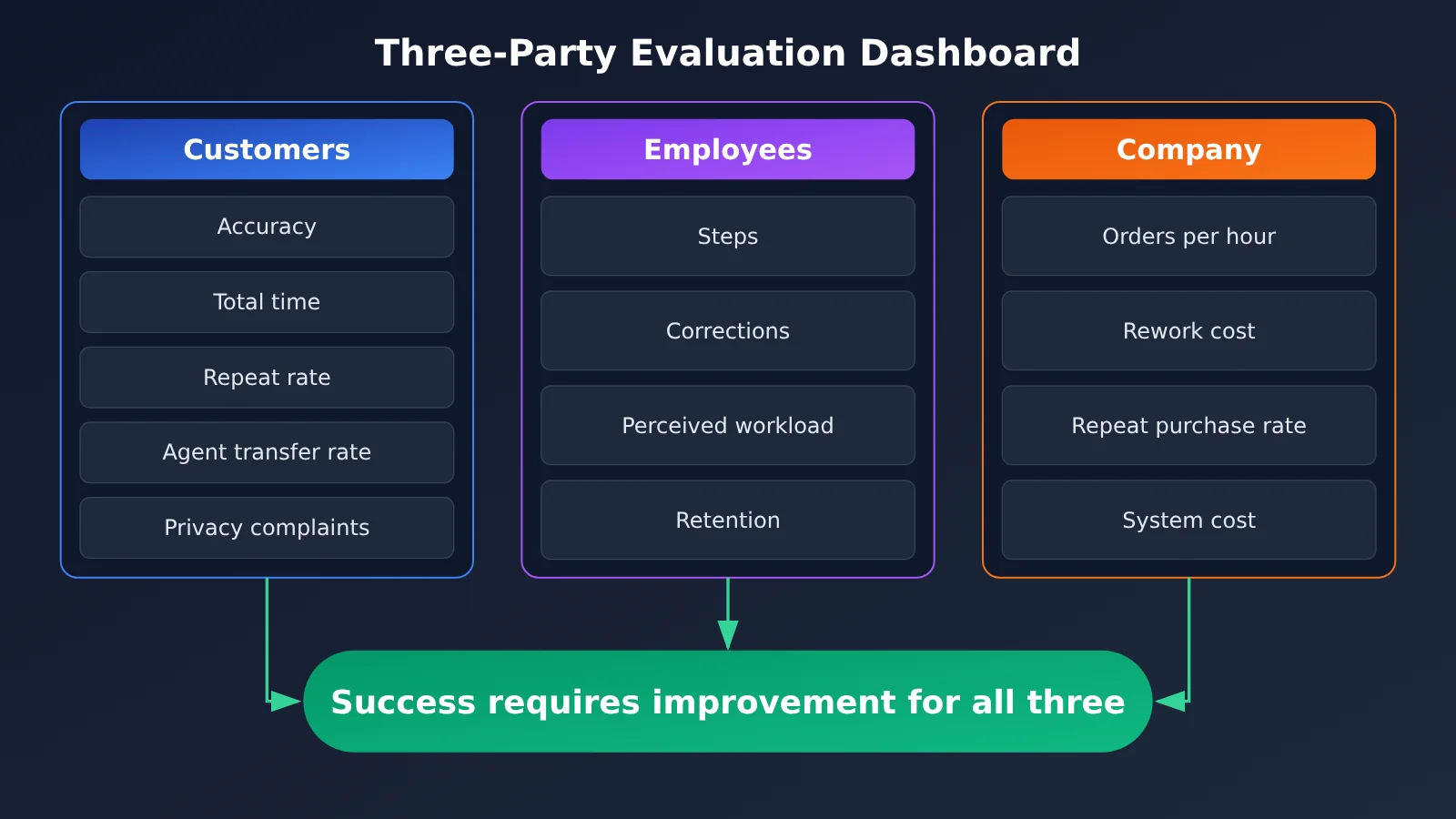
Impact Analysis: Starbucks’ AI Drive-Thru
Impact on Developers and Product Managers
- Evaluate the entire workflow: Intouch’s data shows that AI improved order-taking accuracy, but total time barely changed. Looking only at model metrics can overstate a project’s value.
- Employees are the first users: The discontinuation of Automated Counting shows that tools with a poor employee experience are unlikely to survive in stores. Feedback from frontline employees should be part of the acceptance criteria before launch.
- Multi-model evaluation becomes standard: Tasks like intent recognition, structured order entry, and recommendation phrasing place different demands on models. Teams should compare models using real-world samples before choosing one.
Impact on the Restaurant and Service Industries
- Diverging approaches: “AI interacting directly with customers” and “AI working behind the scenes for employees” will coexist for the long term. Customer acceptance will be a key factor.
- Privacy becomes a hurdle: Once customer identification features go live, consent mechanisms and data boundaries will come under scrutiny from regulators and the public.
- Employment effects remain to be seen: “AI assisting employees” is a product goal, not a promise that companies won’t change roles or staffing. McDonald’s expects to free up at least 50 staff hours per store per week once deployed at scale, but how those hours are ultimately used depends on the company’s staffing decisions.
🎯 Technical recommendation: When integrating Large Language Models, decouple the model invocation layer from business systems and manage multiple models through a unified OpenAI-compatible interface. That way, you can quickly switch models or roll back if performance falls short. APIYI apiyi.com provides this kind of unified access, making it a good fit for teams that frequently compare models.
Frequently Asked Questions
Q1: Does Starbucks use facial recognition to identify customers?
There’s no evidence that it does. Starbucks has only said it will “identify participating customers,” and the scenario its CEO described in an interview involved a customer opening the Starbucks App. Facial recognition, license plate recognition, and specific identification devices haven’t been confirmed. Media discussions of facial recognition are analyses of potential approaches.
Q2: How is Starbucks’ approach different from Burger King’s and McDonald’s AI ordering?
Burger King’s and McDonald’s voice AI systems talk directly to customers and take their orders. Starbucks is currently focused on assisting with order entry behind the scenes and giving baristas context about customers’ purchase history, while employees remain responsible for interacting with customers. Burger King has already encountered customers who refuse to talk to a robot. Starbucks’ approach carries less risk in that respect, but test data is still needed to prove how well it works.
Q3: When will Starbucks launch personalized drive-thru menus?
There’s no confirmed date. Testing of behind-the-scenes AI-assisted order entry is planned to begin in fiscal 2027, while personalized menus are still in the early stages of exploration. The CEO said the company will test and learn first, then roll out the approaches that work well.
Q4: How can a business quickly validate a similar employee-assistance AI system?
Start with a small use case, such as knowledge-based Q&A or structuring order data, and use anonymized historical data to evaluate accuracy and correction costs offline. You can handle model invocation through APIYI apiyi.com’s unified interface. Change the base_url to `https://api.apiyi.com/v1` to reuse the OpenAI SDK and switch between models for comparison.
Q5: Where are AI projects like this most likely to fail?
Based on Automated Counting, the main risks are edge cases in real-world environments, such as glare, packaging changes, and network outages, as well as the extra burden of employees having to make ongoing corrections. Before launch, run phased tests in multiple real stores and make employee workflow steps and perceived workload core metrics. When building a prototype, you can use APIYI apiyi.com’s free testing credits to validate model capabilities before deciding whether to invest in hardware and system integration.
Q6: What are the known limitations of Starbucks’ plan so far?
The biggest issue is a lack of data. Recognition accuracy, actual transaction times, customer satisfaction, employee satisfaction, hours saved, and deployment costs haven’t been made public. The privacy consent mechanism hasn’t been explained either. Until that data is available, “faster, more accurate, and more human” remains an aspiration.
Starbucks AI Drive-Thru: Key Takeaways
- Planning stage: AI-assisted order entry is planned for testing in fiscal 2027. Personalized menus are still in early exploration.
- Division of work: AI provides customer context and helps enter orders, while baristas handle conversations, confirmations, and corrections.
- Recognition technology undecided: Neither facial nor license plate recognition has been confirmed. Customer participation is expected to be voluntary.
- People still matter: Friendly service is associated with a 98.6% satisfaction rate, but that’s an observational association, not proof of causation.
- A lesson from experience: The discontinuation of Automated Counting shows that employee workload is a key factor in whether AI implementation succeeds.
- How to evaluate it: Metrics for customers, employees, and the business all need to improve. APIYI apiyi.com can help compare and evaluate multiple models.
Summary
Starbucks’ AI drive-thru plan can be summed up as “AI behind the scenes, people at the forefront”:
- The direction is clear, but the details aren’t: Identifying participating customers, personalizing menus, and assisting with order entry are all publicly stated goals. But Starbucks hasn’t announced the recognition technology, pilot scope, or performance data.
- Human-AI collaboration has both supporting data and lessons learned: Industry research links friendly human service with high satisfaction. Customer resistance at Burger King and Starbucks’ own discontinuation of Automated Counting show that AI implementations don’t always meet initial expectations.
- Success isn’t measured by how many conversations AI replaces: The real test is whether service becomes more accurate, natural, and reliable, employee workload actually decreases, and customer privacy is respected.
For teams planning enterprise AI applications, start by prototyping a small use case and evaluating the full workflow with real data. We recommend using APIYI apiyi.com to quickly compare how different models perform on your business data before deciding how to integrate them into your systems.
📚 References
- Starbucks Q4 Fiscal 2026 Earnings Call Transcript: The CEO’s public plans and testing schedule for fiscal 2027
- Link:
stockanalysis.com/stocks/sbux/transcripts/702818-q4-2026 -
Notes: A primary source for statements such as “about half of customers use the drive-thru”
-
Yahoo Finance CEO Interview: Fast Pass in the drive-thru
- Link:
sg.finance.yahoo.com/news/starbucks-wants-to-trial-a-fast-pass-drive-through-with-ai-211128951.html -
Notes: Details on the app, recent orders, and fast payment
-
Starbucks’ Official Overview of AI Applications: Green Dot Assist and Smart Queue
- Link:
about.starbucks.com/press/2026/supporting-the-moments-that-matter-with-artificial-intelligence -
Notes: How Starbucks officially positions AI tools for employees
-
Intouch Insight 2026 Drive-Thru Study: Industry customer experience data
- Link:
intouchinsight.com/press-releases/2026-drive-thru-study -
Notes: Observations on friendly service, AI order accuracy, and more
-
Fast Company: Investigation into Starbucks’ Automated Counting: Employee feedback and the project’s discontinuation
- Link:
fastcompany.com/91572019/starbucks-bet-big-ai-tool-national-scale-9-months-inventory-automated-counting-nomadgo -
Notes: A firsthand case study of a failed enterprise AI rollout
-
Nation’s Restaurant News: Burger King Rethinks Its Drive-Thru AI Strategy: Customer acceptance issues
- Link:
nrn.com/quick-service/burger-king-rethinks-its-drive-thru-ai-strategy -
Notes: Real-world examples of customers refusing to talk to a robot, plus a Technomic survey
-
Gizmodo: Privacy Concerns Around Customer Identification: Privacy and pricing controversies
- Link:
gizmodo.com/starbucks-apparently-wants-to-make-that-minority-report-shopping-scene-a-reality-2000833339 - Notes: Includes a Starbucks spokesperson’s response that the company is “still in the early stages of exploration”
Author: APIYI Technical Team
Technical discussions: For questions about enterprise AI applications, model selection, and system integration, contact us through the APIYI homepage at apiyi.com