
Skip to content
Apiyi.com Blog

Apiyi.com Blog

Best AI API Router Services

  • Nano Banana Pro🔥
  • Free AI Imagen
  • DocsExpand
    • ChangeLog
    • Models
    • Scenarios
  • APIYI DashboardExpand
    • Logs
    • KEY(Token)
    • Recharge
    • Back APIYI Home
    • Register APIYI
Apiyi.com Blog
Apiyi.com Blog
Best AI API Router Services
  • Claude Text Watermarking Doesn’t Always Work: 3 Sampling Parameters and 5 Types of API Configurations Developers Should Check

    Claude Text Watermarking Doesn’t Always Work: 3 Sampling Parameters and 5 Types of API Configurations Developers Should Check

    ByFourteen 2026年 11月 6日

    Author’s note: Anthropic has updated its official documentation to warn that Sonnet 4.6 may not reliably carry text watermarks when non-default sampling parameters are used. This article explains when Claude text watermarking applies and provides an API configuration checklist for developers. Not all Claude requests produce output with a reliable text watermark. In API documentation…


    Read More Claude Text Watermarking Doesn’t Always Work: 3 Sampling Parameters and 5 Types of API Configurations Developers Should CheckContinue

  • How to Purchase ChatGPT for Your Enterprise: A 5-Step Decision Framework from $20 Seats to Custom Enterprise Plans and Token-Based Billing

    How to Purchase ChatGPT for Your Enterprise: A 5-Step Decision Framework from $20 Seats to Custom Enterprise Plans and Token-Based Billing

    ByFourteen 2026年 11月 6日

    Author’s note: Starting with the news that enterprise customers now account for more than half of OpenAI’s revenue, this article draws on a Harness survey and the “cost per successful task” metric to break down five steps for enterprise AI procurement and cost governance. On November 4, 2026, OpenAI President Greg Brockman said at the…

    Read More How to Purchase ChatGPT for Your Enterprise: A 5-Step Decision Framework from $20 Seats to Custom Enterprise Plans and Token-Based BillingContinue

  • A Score Surge Doesn’t Necessarily Mean Greater Capability: Truncation and Repetition Pitfalls in Reasoning Model Evaluation, as Seen in Astra’s Modification of Qwen Weights, Plus a 5-Point Checklist
    ChatGPT and OpenAI

    A Score Surge Doesn’t Necessarily Mean Greater Capability: Truncation and Repetition Pitfalls in Reasoning Model Evaluation, as Seen in Astra’s Modification of Qwen Weights, Plus a 5-Point Checklist

    ByFourteen 2026年 11月 6日

    Author’s note: Using a retrospective on Astra’s experiment rewriting Qwen3.5-0.8B’s weights, this article explains the difference between getting an answer wrong and failing to finish it when evaluating reasoning models—and how to break down results by truncation. On November 2, four MIT CSAIL researchers published a blog post titled “Sparks of Weight-Space Programming.” They reported…

    Read More A Score Surge Doesn’t Necessarily Mean Greater Capability: Truncation and Repetition Pitfalls in Reasoning Model Evaluation, as Seen in Astra’s Modification of Qwen Weights, Plus a 5-Point ChecklistContinue

  • OpenAI Acquires Pierre and Opens Codex to All Tiers: 3 Changes in AI Coding Agent Infrastructure Explained

    OpenAI Acquires Pierre and Opens Codex to All Tiers: 3 Changes in AI Coding Agent Infrastructure Explained

    ByFourteen 2026年 11月 6日

    Author’s note: A look at OpenAI’s acquisition of Pierre, the company behind Code Storage, and the rollout of Codex to all tiers: which tools are involved, how existing users are affected, and where the AI coding agent toolchain may be headed. OpenAI recently announced two developments that might not seem like much on their own,…

    Read More OpenAI Acquires Pierre and Opens Codex to All Tiers: 3 Changes in AI Coding Agent Infrastructure ExplainedContinue

  • Can Business Staff Build Systems Themselves Using AI? 3 Conditions and 5 Boundaries from a Farming Company Case Study

    Can Business Staff Build Systems Themselves Using AI? 3 Conditions and 5 Boundaries from a Farming Company Case Study

    ByFourteen 2026年 11月 6日

    Author’s note: At a livestock company with around 120 employees, the general manager built a livestock management system himself using AI coding tools. Rather than repeat the claim that “anyone can develop software,” this article examines what made the case possible—and the limits business professionals still face when building their own systems with AI. In…

    Read More Can Business Staff Build Systems Themselves Using AI? 3 Conditions and 5 Boundaries from a Farming Company Case StudyContinue

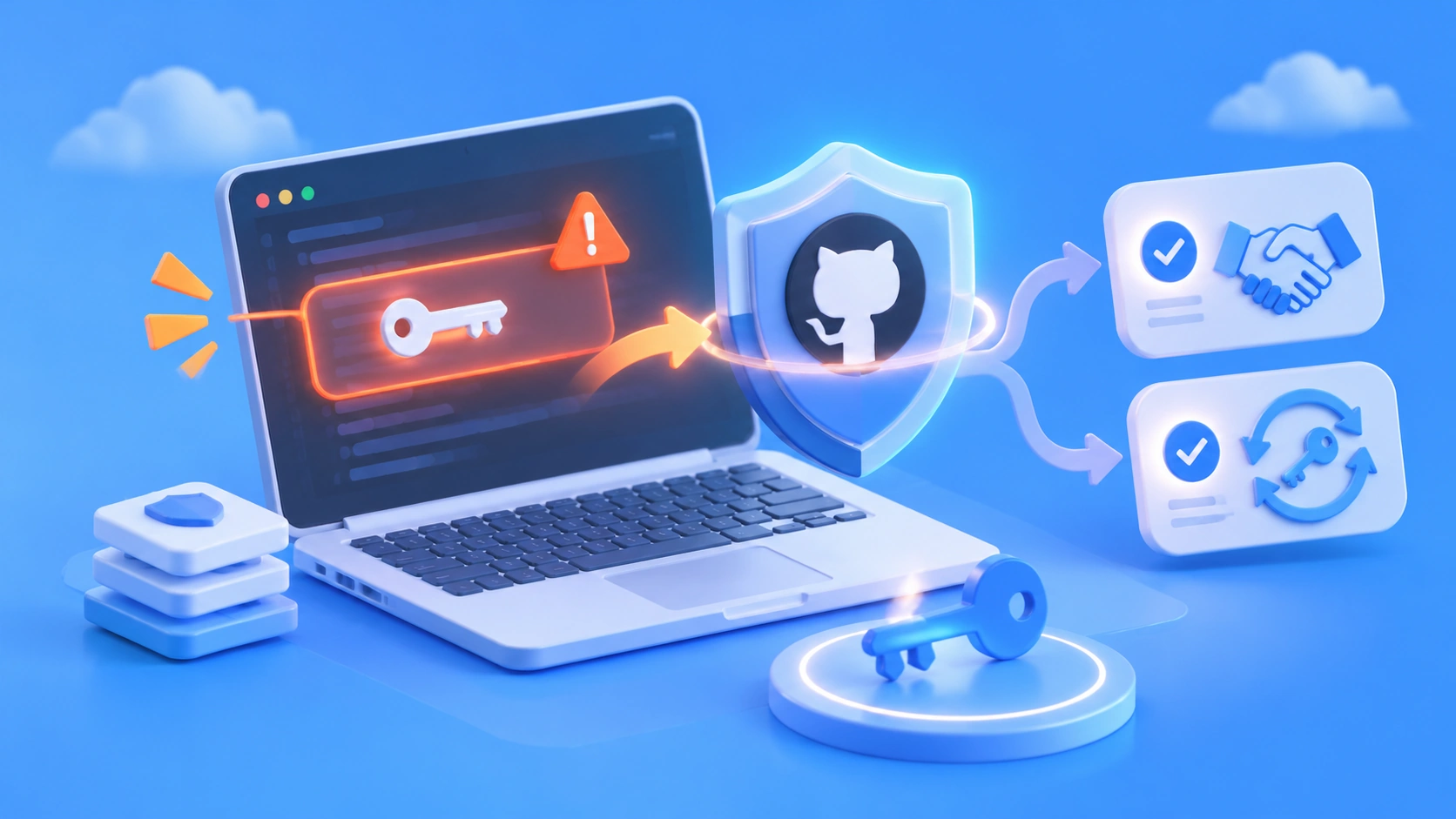
  • What Happens When an API Key Is Accidentally Committed to a Code Repository: 2 Response Mechanisms and 5 Security Practices from GitHub Secret Scanning Updates

    What Happens When an API Key Is Accidentally Committed to a Code Repository: 2 Response Mechanisms and 5 Security Practices from GitHub Secret Scanning Updates

    ByFourteen 2026年 11月 6日

    Author’s note: Using GitHub’s latest secret scanning detector update as a starting point, we’ll look at what happens when an API key is accidentally committed to a repository, how much platform detection can catch, and what developers still need to do themselves. On November 5, 2026, GitHub published a secret scanning update in its changelog:…

    Read More What Happens When an API Key Is Accidentally Committed to a Code Repository: 2 Response Mechanisms and 5 Security Practices from GitHub Secret Scanning UpdatesContinue

  • “Don’t Charge Me a Token Fee for Every Screw You Tighten”: 5 Types of AI Application Tasks That Shouldn’t Call a Large Language Model

    “Don’t Charge Me a Token Fee for Every Screw You Tighten”: 5 Types of AI Application Tasks That Shouldn’t Call a Large Language Model

    ByFourteen 2026年 11月 6日

    Author’s note: Starting with Stardust Intelligence founder Lai Jie’s analogy—“don’t charge me tokens for every screw you tighten”—this article breaks down which parts of an AI workflow belong to fixed programs and which need a Large Language Model’s judgment. On November 5, 2026, ifanr’s “Diversity Company” column published an interview with Lai Jie, founder and…

    Read More “Don’t Charge Me a Token Fee for Every Screw You Tighten”: 5 Types of AI Application Tasks That Shouldn’t Call a Large Language ModelContinue

  • How Long-Running Agents Span Context Windows: 3 Design Questions for the Handoff Summary + Archive Retrieval Pattern

    How Long-Running Agents Span Context Windows: 3 Design Questions for the Handoff Summary + Archive Retrieval Pattern

    ByFourteen 2026年 11月 6日

    Author’s note: Using openJiuwen WorkSwarm’s context-switching mechanism as a case study, this article explores the “handoff summary + archive retrieval” pattern and the design choices and trade-offs long-running agents face as they approach context window limits. The Huawei-backed open-source agent community openJiuwen recently released its Hyper-Agent cluster architecture. One detail is worth developers’ attention: When…

    Read More How Long-Running Agents Span Context Windows: 3 Design Questions for the Handoff Summary + Archive Retrieval PatternContinue

  • Gemini Omni 1.2 Flash Update Explained: 6 Key Changes, Including 15-Second Videos, Multi-Turn Editing, and a 30% Price Cut
    Gemini API | LLM API News

    Gemini Omni 1.2 Flash Update Explained: 6 Key Changes, Including 15-Second Videos, Multi-Turn Editing, and a 30% Price Cut

    ByShark 2026年 11月 6日

    Author’s note: This article breaks down Gemini Omni 1.2 Flash’s 15-second duration, reference following, multi-turn editing, voice and camera controls, 30% price cut, and officially acknowledged limitations to help developers decide whether to evaluate it for video generation. Google released Gemini Omni 1.2 Flash on November 5, 2026, with general availability (GA) on both the…

    Read More Gemini Omni 1.2 Flash Update Explained: 6 Key Changes, Including 15-Second Videos, Multi-Turn Editing, and a 30% Price CutContinue

  • GPT-6 Cyber Released: 48.5% Vulnerability Exploitation Rate, 0.07% Boundary Violation Rate
    ChatGPT and OpenAI | LLM API News

    GPT-6 Cyber Released: 48.5% Vulnerability Exploitation Rate, 0.07% Boundary Violation Rate

    ByShark 2026年 11月 6日

    Author’s note: OpenAI released GPT-6 Cyber, a model built specifically for cybersecurity, on November 5, 2026. This article breaks down its benchmark scores, alignment data, real-world results, pricing, and access requirements—and outlines what security teams, developers, and everyday API users can do now. On November 5, 2026, OpenAI released GPT-6 Cyber, a model built specifically…

    Read More GPT-6 Cyber Released: 48.5% Vulnerability Exploitation Rate, 0.07% Boundary Violation RateContinue

Page navigation

Previous PagePrevious 1 … 9 10 11 12 13 … 92 Next PageNext

© 2026 Apiyi.com Blog - WordPress Theme by Kadence WP

Scroll to top
  • Nano Banana Pro🔥
  • Free AI Imagen
  • Docs
    • ChangeLog
    • Models
    • Scenarios
  • APIYI Dashboard
    • Logs
    • KEY(Token)
    • Recharge
    • Back APIYI Home
    • Register APIYI
  • 简体中文 (Chinese (Simplified))
  • 繁體中文 (Chinese (Traditional))
  • English
  • Русский (Russian)
  • 日本語 (Japanese)
  • 한국어 (Korean)
  • العربية (Arabic)
  • Français (French)
  • Deutsch (German)
  • Indonesia (Indonesian)
  • Português (Portuguese (Portugal))
  • Español (Spanish)